
Why is there damp in my bathroom or around the shower?
Damp in a bathroom or around the shower is usually one of two quite different things: water actually leaking through failed seals, grout or tiling into the wall and floor, or condensation forming because the room is humid and poorly ventilated. They need opposite responses — a leak must be found and sealed, while condensation needs better ventilation and warmer surfaces — so the key is to work out which you have. Because bathrooms generate so much moisture, the two can also occur together, which is why diagnosis matters.
 Reviewed by George Sora, Certified Passive House DesignerUpdated June 2026
Quick answer & key takeaways
7 min read- Bathroom damp is usually either a leak through failed seals/tiling or condensation.
- A leak puts liquid water into the wall or floor; condensation forms on cold surfaces.
- The two need opposite fixes — sealing the leak versus ventilating and warming.
- Bathrooms generate so much moisture that both can occur together.
- Biggest misconception: all bathroom damp is just condensation. Hidden leaks are common.
- Retrofit IQ's approach: confirm leak versus condensation, then fix the right one.
What this usually means
Bathrooms combine two damp risks in one room. First, they are full of water under pressure and use — showers, baths, basins and their pipework — relying on seals, grout, sealant and tanking to keep that water on the right side of the surfaces. When a silicone seal perishes, grout cracks, tiles debond or a waste leaks, water passes behind the finishes into the wall or floor, often invisibly, and shows up as damp on the wall, a stain on the ceiling below, or rot in the floor. This is liquid water escaping where it should not, and it will continue until the breach is sealed.
Second, bathrooms are the most humid rooms in the house, producing large amounts of steam that, without good ventilation, condenses on the cold surfaces — walls, tiles, the ceiling, the window and reveals — and can lead to black mould, especially in corners and on the silicone. This condensation damp is not a leak; it is the room's own moisture settling on cold surfaces because it cannot escape, and it is fixed by extracting the moisture (a good extractor fan, used properly) and warming the surfaces, not by sealing anything.
Telling them apart is therefore the first job, because the remedies are opposite and applying the wrong one wastes effort. A leak tends to produce a persistent, localised damp patch that may not correlate with use of the room and can appear on a ceiling below; condensation is widespread, fluctuates with showering and ventilation, and concentrates on the coldest surfaces. Moisture readings, thermal imaging and, where needed, leak testing distinguish them. And because a humid bathroom can mask a slow leak, or a leak can raise humidity, sometimes both are present and both must be addressed.
Common causes
Failed seals and sealant
Perished silicone around the bath, shower tray or screen lets water pass behind the finishes.
Cracked grout or debonded tiles
Failed grout or loose tiling allows water through to the wall or floor behind.
Leaking pipework or waste
A leaking supply, waste or shower connection wets the wall and floor, often unseen.
Poor ventilation and condensation
Inadequate extraction lets steam condense on cold surfaces, causing damp and mould.
Cold surfaces
Cold external walls, reveals and ceilings provide surfaces for condensation to form.
Signs and symptoms
Persistent damp patch on a wall
A localised, lasting damp area, perhaps unrelated to showering, suggests a leak rather than condensation.
Stain on the ceiling below
Damp or a stain on the ceiling beneath a bathroom strongly indicates a leak through the floor.
Widespread misting after showers
Steam settling broadly on tiles, walls and the window points to condensation and poor ventilation.
Black mould on silicone and corners
Mould on sealant and in corners reflects condensation and high humidity in a poorly ventilated room.
Soft or rotting floor by the shower
A spongy floor around the shower or bath indicates water leaking into the structure.
What most people check first
- Whether the damp is localised and persistent (leak) or widespread and use-related (condensation).
- Whether there is a stain on the ceiling below the bathroom.
- Whether seals, grout and tiling around the shower are sound.
- Whether the extractor fan works and clears the steam.
What most people miss
- That bathroom damp is often a hidden leak, not just condensation.
- That leaks and condensation need opposite remedies.
- That a humid bathroom can mask a slow leak, so both may be present.
- That condensation needs ventilation and warm surfaces, not sealing.
The building physics
A leak is liquid-water transport through a breach in the waterproof layer — seal, grout, tile bed, tanking or pipe — driven by use and gravity. It deposits water into porous wall or floor materials at a rate set by the defect, producing a persistent, often localised damp area that may track downward and appear on the ceiling below, and that does not depend on air humidity. Because the water by-passes the intended barrier, the damp continues regardless of ventilation until the breach is repaired, which is why ventilating harder never cures a genuine leak.
Condensation, by contrast, is vapour from the room air depositing on surfaces below its dew point. A shower can raise bathroom humidity close to saturation in minutes, so any cold surface — tile, wall, ceiling, window, silicone — quickly reaches the dew point and wets, and repeated wetting with limited drying supports mould, especially on sealant and in cool corners. This damp is widespread, fluctuates with showering and ventilation, and is governed by the balance between the moisture generated and the rate the extractor removes it, plus the temperature of the surfaces.
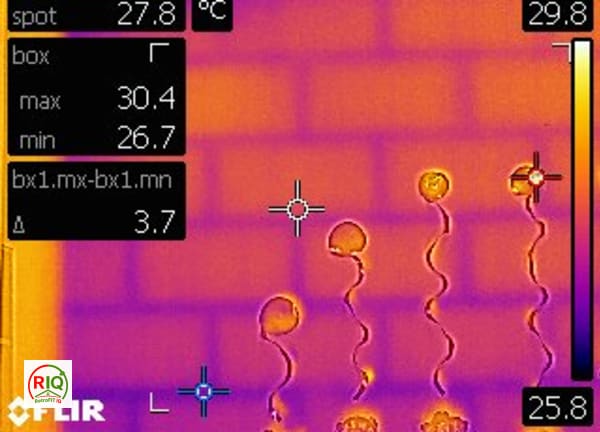
Distinguishing the two relies on pattern and measurement. Moisture profiling shows whether material is wet through (a leak) or only at the surface (condensation); thermal imaging maps cold surfaces prone to condensation and can reveal the cool signature of a leak; and targeted leak testing confirms a suspected breach. The remedies then diverge: a leak is cured by repairing the seal, grout, tiling or pipe and drying the structure; condensation by improving extraction (an adequately sized, well-ducted fan run long enough), warming cold surfaces and reducing dwell time of humid air. Where both coexist — common in heavily used bathrooms — each must be treated on its own terms, which is why a clear diagnosis precedes any work.
How to fix damp in a bathroom or shower
Confirm whether it is a leak or condensation, then apply the matching remedy — seal and dry a leak, or ventilate and warm the surfaces for condensation, addressing both where they coexist.
- 01
Diagnose leak versus condensation
Use moisture readings and thermal imaging to establish whether material is wet through or only surface-damp.
- 02
Check seals, grout and tiling
Inspect the silicone, grout and tiles around the shower and bath for breaches letting water through.
- 03
Find and fix any leak
Locate the failed seal, grout, tile or pipe, repair it, and allow the wall or floor to dry.
- 04
Improve the ventilation
Provide an adequately sized, well-ducted extractor run long enough to clear the steam after showering.
- 05
Warm the cold surfaces
Insulate cold external walls and reveals so condensation forms less readily.
- 06
Treat both if present
Where a leak and condensation coexist, address each on its own terms and verify the room stays dry.
How to prevent it coming back
- Maintain seals, grout and tiling so water cannot get behind them.
- Run an adequate extractor fan during and after showering.
- Warm cold external walls and reveals in the bathroom.
- Diagnose persistent damp rather than assuming it is only condensation.
How Retrofit IQ investigates this
We confirm whether bathroom damp is a leak or condensation, and address the right cause, including where both occur.
Do not spend money fixing symptoms before you understand the cause — investigate first, then build with confidence.
Do I need a professional investigation?
Bathroom or shower damp is worth investigating when it persists, appears on the ceiling below, or returns despite ventilation, because a hidden leak and condensation need opposite fixes. Confirming which mechanism is acting — and whether both are — ensures the right repair rather than ventilating against a leak or sealing against condensation.
Where to go next
Relevant services
Related comparisons
From the Academy
Related case studies
Evidence from Real Projects (17)
Real project and investigation images from our own fieldwork, matched to this page — not stock photography.


No related investigations yet.
Browse all investigationsFrequently asked questions
Why is there damp in my bathroom or around the shower?+
Usually either water leaking through failed seals, grout, tiling or pipework into the wall and floor, or condensation forming because the room is humid and poorly ventilated. They need opposite fixes, and because bathrooms are so moist, sometimes both occur together.
How do I tell a leak from condensation?+
A leak tends to be a persistent, localised damp patch that may not relate to showering and can stain the ceiling below; condensation is widespread, fluctuates with showering and ventilation, and concentrates on the coldest surfaces. Moisture readings and thermal imaging confirm which it is.
Why is there a stain on the ceiling below my bathroom?+
That strongly indicates a leak through the bathroom floor — from failed seals, grout, tiling or a waste — letting water track down into the ceiling below. It needs the breach found and sealed, not just better ventilation.
Can better ventilation fix a leak?+
No. A leak is liquid water by-passing the waterproofing and will continue regardless of ventilation until the seal, grout, tile or pipe is repaired. Ventilation only helps with condensation, which is a different problem.
Why is there black mould on the silicone and in the corners?+
That is typically condensation: showers raise humidity so cold surfaces and sealant wet repeatedly, and limited drying lets mould grow. The fix is better extraction and warmer surfaces, plus replacing the affected silicone.
Could I have both a leak and condensation?+
Yes — heavily used bathrooms often have both, and a humid room can mask a slow leak. That is why diagnosis matters: each is treated on its own terms so neither is missed.
How do you diagnose bathroom damp?+
We use moisture analysis to see whether material is wet through or only surface-damp, thermal imaging to map cold surfaces and possible leaks, leak testing where needed, and a ventilation check, then fix the confirmed cause.
Stop guessing — find the real cause
Do not spend money fixing symptoms before you understand the cause. Every home behaves differently, and the only reliable way to know what is happening in yours is professional building performance diagnostics. At RetrofitIQ we verify buildings using the right combination of investigations:
- Thermal imaging
- Blower door testing
- Moisture & dew point readings
- Ventilation review
- Building physics assessment
- Passive House methodology