
Why is my internal wall damp?
Damp on an internal wall — one inside the house, not an external wall — is often puzzling, because it cannot be rain getting in directly. The usual causes are condensation on a cold surface, a plumbing or waste leak within or behind the wall, moisture tracking from an adjacent external wall or chimney, or bridging from a wet floor or raised ground. Each leaves different clues and needs a different fix, so the key is to diagnose before treating. What it is almost never is 'rising damp' in the sense the treatment industry sells — and an injected chemical course in an internal wall is one of the more common wasted spends.
 Reviewed by George Sora, Certified Passive House DesignerUpdated June 2026
Quick answer & key takeaways
6 min read- Internal-wall damp is usually condensation, a leak, tracking moisture or bridging.
- It can't be direct rain, so the source is internal or adjacent.
- A plumbing or waste leak is a frequent and often hidden cause.
- Diagnosis by measurement comes before any treatment.
- Biggest misconception: it must be rising damp. Injected courses rarely help.
- RetrofitIQ's approach: trace the moisture source with meters and thermal imaging.
What this usually means
An internal wall is protected from the weather, so a damp patch on it points to a source inside the building. The most common is condensation: if the wall surface is cold — for example a partition against an unheated room, or a chimney breast — humid indoor air condenses on it, leaving a diffuse damp area, often with mould. A leak is the next suspect: pipes in or behind the wall, a leaking waste, a shower or bath above, or a roof or gutter defect higher up can all feed water that appears as a localised, sometimes growing, damp patch with no obvious external explanation.
Moisture can also track sideways or up from elsewhere. A wet external wall, a damp chimney, or a saturated floor can carry moisture into the base or end of an internal wall by capillary action and evaporation, so the damp shows internally even though the source is an adjacent element. Hygroscopic salts — common in chimney breasts and old walls — absorb moisture from the air and keep a patch perpetually damp regardless of any active water source. Each of these has a distinct signature in where the damp is, how wet it is at depth, and how it responds to conditions.
Because the causes are so different — and the cures range from improving ventilation, to fixing a pipe, to repairing a roof — diagnosis must come first. A moisture meter maps the pattern and depth, thermal imaging shows whether the wall is cold (condensation) or has a cool plume from a leak, and checking the plumbing and adjacent elements rules sources in or out. Only then is the correct, usually modest, fix obvious. Treating an internal damp wall with an injected damp-proof course, without finding the real source, simply leaves the problem running while the money is spent.
Common causes
Condensation on a cold wall
Humid air condensing on a cold partition or chimney breast.
Plumbing or waste leak
Pipes, wastes or a shower above feeding hidden water into the wall.
Tracking from adjacent elements
Moisture moving in from a wet external wall, chimney or floor.
Hygroscopic salts
Salts in old walls or chimneys holding moisture from the air.
Signs and symptoms
Diffuse damp with mould
Suggests condensation on a cold internal surface.
Localised or spreading patch
Points to a leak feeding a specific area.
Damp at a chimney breast
Often salts or a flue/roof defect rather than rising damp.
Damp at the base near a wet floor
Indicates bridging or tracking from the floor.
What most people check first
- Whether the wall surface is cold enough for condensation.
- Whether pipes, wastes or a bathroom sit in or above the wall.
- Whether an adjacent external wall, chimney or floor is wet.
- Whether salts are holding moisture independent of any leak.
What most people miss
- That an internal wall can't be damp from direct rain.
- That hidden plumbing leaks are a common, missed cause.
- That condensation on cold internal surfaces is frequent.
- That an injected course rarely addresses the real source.
The building physics
Diagnosing internal-wall damp is about identifying the moisture source and transport path, because each cause moves water differently. Condensation deposits moisture on the surface from the room air, so it correlates with low surface temperature and high humidity and is worst where the wall is coldest. A leak introduces liquid water at a point and spreads it through the material, giving high readings at depth concentrated around the source. Tracking and bridging carry moisture from an adjacent wet element through continuous, capillary-active material, so the damp is highest nearest that element. Hygroscopic salts hold equilibrium moisture from the air, so the patch stays damp without any liquid source and varies with humidity.
These signatures are readable with the right tools. A moisture meter and, where needed, deeper measurement map the moisture distribution and whether it is surface or in-depth; thermal imaging distinguishes a cold condensing surface from the cool evaporative plume of a leak and reveals where pipes run; and checking the plumbing, the adjacent walls, the chimney and the floor identifies the source. Establishing the cause this way points straight to the correct, usually inexpensive, remedy — ventilation and surface warming for condensation, a repair for a leak, drying and breathable finishes for salts — and avoids the classic error of treating an internal wall for 'rising damp' it does not have.
How to fix a damp internal wall
Trace the moisture source with meters and thermal imaging, then apply the matching fix — ventilation and warming for condensation, a repair for a leak, breathable treatment for salts.
- 01
Map the moisture
Use a meter to read the pattern and depth of the damp.
- 02
Check for leaks
Inspect pipes, wastes and any bathroom above the wall.
- 03
Assess the surface temperature
Use thermal imaging to identify a cold, condensing surface.
- 04
Check adjacent elements
Rule in or out a wet external wall, chimney or floor.
- 05
Apply the matching fix
Ventilate, repair the leak, or treat salts with breathable finishes.
- 06
Verify it dries
Confirm the wall dries and stays dry once the source is removed.
How to prevent it coming back
- Diagnose the source before any treatment.
- Don't assume rising damp on an internal wall.
- Fix leaks promptly to avoid hidden saturation.
- Keep internal surfaces warm and ventilated to prevent condensation.
How Retrofit IQ investigates this
We trace the real source of internal-wall damp so the correct, often inexpensive, fix is applied.
Do not spend money fixing symptoms before you understand the cause — investigate first, then build with confidence.
Do I need a professional investigation?
If an internal wall is damp and the cause isn't obvious — or a 'rising damp' treatment has been suggested — it is worth an independent moisture investigation. Mapping the moisture and surface temperature identifies whether it's condensation, a leak, tracking or salts, so the right, usually modest, fix is chosen instead of an ineffective injected course.
Diagnose the damp before you treat it
Most damp is mis-diagnosed and mis-treated. An independent moisture investigation finds the true cause — and usually a far cheaper fix than the one being sold.
- Moisture mapping & dew-point readings
- Distinguishes condensation, leaks & penetrating damp
- Independent report — no treatment to sell
Where to go next
Relevant services
Related comparisons
Related case studies
Evidence from Real Projects (19)
Real project and investigation images from our own fieldwork, matched to this page — not stock photography.
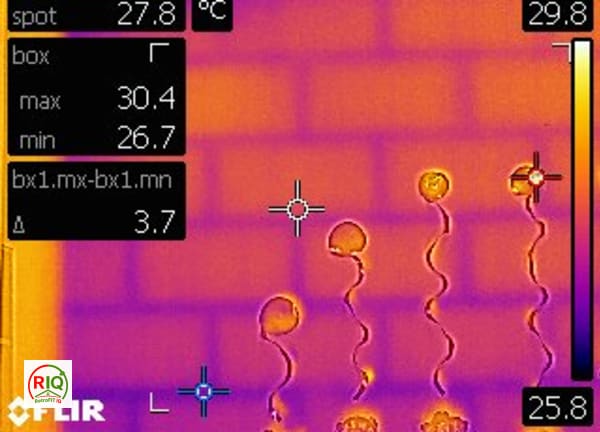
Thermal Bridging Visible Through Masonry Blockwork Wall

Thermal Bridge at Internal Corner Wall Junction

Sample Building Performance Investigation Report — Thermal Imaging

Airtightness Testing in a Stratford Victorian Terrace

Internal door head and reveal next to a framed picture on a warmer external wall

Thermal Bridge at Wall-Ceiling Junction Near Window
No related investigations yet.
Browse all investigationsFrequently asked questions
Why is my internal wall damp?+
Because the source is inside or adjacent, not direct rain. The usual causes are condensation on a cold surface, a plumbing or waste leak, moisture tracking from a wet external wall, chimney or floor, or hygroscopic salts holding moisture from the air. Each needs a different fix, so the cause must be diagnosed before any treatment.
Could it be rising damp?+
Rarely, and on an internal wall a chemical injected course is one of the more common wasted spends. Most internal-wall damp is condensation, a leak or salts. A moisture investigation will show what's actually happening before you pay for a treatment that may not address the cause.
How do I tell if it's a leak?+
A leak usually gives a localised or spreading patch with high moisture at depth, often near pipes, a waste or a bathroom above. Thermal imaging can reveal the cool evaporative plume and where pipes run, helping confirm a hidden leak versus surface condensation.
Why is the damp at my chimney breast?+
Chimney breasts are commonly damp from hygroscopic salts drawn from old soot, or from a flue or roof defect letting water in above — not rising damp. The salts hold moisture from the air, so the patch stays damp; breathable treatment and fixing any defect, not injection, is the usual remedy.
What's the fix?+
It depends entirely on the cause. Condensation needs warmer surfaces and better ventilation; a leak needs repairing; salts need drying and breathable finishes; tracking needs the adjacent source addressed. Diagnosing first means the fix is correct and usually inexpensive.
Stop guessing — find the real cause
Do not spend money fixing symptoms before you understand the cause. Every home behaves differently, and the only reliable way to know what is happening in yours is professional building performance diagnostics. At RetrofitIQ we verify buildings using the right combination of investigations:
- Thermal imaging
- Blower door testing
- Moisture & dew point readings
- Ventilation review
- Building physics assessment
- Passive House methodology