
Why is my bungalow so cold?
Bungalows often feel colder and cost more to heat than two-storey homes of similar floor area, and the main reason is their shape: a single-storey home has a large roof and ground floor spread out over its whole footprint, so it loses a disproportionate amount of heat through the top and bottom of the building. Heat is lost in proportion to surface area, and a bungalow has more roof and floor per square metre of living space than a house. Add the typically large area of external wall and the exposure of a low, spread-out building, and the result is a home that sheds heat quickly. The good news is that the same shape means the roof and floor — the biggest losses — are usually very treatable.
 Reviewed by George Sora, Certified Passive House DesignerUpdated June 2026
Quick answer & key takeaways
9 min read- A bungalow has a large roof and floor area relative to its floor space.
- Heat is lost in proportion to surface area, so the roof and floor lose a lot.
- The whole living area sits under the roof and on the ground floor, unlike a two-storey home.
- The biggest losses — roof and floor — are usually the most treatable.
- Biggest misconception: it's just an old heating system. The shape drives the heat loss.
- Retrofit IQ's approach: measure the losses, then prioritise the roof, floor and airtightness.
What this usually means
A building loses heat through its external surfaces — roof, walls, floor and windows — roughly in proportion to their area, so a home's shape strongly affects how much heat it loses for a given amount of living space. A two-storey house stacks its floor area, so the roof and ground floor each cover only half the footprint of the same area built as a bungalow; a bungalow spreads the whole floor area across one level, so its roof and its ground floor are about twice the area relative to the space inside. Because the roof and floor are major heat-loss paths, a bungalow inherently loses more heat through the top and bottom of the building than a house of the same size — which is the core reason it feels colder and costs more to heat.
Several related factors add to this. A bungalow also tends to have a large area of external wall wrapping its single-storey perimeter, and being low and often detached or exposed, it can be subject to more wind, increasing both heat loss and air infiltration. Older bungalows frequently have thin loft insulation, an uninsulated solid or suspended floor, and significant air leakage through the loft hatch, floor and junctions — so the inherent shape disadvantage is compounded by under-insulation of exactly the elements (roof and floor) that matter most. The combination explains why a bungalow can feel persistently cold and be expensive to run even with the heating working hard.
Encouragingly, the bungalow's shape that causes the problem also makes the solution accessible. Because the roof and floor are the dominant losses and are usually the easiest elements to improve — a loft is readily insulated and air-sealed, and a suspended floor can often be insulated from below or during refurbishment — targeting them delivers a large reduction in heat loss for relatively modest cost. Improving the loft insulation and sealing the loft hatch, insulating the floor, draught-proofing, and then addressing the walls and windows as needed, transforms a cold bungalow. An assessment that measures where the heat actually goes confirms the priorities, so the spend goes first to the roof, floor and airtightness that, in a bungalow, dominate the loss.
Common causes
Large roof area
A bungalow's roof covers the whole footprint, so it loses a lot of heat — but is easy to insulate.
Large ground floor area
The whole floor area sits on the ground, so floor heat loss is proportionally high.
Extensive external walls
A single-storey perimeter wraps a large wall area around the living space.
Exposure and air leakage
A low, spread-out, often detached building catches wind and leaks air through loft, floor and junctions.
Under-insulated roof and floor
Thin loft insulation and uninsulated floors worsen the shape disadvantage.
Signs and symptoms
Cold despite the heating working
Persistent cold with a functioning system points to high fabric heat loss from the shape.
Cold floors and ceilings
Cold underfoot and overhead reflect the large, often under-insulated floor and roof.
High heating bills
Expensive heating for the floor area is typical of a bungalow's high surface losses.
Draughts through loft and floor
Air leakage at the loft hatch, floor and junctions adds to the cold.
Rooms slow to warm and quick to cool
Fast heat loss through roof and floor makes the home hard to keep warm.
What most people check first
- Whether the loft insulation is adequate and the hatch sealed.
- Whether the floor is insulated or losing heat to the ground.
- Whether air leakage through the loft, floor and junctions is high.
- Whether the walls and windows also need attention after the roof and floor.
What most people miss
- That a bungalow's shape makes the roof and floor the dominant losses.
- That those losses are usually the most treatable elements.
- That under-insulation of roof and floor compounds the shape disadvantage.
- That measuring the losses confirms where to spend first.
The building physics
The fabric heat loss of a dwelling is the sum over its external elements of area times U-value times temperature difference, so the ratio of external surface area to enclosed volume — and the distribution of that area — governs how much heat a home loses per unit of living space. A single-storey building has a high proportion of its surface in the roof and ground floor, because the entire floor plan is exposed at top and bottom; built as two storeys, the same floor area halves the roof and ground-floor areas relative to the space. Since roof and floor are significant loss paths, the bungalow's geometry raises its total fabric loss for the same internal area, which is the fundamental reason it is colder and costlier to heat than an equivalent house.
Infiltration and exposure act in the same direction. A low, spread-out, frequently detached building presents a large, exposed envelope and is subject to wind across its whole perimeter, increasing convective loss and driving air leakage through the loft hatch, the suspended or junctioned floor, and the many wall-roof and wall-floor junctions. Where the loft is thinly insulated and the floor uninsulated — common in older bungalows — the elements with the largest areas also have the poorest U-values, so the geometric disadvantage is compounded by the worst-performing surfaces being the most extensive ones. The result is a high heat-loss coefficient and a home that cools quickly once heating stops.
The remedy follows directly from where the area and the losses concentrate. Because the roof and floor dominate and are typically the most accessible to improve — lofts insulate and air-seal readily, and suspended floors can often be insulated from below — addressing them yields the largest reduction in heat loss for the least cost, after which the walls, windows and remaining air leakage are tackled in priority order. A measured assessment — a heat-loss calculation, thermal imaging of the cold surfaces and a blower door test of the leakage — quantifies the contribution of each element and confirms that the roof, floor and airtightness should lead the programme. This fabric-first sequence, matched to the bungalow's geometry, is what turns an inherently heat-losing shape into a genuinely warm, affordable home, rather than running the heating ever harder against the losses.
How to make a cold bungalow warm
Target the roof, floor and airtightness first — the dominant losses in a bungalow and the most treatable — then address the walls and windows, guided by a measurement of where the heat goes.
- 01
Measure the heat loss
Quantify how much heat the roof, floor, walls and air leakage each lose to set priorities.
- 02
Insulate the loft and seal the hatch
Improve the large roof area's insulation and air-seal the hatch, a high-value first step.
- 03
Insulate the floor
Insulate the suspended or solid floor to cut the proportionally large floor loss.
- 04
Draught-proof the building
Seal the air leakage at the loft, floor and junctions that a spread-out bungalow suffers.
- 05
Address walls and windows
Improve the extensive walls and the windows once the roof and floor are done.
- 06
Verify the improvement
Confirm the heat loss has fallen and the bungalow holds its warmth for less heating.
How to prevent it coming back
- Prioritise the roof and floor, where a bungalow loses most heat.
- Keep the loft well insulated and the hatch sealed.
- Insulate the floor and seal the junctions.
- Measure the losses to spend in the right order.
How Retrofit IQ investigates this
We measure where the bungalow loses its heat so the roof, floor and airtightness — its dominant losses — are improved first.
Do not spend money fixing symptoms before you understand the cause — investigate first, then build with confidence.
Do I need a professional investigation?
If a bungalow is persistently cold or expensive to heat, it is worth measuring where the heat actually goes before spending. A heat-loss assessment, thermal imaging and a blower door test confirm that the large roof and floor and the air leakage dominate the loss, so insulation and sealing can be prioritised on the elements that, in a bungalow, deliver the biggest reduction for the least cost.
Where to go next
Relevant services
Related comparisons
From the Academy
Related case studies
Evidence from Real Projects (24)
Real project and investigation images from our own fieldwork, matched to this page — not stock photography.
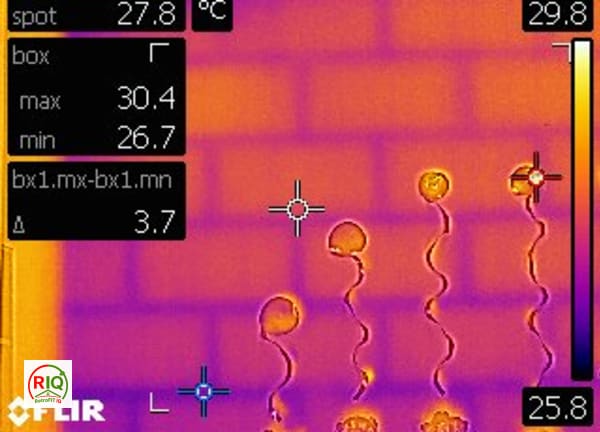
Thermal Bridging Visible Through Masonry Blockwork Wall

Sample Building Performance Investigation Report — Thermal Imaging

Thermal Bridge at Internal Corner Wall Junction
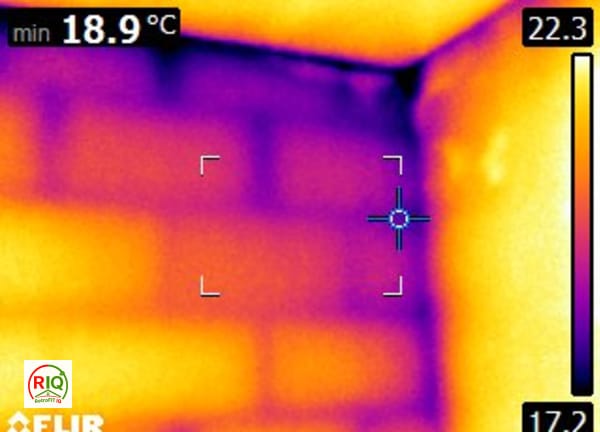
Cold wall surface vs warm ceiling

Thermal Bridge at Wall-Ceiling Junction Near Window
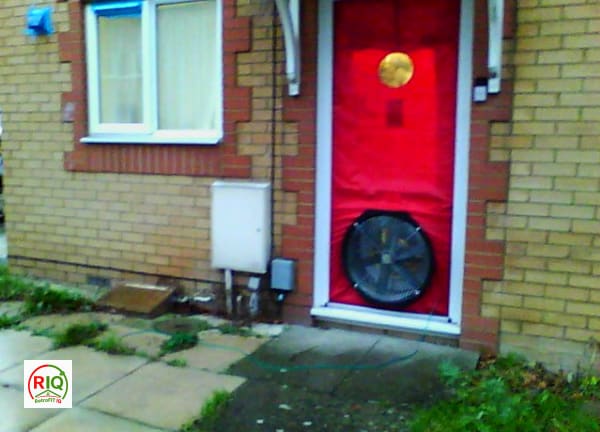
Blower Door Airtightness Test Setup
No related investigations yet.
Browse all investigationsFrequently asked questions
Why is my bungalow so cold?+
Mainly because of its shape. A single-storey home spreads its whole floor area across one level, so its roof and ground floor are about twice the area, relative to the living space, of a two-storey house. Since heat is lost in proportion to surface area and the roof and floor are major loss paths, a bungalow loses more heat through the top and bottom of the building — which makes it colder and costlier to heat.
Is it my heating system or the building?+
Usually the building. A bungalow's geometry gives it a high fabric heat loss, and older ones often have thin loft insulation, an uninsulated floor and significant air leakage — so the home sheds heat faster than the system can comfortably replace it. The shape and the fabric drive the cold more than the heating itself.
What should I insulate first in a bungalow?+
The roof and the floor, because in a bungalow these are the largest surfaces and the dominant heat losses — and they are usually the most accessible to improve. Insulating the loft and sealing the hatch, and insulating the floor, deliver a large reduction in heat loss for relatively modest cost, before tackling the walls and windows.
Why are the floors and ceilings so cold?+
Because in a bungalow the floor and the roof each cover the whole footprint, so a large area of cold floor and ceiling surrounds the living space, especially if they are under-insulated. Insulating the floor and the loft raises those surface temperatures and cuts the heat loss.
Does a bungalow's exposure make it worse?+
Often, yes. A low, spread-out, frequently detached building presents a large envelope and catches wind across its whole perimeter, increasing heat loss and driving air leakage through the loft hatch, floor and junctions. Sealing that leakage is an important part of warming a bungalow.
How do you make a cold bungalow warm?+
We measure where the heat goes with a heat-loss assessment, thermal imaging and a blower door test, then prioritise the roof, floor and airtightness — the dominant, most treatable losses — before the walls and windows, so the spend delivers the biggest reduction and the bungalow holds its warmth for less heating.
Stop guessing — find the real cause
Do not spend money fixing symptoms before you understand the cause. Every home behaves differently, and the only reliable way to know what is happening in yours is professional building performance diagnostics. At RetrofitIQ we verify buildings using the right combination of investigations:
- Thermal imaging
- Blower door testing
- Moisture & dew point readings
- Ventilation review
- Building physics assessment
- Passive House methodology