
The symptoms
- Rooms that never feel warm even with the heating on for hours
- Cold walls and floors that radiate a chill even when the air is warm
- Draughts you can feel near skirtings, windows and doors
- Big swings in temperature between rooms, or between day and night
- Heating bills that keep climbing without the comfort to show for it
The building physics: two things make you feel cold
Feeling cold is about two mechanisms working together. The first is how fast heat leaves the building — fabric heat loss (conduction through walls, roof, floor and windows) plus air leakage (warm air escaping and cold air drawing in). The second is radiant discomfort: how cold the surfaces around you are. You lose heat by radiation to cold surfaces, so a room can have warm air and still feel cold if the walls are chilly.
A solid-wall Victorian terrace can lose 60–70% of its heat through the walls alone, because uninsulated solid brick has a U-value of around 2.0–2.2 W/m²K — roughly four to five times leakier than an insulated wall. In a draughty home, uncontrolled air leakage can rival the loss through the walls. Add a cold suspended timber floor over a ventilated void, and heat is escaping in every direction at once.
The usual culprits, ranked
- Uninsulated or poorly insulated solid walls (typical U-value 2.0–2.2 W/m²K)
- Suspended timber ground floors over a cold, ventilated void
- Air leakage through floor perimeters, loft hatches, chimneys and service holes
- Cold surfaces that pull heat from your body even when the air is warm (radiant chill)
- Heating that is undersized for the real heat loss, or controls that never let rooms recover
Why heating harder rarely works
Turning up the thermostat in a leaky, under-insulated home simply pushes more heat through a building that cannot hold it. The heating runs longer, the bills rise, and the surfaces stay cold because the heat is leaving as fast as it arrives. This is why a cold house is almost always a fabric problem to be solved at the building, not a heating problem to be solved at the boiler.
Common mistakes homeowners make
- Replacing the boiler before reducing the heat loss — a bigger boiler heats a leaky house at higher cost
- Adding insulation to one element (e.g. the loft) while the walls and floors keep losing heat
- Sealing draughts without any ventilation plan, trading cold for condensation
- Buying portable heaters that treat the symptom and add to the bills
- Guessing where heat is escaping instead of measuring it
Where the heat actually goes — a breakdown
It helps to see roughly how a typical un-retrofitted UK home loses its heat, because it explains why fixing one thing rarely solves a cold house. In a solid-wall Victorian or Edwardian property the proportions are commonly something like: walls 30–40% of fabric loss, roof 10–20%, floor 10–15%, windows and doors 10–20% — and then uncontrolled air leakage on top, which in a draughty home can add another 20–30% of total heat loss. The exact split varies hugely from house to house, which is exactly why we measure rather than assume: the biggest single loss in your home might be the walls, or it might be air leakage through the floor and chimney, and the right plan depends on which.
Thermal bridges and the coldest spots
Even where a home has some insulation, heat escapes fastest at thermal bridges — the corners, window reveals, lintels, floor-to-wall junctions and any point where the insulation is interrupted. These run colder than the surrounding surfaces, which is why they feel chilly to the touch and why mould appears there first. A cold house is often a house riddled with thermal bridges, and warming those specific junctions can deliver comfort out of proportion to the area treated.
Why air leakage makes a well-insulated house cold
Homeowners are often baffled that a house with loft and cavity insulation still feels cold. The reason is that insulation slows conductive heat loss but does almost nothing for air leakage. Warm air rising in the house (the stack effect) pulls cold air in low down and pushes warm air out high up, around the clock. As insulation improves, this uncontrolled leakage becomes a proportionally larger share of the heat loss — so a 'well-insulated' but leaky home can remain cold and expensive until the air-sealing is addressed. This is why we always measure airtightness alongside insulation.
What to fix first
Because the causes differ from house to house, the right order of works is something to establish by measurement, not by rule of thumb. That said, a common, cost-effective sequence in older homes is: air-seal the worst leakage paths (often the fastest, cheapest comfort gain); top up and seal the loft; insulate the suspended floor and seal its perimeter; then tackle the walls (the biggest job, usually the biggest single saving). Crucially, every step that tightens the home must be paired with controlled ventilation, or you trade a cold house for a damp one. A measured survey produces this sequence ranked by impact per pound for your specific home.
How RetrofitIQ investigates a cold house
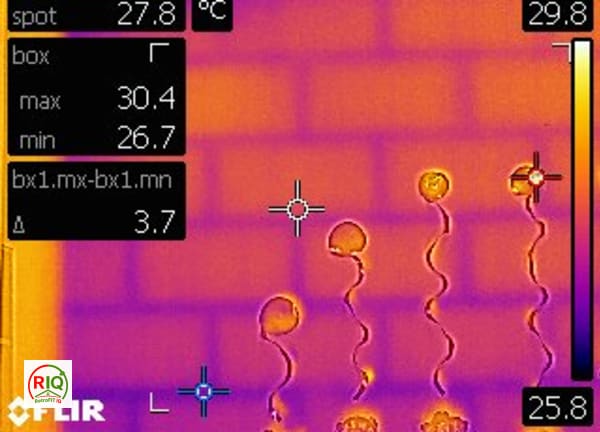
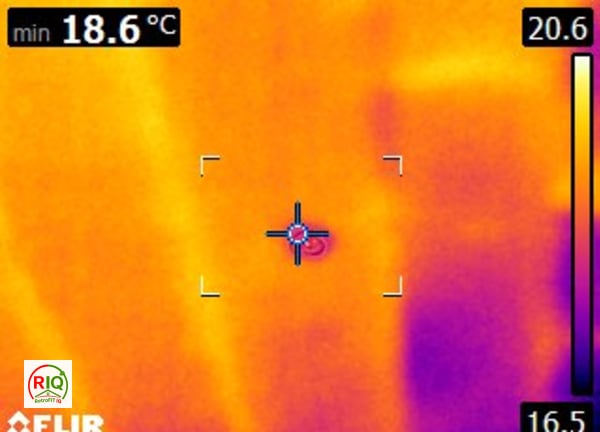
- A FLIR thermal-imaging survey under a 10°C+ temperature difference to map the cold surfaces and missing insulation
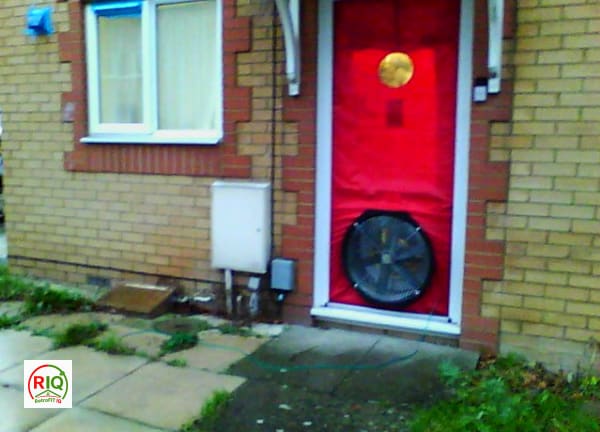
- A blower door test to measure total air leakage (ACH₅₀) and, with smoke tracing, locate every draught path
- Surface-temperature and humidity readings to check which surfaces are uncomfortably cold or at condensation risk
- A whole-house, room-by-room view of where the heat budget is being spent
- A prioritised, fabric-first plan so you spend on the measures that make the biggest difference first