

MVHR & Ventilation in North London
Mechanical Ventilation with Heat Recovery (MVHR) design advice and ventilation strategies to deliver constant fresh air with minimal heat loss. Specialist building-performance diagnostics across North London — N1-N22 · NW (NW1, NW3, NW5, NW11) · EN (Enfield).
What we typically diagnose across North London.
North London's heavyweight Victorian and Edwardian housing stock — from the bay-windowed terraces of Holloway and Finsbury Park through the substantial detached homes of Highgate and Hampstead Garden Suburb to the inter-war semis of Finchley and Barnet — is well-known for cold floors, single-skin extensions and condensation in north-facing rooms. We use FLIR thermal imaging, blower door testing and moisture diagnostics to identify the actual problem before any insulation or remedial work is specified.
- Victorian solid-wall terraces in Islington, Holloway, Archway and Finsbury Park with high heat loss through original brickwork
- Single-storey rear-extension flat roofs in 1930s semis (Finchley, Barnet) with compressed or absent insulation
- North-facing bedrooms and bathrooms in N1, N5, N7 Victorian terraces with chronic winter mould
- Camden conversion flats with inadequate kitchen extract and bathroom ventilation
- Suspended floor perimeters in Holloway, Finsbury Park and Wood Green Victorian terraces
One process — every service is a stage of it.
This is engineering-led work, so our process adds a Predict stage — building-physics modelling, heat-loss and condensation-risk calculation and performance forecasting before anything is built.
The Predict stage is where engineering decisions are made on calculations, not assumptions — see the Building Physics Assessment.
MVHR & Ventilation — in plain English.
Mechanical Ventilation with Heat Recovery (MVHR) constantly extracts moist, stale air from kitchens and bathrooms and supplies filtered fresh air to bedrooms and living rooms — recovering 80–93% of the heat in the process. It's the only ventilation strategy that delivers controlled, balanced fresh air without throwing your heating out of the window.
Why mvhr & ventilation is important.
As homes are made airtight to save energy, ventilation stops being optional and becomes a design discipline in its own right. An airtight building cannot rely on random leaks to clear the moisture, CO₂ and pollutants generated by everyday living, so it needs controlled, balanced ventilation — and MVHR delivers that with 85–95% of the heat recovered. The catch is that MVHR only works when it is properly designed, sized and commissioned for the specific property and its achieved airtightness. 'Build tight, ventilate right' is not a slogan but a building-physics requirement: get either half wrong and comfort, air quality and energy all suffer.
The right time to bring us in.
- On airtight new builds and deep retrofits where opening windows is not enough
- After the envelope has been tightened to roughly 3 ACH₅₀ or better
- When condensation, mould or overnight CO₂ show ventilation is inadequate
- When an existing MVHR specification needs an independent design review
- When filtered fresh air matters — allergies, asthma or a polluted location
The symptoms that bring people to this service.
- 01Airtight new builds and deep retrofits where opening windows isn't enough
- 02Bathrooms with persistent condensation and mould
- 03Bedrooms with CO₂ >1500 ppm overnight (fatigue, poor sleep)
- 04Indoor humidity above 65% RH driving dust mites and mould
- 05Hayfever / asthma sufferers needing filtered fresh air
- 06Properties next to busy roads with poor outdoor air quality
What you tend to notice first.
- An airtight new build or deep retrofit where opening windows is not enough
- Persistent bathroom condensation and mould
- Stuffy bedrooms and overnight CO₂ that disrupts sleep
- Indoor humidity stuck above 65% RH
- Allergy or asthma sufferers needing filtered fresh air
- An MVHR specification from a contractor that needs an independent check
Our diagnostic approach
- 01Whole-house airflow demand calculation per Approved Doc F and PHPP
- 02Duct route planning with thermal-bridge-free penetrations through the envelope
- 03Heat-exchanger sizing, SFP (specific fan power) and acoustic spec
- 04Filter strategy (G4 + F7 / ePM1 50%) for outdoor pollutants
- 05Commissioning and balancing plan (room-by-room flow targets)
What we bring on site
- Anemometer + balometer for room-by-room airflow verification
- CO₂ + humidity logger to verify ventilation performance over time
- Acoustic measurement at supply / extract terminals (Class 1 SLM)
- Smoke pen for air-pattern visualisation
- Manometer for filter pressure drop monitoring
The science behind the diagnosis.
A heat-exchanger places incoming cold fresh air on one side of a thin membrane, and outgoing warm stale air on the other. They never mix — but heat transfers across the membrane, so the fresh air entering your bedrooms is already pre-warmed to within a few degrees of room temperature. The result: continuous fresh air with almost no heating penalty.
Measured benefits — not vague promises.
- Continuous controlled fresh air (every room, every hour)
- 80–93% heat recovery — no heating energy thrown away
- Filtered intake (F7 / ePM1 50%) — pollen, soot, PM2.5 removed
- Bedroom CO₂ stays below 1000 ppm — measurably better sleep
- Indoor humidity controlled to 40–60% RH — condensation eliminated
What we design and deliver next.
Every recommendation follows our methodology — Investigate → Design → Verify — so the diagnosis on this page leads directly into an engineered, buildable and independently verified solution.
- A room-by-room airflow design sized to the building and its airtightness
- Duct routes planned for low pressure loss, low noise and thermal-bridge-free penetrations
- Correct unit, filter and acoustic specification for the property
- An independent design review of an existing MVHR specification
- Commissioning with measured, balanced room-by-room airflows
- Post-installation verification of CO₂, humidity and comfort in real use
What goes wrong on site — and why it matters.
Our diagnoses are grounded in real site experience. These are the workmanship and detailing failures we repeatedly find on this kind of work — the difference between a building that should perform and one that actually does.
Supply and exhaust ducts run bare through a cold loft cause condensation inside the ductwork and throw away much of the heat recovery.
Cheap flexible duct, kinked or run too far, adds resistance and noise and starves rooms of their design airflow.
An MVHR unit left on factory settings rarely delivers the right room-by-room flows — extract and supply must be measured and balanced.
Drawing fresh air in next to the exhaust, a flue or a busy road recirculates the very pollutants the system should keep out.
Sited against a bedroom without acoustic isolation, even a quiet unit becomes a noise complaint.
Services
- Ventilation strategy advice for retrofit and new-build
- MVHR system sizing and design advice
- Airflow calculations per room and overall
- Duct route planning to minimise pressure loss and noise
- Equipment recommendations from reputable manufacturers
- Commissioning and airflow verification
Why MVHR matters
- Constant supply of filtered fresh air
- Up to 90% heat recovery from extract air
- Lower humidity and condensation risk
- Better indoor air quality, especially in airtight homes
What we commonly discover during mvhr & ventilation investigations
- 01Bathrooms with intermittent extract fans delivering <50% of required airflow
- 02Kitchens producing 2–4 kg/day of moisture with no continuous extract
- 03Trickle vents closed or blocked, no continuous fresh-air supply
- 04Airtight retrofits without balanced ventilation — CO₂ regularly >1500 ppm
Findings reflect patterns observed across completed RetrofitIQ projects — every survey is interpreted in the building’s specific context.
MVHR & Ventilation — common questions
What is MVHR and how does it work?+
MVHR (Mechanical Ventilation with Heat Recovery) is a continuously-running balanced ventilation system. It extracts stale moist air from wet rooms (kitchen, bathroom, utility), passes it through a heat exchanger, and uses the recovered heat to warm fresh filtered outdoor air which is then supplied to bedrooms and living rooms. Typical heat recovery efficiency is 85-95%. The two air streams never mix; they only exchange heat across the exchanger membrane.Why is ventilation important alongside airtightness?+
An airtight building cannot 'breathe' through random leaks; without controlled ventilation, indoor moisture (cooking, breathing, showering), CO₂ and pollutants accumulate. Passive House and modern building science treat airtightness + MVHR as inseparable: tighten the envelope to control heat loss, and use mechanical ventilation to deliver the right amount of fresh air with measured heat recovery. 'Build tight, ventilate right.'Can MVHR reduce condensation and mould?+
Yes — substantially. MVHR continuously removes the moisture-laden air from kitchens and bathrooms before the vapour has time to condense on cold surfaces elsewhere in the house. We routinely see indoor RH drop from 70-80% (mould-supporting) down to 45-55% (mould-suppressing) within days of an MVHR system being commissioned. The change is measurable and dramatic.What is the difference between MVHR and a normal extract fan?+
A normal extract fan (bathroom / kitchen) runs intermittently, pulls air out of one room without controlling where the make-up air comes from, and recovers no heat. MVHR is continuous, balanced (supply = extract), filtered, and recovers 85-95% of the heat from the extracted air. Energy use is around 25-45 watts continuous — typically less than an intermittent extract over 24 hours.Does MVHR make sense in an existing house, or only in new builds?+
MVHR is most effective when the building is reasonably airtight (≤3 ACH50). In a leaky Victorian terrace running MVHR is largely throwing heat-recovered warm air out through gaps you have not sealed yet. Our approach is to do the airtightness work first (blower door + sealing), then specify MVHR. Many existing London homes can achieve 3-5 ACH50 with a targeted air-sealing campaign — well within the useful range for MVHR.How is MVHR designed for a specific property?+
Properly designed MVHR requires room-by-room airflow calculations based on the building volume, occupancy, room use (extract from wet rooms, supply to habitable rooms), pressure-drop modelling of the duct route, and acoustic checks. We use PHPP or equivalent software to size the unit, the ducts and the diffusers. Off-the-shelf 'one size' MVHR units installed without design routinely under-perform.What is an MVHR design review?+
A design review is an independent check of an MVHR specification produced by a contractor or designer. We review the airflow calculations, the duct route, the unit selection, the filter spec, the acoustic implications and the commissioning protocol — and produce a written report identifying any building-physics or specification issues before money is spent. This is one of our most popular services with London architects.Where should an MVHR unit be located?+
Ideally inside the thermal envelope (in a service cupboard, plant room or warm loft), as close as practical to the centre of the duct routes to minimise pressure drop. The unit itself produces some noise (typically 25-35 dB at 1 m), so siting away from bedrooms and against an acoustic-mass wall is essential. Outdoor air intake should be at least 2 m away from any extract terminal and clear of pollution sources (roads, flue outlets).What filters should an MVHR system have?+
G4 (coarse) on the extract side; F7 / ePM₁ 50% on the supply side as standard. For London properties near busy roads or polluted areas, ePM₁ 80% or HEPA upgrade filters are an option. Filter changes are typically twice a year. We always size the unit assuming the filters are loaded with London dirt — not factory-new — so airflow performance is real.Can MVHR ducts be retrofitted into an existing house?+
Yes, but it requires planning. Ducts can be routed through service voids, lowered ceilings, dropped sections of plasterboard, ex-chimney stacks and surface-mounted boxing. Semi-rigid 75 mm ducts are particularly useful for retrofit. We work with the architect and the contractor to find a route that works for the floorplan; sometimes the duct route is a deciding factor in the wider refurbishment scheme.What is the difference between MVHR and PIV?+
MVHR is *balanced* (supply = extract) with heat recovery. Positive Input Ventilation (PIV) is a *supply-only* system that pushes filtered outdoor air into the property and forces stale air out through random leaks — no heat recovery, no controlled extract. PIV is cheaper and suits leaky houses where MVHR cannot be sealed for; MVHR delivers far better comfort, IAQ and energy performance in any building that can be made reasonably airtight.Can MVHR improve indoor air quality (IAQ)?+
Yes — significantly. Continuously filtered fresh air dilutes indoor CO₂ (typical levels drop from 1,200-1,800 ppm down to 600-900 ppm), removes cooking pollutants, formaldehyde, VOCs and PM2.5, and stabilises indoor humidity. Many of our IAQ-focused clients (asthma sufferers, allergy sufferers, families with infants) find the difference in sleep quality and respiratory comfort immediately noticeable.Is MVHR noisy?+
Properly designed and installed MVHR is essentially inaudible — typical room noise is 18-25 dB(A) at the diffuser, well below the threshold of conscious notice in a normal occupied room. Noise problems we encounter on poorly designed systems are almost always (a) over-sized airflow (b) undersized ducts (c) hard-edged diffusers (d) the unit mounted next to a bedroom. All four are design failures, not inherent to MVHR.Does MVHR replace the need to open windows?+
It removes the *need* to open windows for ventilation — but you can of course still open them when you want. MVHR delivers measured, filtered, heat-recovered fresh air continuously, 24/7, regardless of weather. Windows opened in winter dump heat (no recovery), in summer admit unfiltered outdoor pollutants, and at night admit noise. MVHR gives you the option to open windows for pleasure, not necessity.Do you commission and verify MVHR systems after installation?+
Yes — and we strongly recommend this whether or not we did the design. Commissioning involves measured room-by-room airflow verification using calibrated balometers, pressure-drop checks, supply/extract balance adjustment, filter installation, acoustic testing at diffusers and CO₂/humidity logging over 1-2 weeks to confirm real-world performance. Without commissioning data, you have no evidence the system actually works.Do you offer MVHR design and review for London architects?+
Yes — we work regularly with London-based architects and design teams on both new-build and EnerPHit retrofit projects. Services include initial MVHR strategy advice, full PHPP-modelled design, design-review of contractor specifications, on-site commissioning and post-occupancy IAQ verification. We are happy to work directly to the architect's brief.
Weighing this up against the alternatives?
Independent, building-physics-led comparisons from our knowledge base — written to help you understand the difference before you decide which survey or approach you actually need.
- Blower Door vs Smoke Testing for Air LeakageBlower Door & Airtightness
- Condensation vs Penetrating Damp vs Rising DampDamp & Moisture
- MVHR vs PIV (Positive Input Ventilation)Ventilation & Indoor Air Quality
- Thermal Imaging vs a Damp SurveyThermal Imaging
Common problems we diagnose
The symptoms that most often lead homeowners to a mvhr & ventilation. Each guide explains the building physics behind the problem — and how we diagnose the real cause before any work begins.
- Why is my bedroom always cold?
- Why is the room above my garage always cold?
- Why is my kitchen or bathroom so cold?
- Why is my hallway and stairs so cold?
- Why do I have condensation on my windows?
- Why are my windows wet in the morning?
Part of one connected building-performance journey.
Every Retrofit IQ service is one stage of a single methodology — Investigate → Design → Verify. Explore how this service connects to the wider network of diagnostics, engineering and quality assurance.
The engineering and quality-assurance services that most often follow this one.
One company. One process. One point of responsibility.
We don’t simply identify problems. We investigate, diagnose, design solutions, carry out the work and verify the results. Book a Home Health Diagnostic Survey and we’ll tell you exactly which remedial works (if any) are actually needed.
Commission a Retrofit IQ Building Physics Assessment
After this investigation, you can commission a Building Physics Assessment for an advanced engineering analysis. A standard survey identifies the problems; this uses advanced building physics modelling to predict how your building is expected to perform after the proposed upgrade — before any work begins.
Most contractors recommend insulation. Retrofit IQ predicts how your building is expected to perform first.
Investigate → Diagnose → Design → Remediate → Verify
RetrofitIQ is not only a diagnostics company. We take projects from first investigation through to verified improvement — and you decide how far we go. Engage us for an investigation on its own, an investigation plus targeted remedial works, or a complete building-performance and retrofit project.
A measured diagnosis — thermal imaging, blower door testing, moisture and building-physics analysis — with a clear, costed report you can act on however you choose.
We investigate, then carry out targeted remedial works — airtightness, insulation, ventilation or thermal-bridge corrections — and verify the result.
A full fabric-first, Passive House-informed retrofit from diagnosis through design, installation and verification — one accountable team, one point of responsibility.
- Airtightness improvements & draught-proofing
- Internal wall insulation (IWI)
- External wall insulation (EWI)
- Loft & roof insulation
- Suspended floor & underfloor insulation
- Thermal-bridge detailing & correction
- Extract ventilation & MVHR installation
- Soundproofing & acoustic upgrades
- General building-fabric improvements
Evidence from Real Projects (8)
Real project and investigation images from our own fieldwork, matched to this page — not stock photography.
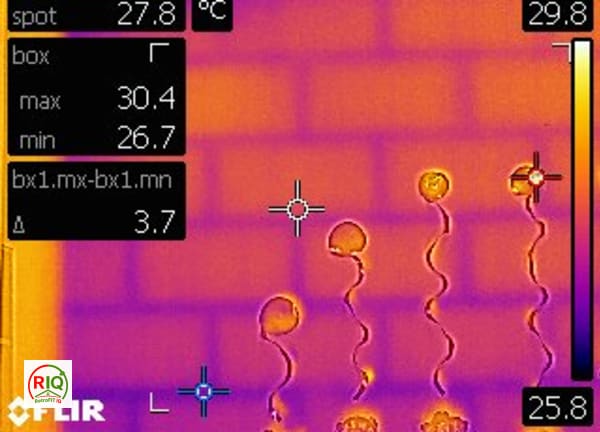
Thermal Bridging Visible Through Masonry Blockwork Wall
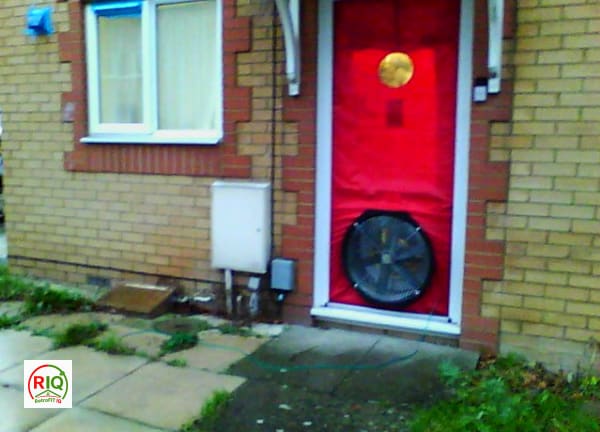
Blower Door Airtightness Test Setup

Sample Building Performance Investigation Report — Thermal Imaging

Thermal Bridge at Wall-Ceiling Junction Near Window

Thermal Bridge at Internal Corner Wall Junction

Acoustic Floor Upgrades: Mineral Wool Insulation Between Joists
No related investigations yet.
Browse all investigationsMVHR & Ventilation across London & the surrounding areas.
Explore building performance diagnostics, damp and condensation investigations, airtightness testing and retrofit advice in your area. We cover London, Greater London, East London, Essex, Kent, Surrey, Hertfordshire and the surrounding counties.