
Why is there mould around my windows?
Mould around windows is almost always caused by condensation: the glass, frames and reveals are the coldest surfaces in the room, so moist indoor air condenses on them, the water runs down onto the sills, frames and surrounding plaster, and those repeatedly damp surfaces grow mould. The reveals and corners around the window are particularly prone because they are colder still and often poorly ventilated behind blinds and curtains. It is a cold-surface and humidity problem, fixed by warming the surfaces and managing moisture, not by cleaning alone.
 Reviewed by George Sora, Certified Passive House DesignerUpdated July 2026
Quick answer & key takeaways
7 min read- Windows, frames and reveals are the coldest surfaces, so condensation forms there first.
- Condensation runs down onto sills, frames and reveals, keeping them damp.
- Repeatedly damp window surrounds grow mould, especially in cold reveals and corners.
- Warming the surfaces and reducing humidity stops it; cleaning alone does not.
- Biggest misconception: it's the window leaking. It's usually condensation on cold surfaces.
- Retrofit IQ's approach: warm the cold reveals and frames, ventilate, and improve the glazing.
What this usually means
A window is typically the coldest part of a room's surface: the glass, the frame and especially the reveals (the sides of the opening) and the sill run colder than the surrounding walls. So when warm, moist indoor air reaches them, it condenses there first — which is why windows mist up and water collects on the frames and sills. That water then keeps the frames, sills and the plaster of the reveals repeatedly damp, and those persistently moist surfaces are exactly what mould needs to grow, producing the black mould commonly seen around window edges, in the corners and on the sealant.
The reveals and corners are the worst-affected because they are colder and less ventilated. The reveal is a thinner, more exposed piece of wall, often with a thermal bridge around the window, so it runs colder than the main wall; and the corners and the area behind curtains, blinds and on the sill behind objects get little air movement, so any moisture lingers. The combination of a cold surface and stagnant, humid air in these spots makes them prime sites for mould, even when the main walls are clear.
Because it is condensation-driven, the fix is to address the cold surfaces and the humidity, not just to clean the mould. Warming the reveals and frames — treating the thermal bridge around the window, improving the glazing so the inner surfaces are warmer — raises them above the dew point; reducing indoor humidity and improving ventilation removes the moist air; and allowing air to circulate around the window (not trapping it behind heavy curtains or objects on the sill) helps the surfaces stay dry. Cleaning the mould deals with the symptom, but unless the window surrounds stop being repeatedly damp, it returns — which is why diagnosing the cold-surface and ventilation cause matters.
Common causes
Cold glass, frames and reveals
Windows are the coldest surfaces, so condensation forms on them before the warmer walls.
Condensation running onto surrounds
Water from the glass collects on sills, frames and reveals, keeping them damp.
Thermal bridge at the reveal
The reveal around the window runs colder than the wall, encouraging condensation and mould.
Stagnant air behind curtains and on sills
Little air movement around the window lets moisture linger on the surrounds.
High indoor humidity
Moist indoor air provides the moisture that condenses on the cold window surfaces.
Signs and symptoms
Black mould on frames and reveals
Mould around the window edges and reveals reflects repeatedly damp, cold surfaces.
Condensation on the glass
Misted glass and water on the sills show the condensation that feeds the mould.
Mould worst in the corners
Mould concentrating in the reveal corners indicates the coldest, least ventilated spots.
Damp behind curtains or blinds
Moisture and mould behind window coverings reveal stagnant, humid air at the cold surface.
Mould returning after cleaning
Mould regrowing on the surrounds shows the cold-surface and humidity cause remains.
What most people check first
- Whether the mould follows the cold glass, frames and reveals.
- Whether there is a thermal bridge keeping the reveal cold.
- Whether curtains, blinds or sill objects trap stagnant humid air.
- Whether indoor humidity and ventilation are feeding the condensation.
What most people miss
- That window mould is condensation on cold surfaces, not usually a leak.
- That the reveals are colder and less ventilated, so mould concentrates there.
- That warming the surfaces and ventilating is the fix, not cleaning alone.
- That trapping air behind curtains worsens it.
The building physics
The inner surfaces of a window — glass, frame and reveal — have lower temperatures than the surrounding wall because the glazing has a higher U-value and the reveal is a geometric thermal bridge where the wall thins around the opening and heat paths concentrate. Condensation forms wherever a surface falls below the dew point of the adjacent air, so these coldest surfaces reach the dew point first and collect moisture, which drains onto the frames and sills. The reveal corners are coldest of all, combining the bridge with two-dimensional heat loss, so they are the most condensation-prone points.
Mould then colonises the repeatedly damp surrounds. The frames, sills and reveal plaster, kept moist by the draining condensation and by stagnant humid air trapped behind curtains, blinds and objects, sustain the high surface humidity mould requires. Air movement is part of the equation: where curtains or sill clutter prevent room air from washing over the surface, local humidity stays high and the surface stays damp longer, which is why mould often appears behind window coverings and in the still corners even when the open wall is clear.
The remedies follow from raising surface temperature and lowering surface humidity. Improving the glazing raises the inner-pane temperature; insulating and treating the thermal bridge at the reveal raises the surround temperature; and these together lift the cold surfaces above the dew point so condensation does not form. Reducing indoor humidity through ventilation lowers the dew point, and allowing air to circulate around the window keeps the surfaces dry. Cleaning addresses only the existing growth; without warming the surfaces and managing the moisture, the surrounds remain damp and the mould recurs. A diagnosis of the surface temperatures, humidity and ventilation around the window identifies which measures will keep it dry.
How to stop mould around windows
Warm the cold window surfaces and reduce the humidity: treat the reveal thermal bridge, improve the glazing, ventilate, and let air circulate around the window.
- 01
Clean the existing mould safely
Remove the mould from frames and reveals to cut immediate exposure.
- 02
Warm the reveals
Insulate and treat the thermal bridge around the window so the reveals stay above the dew point.
- 03
Improve the glazing
Upgrade cold glazing so the inner surfaces are warmer and condense less.
- 04
Reduce indoor humidity
Ventilate to remove moist air so less condenses on the cold window surfaces.
- 05
Let air circulate around the window
Avoid trapping humid air behind heavy curtains or sill clutter so the surfaces stay dry.
- 06
Verify the surrounds stay dry
Confirm the frames and reveals no longer condense and the mould does not return.
How to prevent it coming back
- Warm the window reveals and improve the glazing.
- Ventilate to keep indoor humidity down.
- Let air circulate around windows rather than trapping it behind curtains.
- Address the condensation, not just the visible mould.
How Retrofit IQ investigates this
We confirm the condensation cause around the window and identify how to warm the surfaces and manage the moisture.
Do not spend money fixing symptoms before you understand the cause — investigate first, then build with confidence.
Do I need a professional investigation?
Recurring mould around windows is worth investigating as a cold-surface and condensation problem, especially where the reveals and corners are affected. Identifying the thermal bridge, the humidity and the ventilation around the window ensures the surfaces are warmed and the moisture managed, so the surrounds stay dry and the mould cannot return.
Where to go next
Relevant services
Related comparisons
From the Academy
Related case studies
Evidence from Real Projects (14)
Real project and investigation images from our own fieldwork, matched to this page — not stock photography.

Thermal Bridge at Wall-Ceiling Junction Near Window
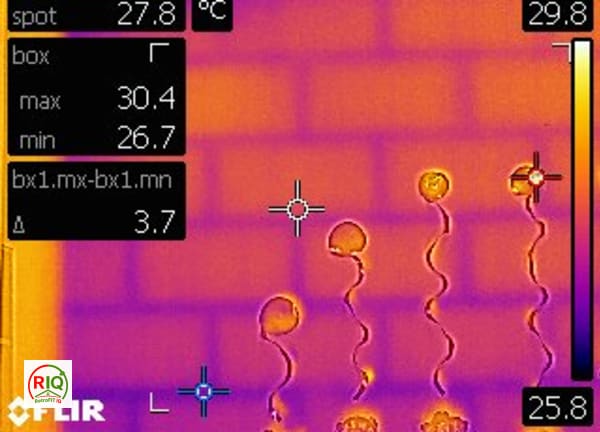
Thermal Bridging Visible Through Masonry Blockwork Wall

Sample Building Performance Investigation Report — Thermal Imaging

Thermal Bridge at Internal Corner Wall Junction

Airtightness Testing in a Stratford Victorian Terrace

Bathroom external wall
No related investigations yet.
Browse all investigationsFrequently asked questions
Why is there mould around my windows?+
Almost always because of condensation: the glass, frames and reveals are the coldest surfaces in the room, so moist indoor air condenses there, the water runs onto the sills and reveals, and those repeatedly damp surfaces grow mould — especially in the colder, less ventilated reveal corners.
Is it the window leaking?+
Usually not — it's condensation on the cold window surfaces rather than rain getting in. A leak follows rainfall and enters from outside; condensation mould follows the cold glass and reveals and is driven by indoor humidity. Diagnosis confirms which it is.
Why is the mould worst in the corners of the reveal?+
Because the reveal corners are the coldest points — combining the thermal bridge around the window with two-dimensional heat loss — and often the least ventilated, so condensation forms and lingers there before anywhere else.
Will cleaning the mould stop it coming back?+
Only temporarily. Cleaning removes the visible mould, but the surrounds are still cold and damp, so it returns. Warming the surfaces, improving the glazing and ventilating to lower humidity is what stops it for good.
Does mould grow behind my curtains?+
Often, yes — curtains and blinds trap still, humid air against the cold window surfaces, so the reveals and sill behind them stay damp longer and grow mould. Letting air circulate around the window helps keep them dry.
Will new windows fix mould around the windows?+
Better glazing warms the inner surfaces and reduces condensation, which helps — but if the reveals remain cold thermal bridges and humidity stays high, mould can persist on the surrounds, so the reveals and ventilation must be addressed too.
How do you stop mould around windows?+
We confirm it is condensation, map the cold glass and reveals with thermal imaging, check the humidity and ventilation, and specify warming the reveals, improving the glazing and ventilating so the surrounds stay dry and the mould cannot return.
Stop guessing — find the real cause
Do not spend money fixing symptoms before you understand the cause. Every home behaves differently, and the only reliable way to know what is happening in yours is professional building performance diagnostics. At RetrofitIQ we verify buildings using the right combination of investigations:
- Thermal imaging
- Blower door testing
- Moisture & dew point readings
- Ventilation review
- Building physics assessment
- Passive House methodology