
Why is my upstairs too hot and downstairs too cold?
An upstairs that is too warm while the downstairs stays cold is a common pattern, and it usually comes from a combination of three things: warm air naturally rising through the house, a heating system that is not balanced so it over-heats some rooms and under-heats others, and the downstairs losing more heat than the upstairs through its floor, walls and draughts. Heat rises, so without good control the upper floor tends to gather warmth while the ground floor — which sits on the cold ground and often leaks more air — struggles. The good news is that each cause is addressable: balancing the system, reducing downstairs heat loss, and controlling the stack effect all even out the temperatures.
 Reviewed by George Sora, Certified Passive House DesignerUpdated June 2026
Quick answer & key takeaways
8 min read- Warm air rises, so the upper floor naturally gathers heat the downstairs loses.
- An unbalanced heating system over-heats some rooms and under-heats others.
- Downstairs often loses more heat through the floor, walls and draughts.
- The stack effect draws warm air up and cold air in at low level.
- Biggest misconception: it's just how houses are. Balancing and fabric fixes even it out.
- Retrofit IQ's approach: balance the system, cut downstairs heat loss, and control the stack effect.
What this usually means
Three mechanisms combine to make the upstairs hot and the downstairs cold. First, warm air is buoyant and rises, so heat generated anywhere in the house tends to migrate upward and collect on the upper floor, while the ground floor is left cooler — a tendency in every house that becomes a noticeable imbalance when the other factors are present. Second, the heating system may be unbalanced: if the radiators are not adjusted so each delivers the heat its room needs, those nearest the boiler or on the upper floor can run hot while distant or downstairs radiators barely warm, exaggerating the difference. Third, the downstairs typically loses more heat — it sits on the cold ground, often has more external wall and door exposure, and is where draughts enter at low level.
The stack effect ties these together. A house behaves like a chimney: warm air rises and escapes through gaps high up (the loft hatch, upper-floor leaks), drawing cold air in through gaps low down (doors, floors, the ground-floor fabric). This both carries the warmth upward, adding to the upstairs heat, and pulls cold air into the downstairs, adding to the ground-floor cold — so a leaky house with significant air leakage top and bottom will show the imbalance strongly. The cold downstairs is therefore partly heat loss and partly cold air being drawn in by the warm air leaving above.
Because the causes are identifiable, the imbalance can be corrected rather than tolerated. Balancing the heating system — adjusting the radiators so each room receives the heat it needs for its heat loss, often with thermostatic controls — stops some rooms being over-served and others starved. Reducing the downstairs heat loss by insulating the floor, addressing cold walls and draught-proofing brings the ground floor up. And sealing the air leakage high and low reduces the stack effect that both over-warms the top and chills the bottom. An assessment that establishes how much each factor contributes — the system balance, the downstairs heat loss and the air leakage — lets the fixes be targeted, so the house heats evenly instead of being uncomfortable on both floors at once.
Common causes
Heat rising
Warm air is buoyant and collects upstairs, leaving the ground floor cooler.
Unbalanced heating system
Radiators not adjusted to each room's need over-heat some and starve others.
Higher downstairs heat loss
The ground floor loses more heat through the cold floor, walls and doors.
Stack effect
Warm air escaping high draws cold air in low, warming upstairs and chilling downstairs.
Poor controls
Lack of thermostatic control lets the upper floor overheat while the lower stays cold.
Signs and symptoms
Bedrooms hot, living room cold
A warm upper floor and cold ground floor is the classic stratification pattern.
Upstairs radiators scalding, downstairs lukewarm
Uneven radiator output points to an unbalanced system.
Cold floor and draughts downstairs
A cold ground floor with draughts indicates heat loss and the stack effect.
Warmth concentrated near the stairs
Heat rising up the stairwell shows the buoyancy effect at work.
Worse on windy or cold days
A stronger imbalance in cold, windy weather reflects the stack effect and downstairs loss.
What most people check first
- Whether the heating system is balanced across the radiators.
- Whether the downstairs loses more heat through floor, walls and draughts.
- Whether air leakage high and low is driving the stack effect.
- Whether the controls allow each floor to be regulated.
What most people miss
- That an unbalanced system exaggerates the natural rise of heat.
- That downstairs heat loss is often the bigger half of the problem.
- That the stack effect both over-warms the top and chills the bottom.
- That balancing and fabric fixes together even the house out.
The building physics
Temperature stratification between floors arises from buoyancy, heat-loss distribution and air movement acting together. Warm air is less dense and rises, so in a multi-storey space heat migrates upward and the upper floor tends to a higher temperature than the lower — a baseline tendency that the heating distribution and the fabric either moderate or amplify. A hydronic heating system delivers heat to each radiator according to the flow it receives; if the system is not balanced, flow and therefore output are unevenly distributed, so some radiators (often upstairs or near the boiler) over-supply their rooms while others under-supply, superimposing a system imbalance on the natural stratification.
The downstairs generally has the higher heat loss, which deepens the imbalance. The ground floor loses heat to the cold ground through its floor, frequently has greater external wall and opening exposure, and is where the stack effect draws in cold infiltration at low level. The stack effect itself is a buoyancy-driven flow: warm internal air escapes through high-level leakage (loft hatch, upper-storey gaps), creating a pressure difference that pulls cold external air in through low-level leakage (doors, floor and ground-floor junctions). This simultaneously transports heat to the upper floor and introduces cold air to the lower, so a leaky envelope with leakage paths top and bottom produces a pronounced hot-upstairs, cold-downstairs pattern that worsens in cold, windy conditions.
Correcting the imbalance therefore addresses all three terms. Balancing the heating system — regulating the flow to each radiator so output matches each room's heat loss, with thermostatic control — removes the system-induced unevenness; reducing the downstairs heat loss through floor insulation, wall improvement and draught-proofing raises the ground-floor temperature; and sealing the high- and low-level leakage suppresses the stack effect that both over-warms the top and chills the bottom. A diagnostic that quantifies the radiator balance, the downstairs heat loss with thermal imaging, and the air leakage with a blower door test apportions the imbalance among these causes, so the interventions are targeted and the house heats evenly — rather than the occupant opening upstairs windows while the downstairs heating runs flat out.
How to even out a hot upstairs and cold downstairs
Balance the heating system, reduce the downstairs heat loss, and seal the leakage that drives the stack effect — guided by how much each contributes.
- 01
Balance the heating system
Adjust the radiators so each delivers the heat its room needs, with thermostatic controls.
- 02
Measure the downstairs heat loss
Establish how much the ground floor loses through the floor, walls and draughts.
- 03
Insulate and draught-proof downstairs
Reduce the floor, wall and air-leakage losses bringing the ground floor up.
- 04
Seal high- and low-level leakage
Close the loft-hatch and upper leaks and the low-level gaps to suppress the stack effect.
- 05
Control each floor
Use zoning or thermostatic controls so the upper floor does not overheat.
- 06
Verify the balance
Confirm the floors reach similar comfortable temperatures.
How to prevent it coming back
- Keep the heating system balanced and thermostatically controlled.
- Reduce downstairs heat loss with floor, wall and draught measures.
- Seal leakage top and bottom to limit the stack effect.
- Diagnose the contributions before adjusting.
How Retrofit IQ investigates this
We apportion the imbalance among the heating balance, the downstairs heat loss and the stack effect, so the fix is targeted.
Do not spend money fixing symptoms before you understand the cause — investigate first, then build with confidence.
Do I need a professional investigation?
If your upstairs overheats while the downstairs stays cold, it is worth establishing how much the system balance, the downstairs heat loss and the air leakage each contribute before adjusting. Measuring the radiator balance, the ground-floor heat loss and the leakage lets the right combination of balancing, insulation and sealing be applied, so the house heats evenly rather than being uncomfortable on both floors.
Where to go next
Relevant services
From the Academy
Related case studies
Related problems you may also have
Evidence from Real Projects (22)
Real project and investigation images from our own fieldwork, matched to this page — not stock photography.
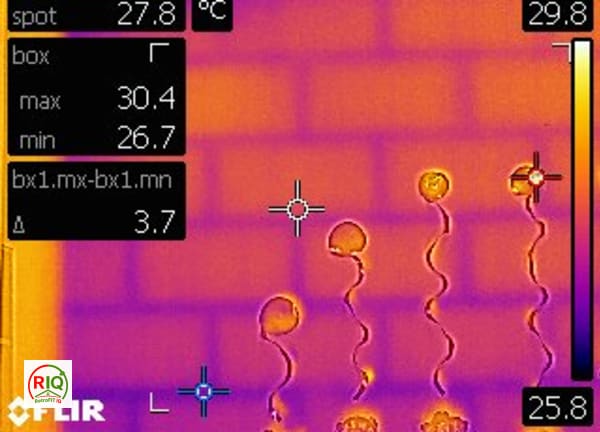
Thermal Bridging Visible Through Masonry Blockwork Wall

Sample Building Performance Investigation Report — Thermal Imaging
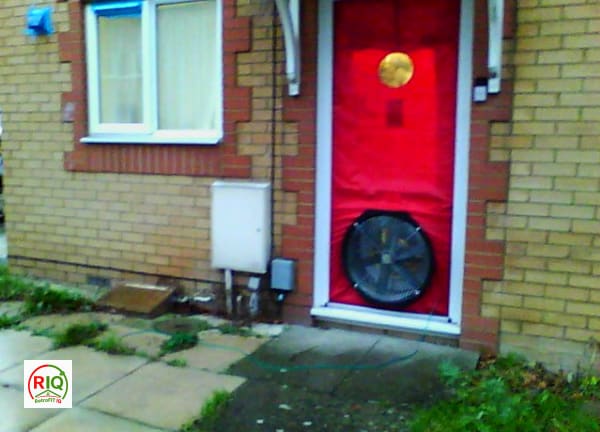
Blower Door Airtightness Test Setup

Thermal Bridge at Wall-Ceiling Junction Near Window

Thermal Bridge at Internal Corner Wall Junction
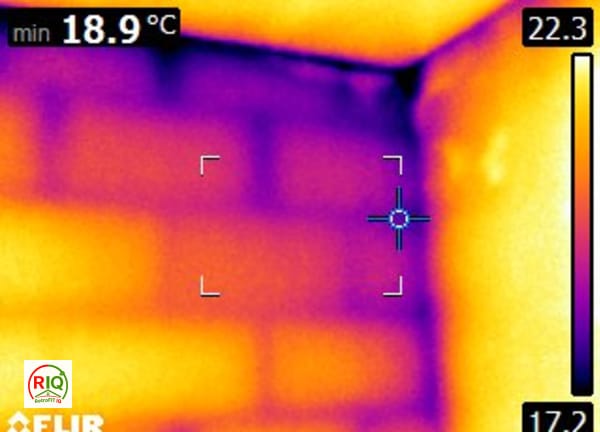
Cold wall surface vs warm ceiling
No related investigations yet.
Browse all investigationsFrequently asked questions
Why is my upstairs too hot and downstairs too cold?+
Usually a combination of three things: warm air naturally rising and collecting upstairs, a heating system that is not balanced so it over-heats some rooms and starves others, and the downstairs losing more heat through its cold floor, walls and draughts. The stack effect ties these together by carrying warmth up and drawing cold air in low down.
Is it just because heat rises?+
Heat rising is part of it, but on its own it would not cause a big imbalance. It becomes pronounced when combined with an unbalanced heating system and higher downstairs heat loss, and when the stack effect in a leaky house both pushes warmth up and pulls cold air into the ground floor.
What does balancing the heating do?+
Balancing adjusts the flow to each radiator so every room receives the heat it needs for its heat loss, rather than some radiators running hot while others stay lukewarm. It stops the upper floor being over-served while the downstairs is starved, which is a major part of evening out the temperatures.
Why is the downstairs colder?+
Because the ground floor usually loses more heat — it sits on the cold ground, often has more external wall and door exposure, and is where the stack effect draws cold air in at low level. Insulating the floor, addressing cold walls and draught-proofing brings the downstairs up.
What is the stack effect?+
It is the chimney-like flow in a house: warm air rises and escapes through high-level gaps such as the loft hatch, drawing cold air in through low-level gaps such as doors and the ground floor. It both adds to the upstairs warmth and chills the downstairs, and it is worse in cold, windy weather and leaky homes.
How do you fix the imbalance?+
We measure how much the system balance, the downstairs heat loss and the air leakage each contribute, then balance the radiators and controls, reduce the ground-floor heat loss with insulation and draught-proofing, and seal the leakage top and bottom to suppress the stack effect — so the house heats evenly.
Stop guessing — find the real cause
Do not spend money fixing symptoms before you understand the cause. Every home behaves differently, and the only reliable way to know what is happening in yours is professional building performance diagnostics. At RetrofitIQ we verify buildings using the right combination of investigations:
- Thermal imaging
- Blower door testing
- Moisture & dew point readings
- Ventilation review
- Building physics assessment
- Passive House methodology