
Should I replace my radiators with bigger ones?
Replacing radiators with bigger ones can be exactly the right move — or money spent on the wrong thing — depending on why the room is cold. A radiator that is genuinely too small for a room's heat loss cannot keep it warm, and a larger one will help; bigger radiators are also essential if you run, or plan to run, your heating at a lower flow temperature, as with a heat pump, because each radiator gives out less heat when the water is cooler. But if the room is cold because it loses heat too fast through poor insulation and draughts, a bigger radiator just burns more fuel to keep up. The right answer comes from knowing the room's heat loss and the flow temperature, not from guessing.
 Reviewed by George Sora, Certified Passive House DesignerUpdated June 2026
Quick answer & key takeaways
9 min read- A radiator too small for the room's heat loss cannot keep it warm — a bigger one helps.
- Lower flow temperatures (and heat pumps) need bigger radiators to give out the same heat.
- If the room loses heat too fast, a bigger radiator just uses more fuel to compensate.
- Radiator size should follow the room's heat loss and the flow temperature.
- Biggest misconception: a bigger radiator always fixes a cold room. Sometimes the fabric is the problem.
- Retrofit IQ's approach: size from the room's heat loss and flow temperature, and fix the fabric where needed.
What this usually means
A radiator's job is to give out as much heat as a room loses, so the room holds its temperature. How much heat a radiator gives out depends on its size and on how much hotter it is than the room — so a radiator that is undersized for the room's heat loss simply cannot deliver enough heat, and the room stays cool however long the heating runs. In that case a bigger radiator is the correct fix. But a radiator that is adequately sized for the room will not make a cold room warmer by being replaced with a larger one if the real problem is that the room loses heat too quickly; it will just consume more fuel maintaining the temperature against the losses.
Flow temperature changes the picture significantly, and this is where radiator sizing has become a live question for many homeowners. The output of a radiator falls as the water flowing through it gets cooler, because the difference between the radiator and the room shrinks. A conventional gas boiler runs the water hot, so modest radiators can deliver plenty of heat; but running the system cooler — to improve boiler efficiency, or because you are moving to a heat pump, which is only efficient at low flow temperatures — means each radiator gives out much less, so the radiators usually need to be larger to deliver the same heat at the lower temperature. Undersized radiators are one of the main reasons a heat pump or a low-temperature system leaves rooms cold.
So whether to fit bigger radiators depends on two things: the room's actual heat loss, and the flow temperature you run (or intend to run) at. A room-by-room heat loss calculation gives the heat each room needs, and the chosen flow temperature gives the output each radiator can deliver per unit size — together they tell you the correct radiator size for every room. If that shows the radiators are genuinely undersized, replacing them is right; if the room's heat loss is simply too high, reducing that loss with insulation and draught-proofing is the better-value step, sometimes alongside modest radiator changes. An assessment that establishes the heat loss and the flow-temperature strategy ensures the radiators are sized to actually keep the rooms warm — efficiently — rather than oversized by guess or left too small for a low-temperature system.
Common causes
Radiator undersized for the room
A radiator too small for the heat loss cannot deliver enough heat to warm the room.
Low flow temperature
Cooler water means each radiator gives out less, so larger radiators are needed.
Heat pump operation
Heat pumps run at low flow temperatures, requiring bigger emitters to keep rooms warm.
High room heat loss
A room losing heat fast stays cold even with a big radiator — the fabric is the issue.
Unbalanced or poorly performing system
Balancing and flow issues can leave a radiator under-performing regardless of size.
Signs and symptoms
Room never reaches temperature
A room that cannot get warm may have a radiator too small for its heat loss.
Cold since lowering the flow temperature
Rooms cooling after turning the boiler down show radiators undersized for low temperatures.
Cold with a heat pump
A heat pump leaving rooms cold often means the radiators are too small for low-temperature heat.
Radiator hot but room still cold
A hot radiator that cannot warm the room indicates high heat loss, not radiator size.
Some rooms fine, others not
Uneven warmth can reflect mis-sized radiators or a system needing balancing.
What most people check first
- Whether the radiator is actually undersized for the room's heat loss.
- What flow temperature the system runs at, now or planned.
- Whether the room loses heat too fast through poor fabric.
- Whether the system is balanced and the radiators perform properly.
What most people miss
- That radiator size must follow heat loss and flow temperature.
- That low-temperature heating and heat pumps need bigger radiators.
- That a hot radiator failing to warm a room means high heat loss.
- That reducing heat loss is often better value than a bigger radiator.
The building physics
A radiator's heat output is proportional to its surface area and rises with the temperature difference between the radiator and the room, conventionally expressed through a mean water-to-air temperature difference. Manufacturers rate output at a high standard temperature difference; at a lower flow temperature the difference shrinks and the output falls non-linearly, so a radiator can deliver only a fraction of its rated output when the system runs cool. To meet a room's design heat loss — the heat it loses at the design external temperature — the radiator must give out that much heat at the actual flow temperature, which is why the required radiator size grows substantially as the flow temperature is reduced. This is the physical reason low-temperature systems and heat pumps demand larger emitters.
Whether enlarging a radiator helps therefore depends on the balance between the room's heat loss and the emitter's deliverable output. If the emitter's output at the operating temperature is below the room's heat loss, the room cannot reach temperature and a larger emitter is the correct remedy; if the emitter can already meet the heat loss, the room's failure to warm indicates either excessive heat loss or a system fault, neither of which a bigger radiator addresses. A radiator that runs hot while the room stays cold is the signature of high heat loss — the heat is delivered but lost as fast as it arrives — pointing to insulation and airtightness rather than emitter size. System effects such as poor balancing, low flow or sludge can also suppress a radiator's effective output independently of its size.
Correct sizing thus requires the room-by-room design heat loss and the intended flow temperature together, which is a heating-design calculation rather than a guess. From the heat loss and the flow temperature, the necessary output and hence size of each radiator follow; the assessment also reveals where the room's heat loss is so high that reducing it through fabric improvements is more cost-effective than installing very large radiators, and whether the existing emitters are merely under-performing for system reasons. This is the same analysis that underpins heat-pump readiness, where every emitter must deliver its room's demand at a low flow temperature. Establishing the heat loss and the flow-temperature strategy ensures radiators are sized to keep rooms warm efficiently — neither oversized by assumption nor left too small for low-temperature operation — and identifies when fixing the fabric is the better investment.
How to decide whether to fit bigger radiators
Size from the room's heat loss and the flow temperature you run at — fitting bigger radiators where they are genuinely undersized, and reducing heat loss where the fabric is the real problem.
- 01
Calculate the room heat loss
Establish how much heat each room loses so the required radiator output is known.
- 02
Fix the flow temperature
Decide the flow temperature you run at now or plan to, especially for a heat pump.
- 03
Size the radiators
Match each radiator's output at that flow temperature to the room's heat loss.
- 04
Check the fabric
Where heat loss is high, assess insulation and airtightness as a better-value alternative.
- 05
Balance and service the system
Ensure balancing, flow and condition are not suppressing radiator output.
- 06
Replace where genuinely undersized
Fit larger radiators where the calculation shows they cannot meet the room's heat loss.
How to prevent it coming back
- Size radiators from heat loss and flow temperature, not by eye.
- Plan bigger emitters when moving to low-temperature heating or a heat pump.
- Reduce heat loss where the fabric, not the radiator, is the problem.
- Keep the system balanced and serviced so radiators perform.
How Retrofit IQ investigates this
We establish the room heat loss and flow-temperature strategy so radiators are sized to keep rooms warm efficiently, and identify where fabric improvements are better value.
Do not spend money fixing symptoms before you understand the cause — investigate first, then build with confidence.
Do I need a professional investigation?
If rooms stay cold, or you are lowering your flow temperature or moving to a heat pump, it is worth establishing the room-by-room heat loss and the right radiator sizes before buying radiators. The calculation shows whether the radiators are genuinely undersized, whether the fabric is the real problem, and what size each emitter needs to be at your flow temperature — so the spend keeps the rooms warm efficiently rather than guessing.
Find out why your heating isn't delivering
Before upsizing radiators or blaming the heat pump, measure the heat loss and emitter sizing — the real cause is usually the building, not the boiler.
- Room-by-room heat-loss assessment
- Emitter & flow-temperature review
- Fabric-first plan to cut bills
Where to go next
Relevant services
Related comparisons
From the Academy
Related case studies
Related problems you may also have
Evidence from Real Projects (16)
Real project and investigation images from our own fieldwork, matched to this page — not stock photography.

Thermal Bridge at Wall-Ceiling Junction Near Window
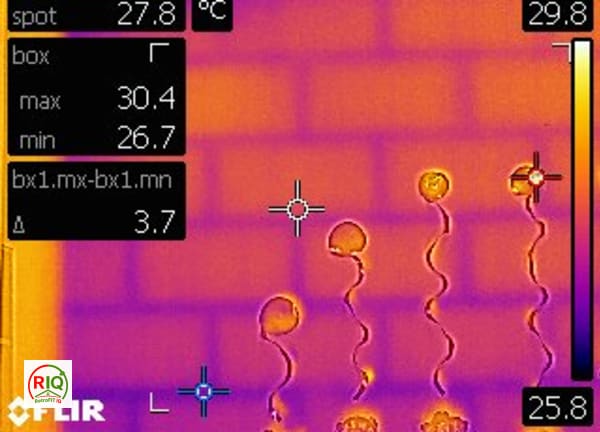
Thermal Bridging Visible Through Masonry Blockwork Wall

Thermal Bridge at Internal Corner Wall Junction

Sample Building Performance Investigation Report — Thermal Imaging
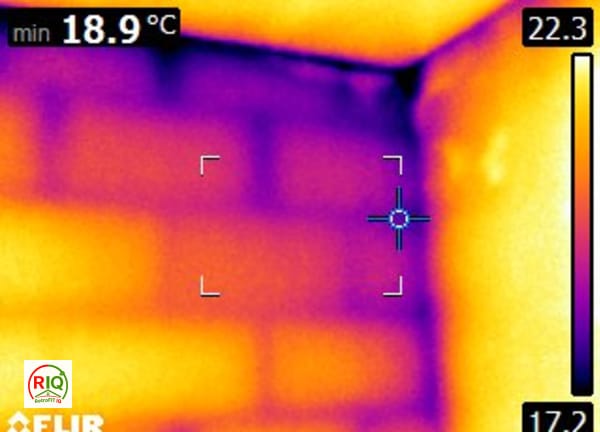
Cold wall surface vs warm ceiling

Cold wall mapped against warm radiator and surrounding fabric
No related investigations yet.
Browse all investigationsFrequently asked questions
Should I replace my radiators with bigger ones?+
It depends on why the room is cold. If a radiator is genuinely too small for the room's heat loss, a bigger one will help — and bigger radiators are essential if you run a low flow temperature or a heat pump, because each radiator gives out less heat with cooler water. But if the room loses heat too fast through poor fabric, a bigger radiator just uses more fuel, so the cause needs establishing first.
Why do heat pumps need bigger radiators?+
Because a heat pump is efficient only at a low flow temperature, and a radiator gives out less heat when the water is cooler. To deliver the same heat at a lower temperature, the radiators usually need to be larger — undersized radiators are a common reason a heat pump leaves rooms cold.
My radiator gets hot but the room is still cold — will a bigger one help?+
Probably not on its own. A hot radiator that cannot warm the room means the heat is being lost as fast as it is delivered, which points to high heat loss through insulation and draughts rather than radiator size. Reducing that loss is usually the better-value fix.
How do I know what size radiator I need?+
From the room's heat loss and your flow temperature together: the heat loss gives the output each room needs, and the flow temperature gives the output a radiator delivers per unit size. A heat-loss calculation produces the correct size for every room, rather than guessing.
Is it better to insulate or fit bigger radiators?+
Where a room's heat loss is high, reducing it with insulation and draught-proofing is often more cost-effective than installing very large radiators, and it lowers running costs too. Where the radiators are simply undersized for a reasonable heat loss, replacing them is the right step. An assessment shows which applies.
How do you work out the right approach for my home?+
We calculate the room-by-room heat loss, establish your flow-temperature strategy, and check the system's balancing and condition — then size the radiators to deliver each room's heat at that temperature, while identifying where reducing the heat loss is the better investment.
Stop guessing — find the real cause
Do not spend money fixing symptoms before you understand the cause. Every home behaves differently, and the only reliable way to know what is happening in yours is professional building performance diagnostics. At RetrofitIQ we verify buildings using the right combination of investigations:
- Thermal imaging
- Blower door testing
- Moisture & dew point readings
- Ventilation review
- Building physics assessment
- Passive House methodology