
Why are my radiators not getting hot?
Radiators not getting hot has two quite different explanations, and telling them apart matters. The radiator itself may not be heating — trapped air, sludge, poor balancing or weak circulation — which is a heating-system issue a heating engineer resolves. Or the radiators may be working but the room still feels cold, because the home loses heat faster than they can deliver it — which is a fabric problem no amount of radiator work will fix. Knowing which you have decides where the money should go.
 Reviewed by George Sora, Certified Passive House DesignerUpdated June 2026
Quick answer & key takeaways
7 min read- A radiator not heating and a room not warming are different problems.
- Cold at the top usually means trapped air; cold at the bottom often means sludge.
- Poor balancing or weak circulation can starve some radiators of hot water.
- Warm radiators with a cold room point to heat loss, not the heating system.
- Biggest misconception: a cold room always means the heating needs fixing or upsizing.
- Retrofit IQ's approach: confirm whether it's the system or the fabric before spending.
What this usually means
When a radiator does not get hot, the cause is usually within the heating system. Air trapped at the top stops hot water filling the upper section, so the radiator is cold at the top and warm at the bottom — cured by bleeding. Sludge and debris settling at the base block flow there, so it is hot at the top and cold at the bottom — needing a flush. If whole radiators stay cold, the system may be poorly balanced, so hot water short-circuits through the nearest radiators, or the circulation (pump, valves) may be weak. These are jobs for a heating engineer.
But there is a second, frequently confused situation: the radiators do get hot, yet the room still feels cold. Here the heating is working; the problem is that the home loses heat — through uninsulated fabric, cold surfaces and air leakage — faster than the radiators can replace it. The radiators run hot and the boiler runs constantly, but the room never feels warm. This is a building-fabric problem, and no amount of bleeding, flushing or even a bigger boiler will solve it, because the heat is escaping as fast as it is made.
Distinguishing the two is the key step. If radiators are genuinely not heating, a heating engineer addresses the air, sludge, balancing or circulation. If they are hot but the room stays cold, the answer lies in the fabric — measuring where the heat escapes and addressing insulation and air leakage so the radiators' output can actually warm the room. Spending on the wrong one — upsizing a heating system to overcome heat loss — is a common and expensive mistake.
Common causes
Trapped air (cold at the top)
Air collecting at the top of a radiator stops hot water filling it, leaving it cold at the top — usually cured by bleeding.
Sludge or debris (cold at the bottom)
Settled sludge blocks flow at the base, leaving the radiator cold at the bottom — needing a system flush.
Poor balancing
An unbalanced system lets hot water favour the nearest radiators, starving others further from the boiler.
Weak circulation
A failing pump or faulty valves reduce flow, so radiators do not reach temperature.
Fabric heat loss (radiators hot, room cold)
If the radiators are hot but the room stays cold, the home loses heat faster than they can replace it.
Signs and symptoms
Radiator cold at the top
A radiator warm at the bottom but cold at the top usually has trapped air needing bleeding.
Radiator cold at the bottom
A radiator hot at the top but cold at the base often has sludge restricting flow.
Some radiators cold, others hot
Uneven heating across radiators points to balancing or circulation problems.
Radiators hot but room still cold
Working radiators with a cold room indicate fabric heat loss, not a heating fault.
Boiler running constantly
Continuous running can accompany either a struggling system or a home losing heat rapidly.
What most people check first
- Whether the radiator is cold at the top (air) or bottom (sludge).
- Whether only some radiators are affected (balancing/circulation) or all.
- Whether the radiators actually get hot but the room still feels cold.
- Whether the issue is the heating system or the home losing heat.
What most people miss
- That a cold room with hot radiators is a fabric problem, not a heating one.
- That cold at the top and cold at the bottom point to different causes.
- That upsizing the heating cannot overcome large fabric heat loss.
- That confirming system-versus-fabric first avoids wasted spend.
The building physics
A radiator transfers heat to a room at a rate set by its size, its water temperature and the room temperature; a room's temperature settles where that heat input equals the room's heat loss. So two failure modes exist. In the first, the radiator cannot deliver its rated output — air or sludge reduces the effective heated surface, or poor flow lowers the water temperature through it — and this is a hydraulic, system-side problem. Bleeding, flushing, balancing and restoring circulation recover the output.
In the second mode the radiator delivers its output but the room still loses heat faster than that output, so the balance point sits below a comfortable temperature. Adding more output — a bigger radiator or boiler — raises the balance point only modestly when losses are large, and at higher running cost. Reducing the loss with insulation and air-sealing lowers the heat the room needs and raises comfort efficiently. The binding constraint is the fabric, not the heat source, which is why diagnosis must separate the two.
The practical test is simple in principle: when the radiators are genuinely hot across their surface and the flow is sound, yet the room will not warm, the problem is the building, not the boiler. Measuring the heat loss — calculating it, mapping it with thermal imaging and quantifying air leakage with a blower door test — confirms this and ranks the losses, so investment goes to the fabric. Where radiators truly are not heating, the heating engineer's hydraulic fixes apply. Establishing which case you are in prevents the costly error of upsizing a system to chase fabric losses.
How to get warm radiators — and a warm room
First decide whether the radiators are failing to heat or the room is failing to warm. Then fix the heating system, or the fabric, accordingly.
- 01
Identify the symptom precisely
Note whether radiators are cold at the top, cold at the bottom, partly cold across the system, or hot while the room stays cold.
- 02
Address system-side faults
Bleed trapped air, flush sludge, balance the system and check the pump and valves — a heating engineer's work.
- 03
Test system versus fabric
If the radiators are genuinely hot but the room stays cold, treat it as a fabric problem, not a heating one.
- 04
Measure the heat loss
Where the room will not warm, calculate and map the heat loss and air leakage to find why.
- 05
Improve the fabric
Insulate and air-seal the biggest losses so the radiators' output can actually warm the room.
- 06
Verify warmth and efficiency
Confirm the radiators heat fully and the room reaches comfort without the heating running constantly.
How to prevent it coming back
- Bleed radiators and maintain the heating system periodically.
- Keep the system balanced and the water treated against sludge.
- Address fabric heat loss before upsizing the heating.
- Judge success by room comfort, not just hot radiators.
How Retrofit IQ investigates this
We confirm whether a cold room is a heating-system or a building-fabric problem before any spend.
Do not spend money fixing symptoms before you understand the cause — investigate first, then build with confidence.
Do I need a professional investigation?
If the radiators get hot but the room still feels cold, or you are being advised to upsize the heating, it is worth measuring the heat loss first — so you confirm whether the fabric or the heating system is the real limit and avoid spending on a bigger system that cannot fix a fabric problem.
Where to go next
Relevant services
Related comparisons
From the Academy
Related case studies
Related problems you may also have
Evidence from Real Projects (21)
Real project and investigation images from our own fieldwork, matched to this page — not stock photography.
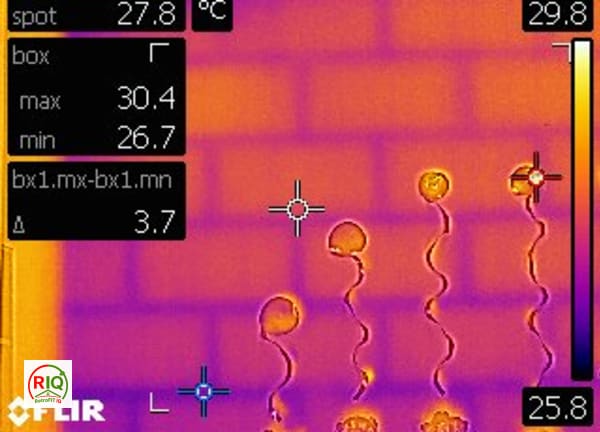
Thermal Bridging Visible Through Masonry Blockwork Wall

Sample Building Performance Investigation Report — Thermal Imaging
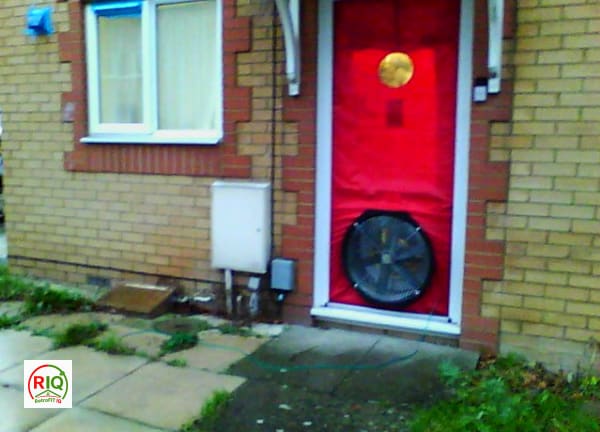
Blower Door Airtightness Test Setup

Top of door frame

Thermal Bridge at Wall-Ceiling Junction Near Window

Thermal Bridge at Internal Corner Wall Junction
No related investigations yet.
Browse all investigationsFrequently asked questions
Why are my radiators not getting hot?+
Either the radiators themselves are not heating — trapped air (cold at the top), sludge (cold at the bottom), poor balancing or weak circulation — or they are hot but the room stays cold because the home loses heat faster than they can supply. The fixes are completely different.
Why is my radiator cold at the top?+
Usually trapped air, which collects at the top and stops hot water filling the upper section. Bleeding the radiator releases the air and lets it heat fully.
Why is my radiator cold at the bottom?+
Often sludge and debris settled at the base, restricting flow there. A system flush typically clears it and restores even heating.
My radiators are hot but the room is still cold — why?+
Because the room loses heat faster than the radiators can replace it. That is a building-fabric problem — insulation and air leakage — not a heating fault, and a bigger boiler will not solve it.
Will a bigger boiler or radiator fix a cold room?+
Not if the room loses heat rapidly. More output raises comfort only modestly at higher cost; reducing the heat loss with insulation and air-sealing is the efficient fix.
How do I know if it's the heating or the house?+
If the radiators are genuinely hot across their surface and the flow is sound yet the room stays cold, it is the fabric. Measuring the heat loss confirms it and shows where to act.
How do you diagnose a cold room?+
We calculate and map the heat loss with thermal imaging and measure air leakage, then confirm whether to address the fabric or the heating system.
Stop guessing — find the real cause
Do not spend money fixing symptoms before you understand the cause. Every home behaves differently, and the only reliable way to know what is happening in yours is professional building performance diagnostics. At RetrofitIQ we verify buildings using the right combination of investigations:
- Thermal imaging
- Blower door testing
- Moisture & dew point readings
- Ventilation review
- Building physics assessment
- Passive House methodology