
Should I leave my heating on low all day, or only when I need it?
The long-running debate over whether to leave the heating on low all day or only run it when needed has no single answer, because it depends almost entirely on how well your home holds heat. In a poorly insulated home that loses heat fast, heating only when you need it is usually cheaper; in a well-insulated, airtight home that holds warmth, gentle continuous heating can be comfortable and barely more costly. The deeper truth is that the better your fabric, the less the question even matters.
 Reviewed by George Sora, Certified Passive House DesignerUpdated June 2026
Quick answer & key takeaways
7 min read- Whether constant-low or timed heating is cheaper depends on how well the home holds heat.
- A leaky, poorly insulated home is usually cheaper heated only when needed.
- A well-insulated, airtight home holds warmth, so gentle continuous heat costs little more.
- Total heat loss, not the heating pattern, drives the bill.
- Biggest misconception: there is one right answer. It depends on your home's fabric.
- Retrofit IQ's approach: reduce heat loss so the home holds warmth and the debate fades.
What this usually means
The reason the advice seems contradictory is that the right answer genuinely differs between homes. The total energy you use to heat a house over a day depends on how much heat it loses over that day, which in turn depends on the temperature difference between inside and outside and on how leaky and poorly insulated the fabric is. The heating pattern — constant versus timed — changes the shape of that demand, but the dominant factor is always the rate of heat loss. So the same advice cannot be right for a draughty solid-wall house and a well-insulated modern one.
In a home that loses heat quickly, leaving the heating on low all day means continuously replacing heat that is escaping even when no one needs the rooms warm, which generally wastes energy compared with heating only when you are there and letting the temperature drop the rest of the time. The classic guidance — use a timer and thermostat to heat when needed — is aimed at exactly these homes, which are the majority of older UK housing, and for them it is usually the cheaper approach.
In a well-insulated, airtight home the picture changes. Such a home loses heat so slowly that it barely cools between heating periods, so the difference between gentle continuous heating and timed heating becomes small, and continuous low-temperature heating can be both comfortable and efficient — particularly with a heat pump, which runs most efficiently at a steady, low flow temperature rather than in hot bursts. The unifying lesson is that the heating-pattern question is really a symptom of the fabric: improve the insulation and airtightness, and the home holds its warmth, the bills fall whichever pattern you choose, and the debate largely dissolves.
Common causes
High heat loss in poor fabric
A leaky, poorly insulated home loses heat fast, so continuous heating replaces heat no one needs.
Low heat loss in good fabric
A well-insulated, airtight home holds warmth, so continuous gentle heat costs little more.
Heat-pump operating preference
Heat pumps run most efficiently at steady low flow temperatures rather than hot bursts.
Comfort versus cost priorities
Constant warmth may be preferred for comfort even if timed heating is marginally cheaper.
Poor controls
Without a good thermostat and timer, neither pattern is run efficiently.
Signs and symptoms
Rapid cooling when heating goes off
A home that chills quickly loses heat fast and is usually cheaper heated only when needed.
Warmth that lingers for hours
A home that stays warm after the heating drops holds heat well, so continuous heat costs little more.
High bills whichever pattern is used
Large bills regardless of pattern indicate high heat loss is the real driver.
A heat pump running in bursts
A heat pump cycling hard may be more efficient run steadily at a low flow temperature.
Uncertainty about the best approach
Confusion over the right pattern usually reflects fabric that has not been assessed.
What most people check first
- How quickly the home cools once the heating goes off.
- Whether the home is well insulated and airtight or leaky and cold.
- Whether you have a heat pump that prefers steady operation.
- Whether good controls (thermostat and timer) are in place.
What most people miss
- That the right pattern depends on the home's fabric, not on a universal rule.
- That total heat loss, not the heating pattern, drives the bill.
- That a well-insulated home makes the debate largely irrelevant.
- That heat pumps favour steady, low-temperature running.
The building physics
The energy to heat a home over a period equals the heat it loses over that period, which is governed by the average indoor-outdoor temperature difference and the home's heat-loss rate. Lowering the temperature when the house is empty reduces the average temperature difference, and therefore the heat lost, so in principle setting back the temperature saves energy. The faster a home loses heat, the larger this saving, because a leaky home maintained warm all day continuously bleeds heat to outside that timed heating would not replace while the set point is lower.
In a low-heat-loss home the set-back saving shrinks. Because such a home cools very slowly, the temperature barely falls during an 'off' period, so the average temperature difference is similar whether heating is continuous-low or timed, and the energy used is similar too. The reheat after a set-back is sometimes raised as a counter-argument, but reheating only replaces the heat that was saved by letting the house cool; it does not exceed it. The genuine nuances are comfort, the responsiveness of the system, and — for heat pumps — efficiency.
Heat pumps add a real efficiency dimension. Their coefficient of performance is higher at lower, steadier flow temperatures, so a heat pump running gently and continuously to hold a well-insulated home at temperature can be more efficient than driving it hard to reheat after a deep set-back, which forces higher flow temperatures. This is why advice for heat-pump homes often favours steady operation, whereas for gas boilers in leaky homes timed heating usually wins. In every case, reducing the fabric heat loss lowers the total demand and narrows the gap between strategies, so the most reliable saving comes not from optimising the pattern but from improving insulation and airtightness.
How to decide — and the real saving
Match the pattern to your home and system, but recognise that reducing heat loss is what actually cuts the bill and makes the choice unimportant.
- 01
Judge how well the home holds heat
Note how quickly it cools when the heating goes off to gauge its heat-loss rate.
- 02
Time heating in a leaky home
If the home cools fast, heat when needed with a good thermostat and timer rather than constantly.
- 03
Consider steady heat in a tight home
If the home holds warmth, gentle continuous heating is comfortable and costs little more.
- 04
Run a heat pump steadily
For a heat pump, favour steady, low-temperature operation over hard reheating from deep set-backs.
- 05
Fit good controls
Use a thermostat, timer and TRVs so whichever pattern you choose runs efficiently.
- 06
Reduce the heat loss
Insulate and air-seal so the home holds warmth and the bill falls whatever the pattern.
How to prevent it coming back
- Time heating in homes that lose heat quickly.
- Use steady heating in well-insulated homes and with heat pumps.
- Fit good controls so either pattern runs efficiently.
- Improve insulation and airtightness to cut the bill regardless of pattern.
How Retrofit IQ investigates this
We measure how well the home holds heat and reduce the heat loss, so the heating pattern matters less and the bill falls.
Do not spend money fixing symptoms before you understand the cause — investigate first, then build with confidence.
Do I need a professional investigation?
If you are unsure whether to heat constantly or on a timer, the underlying question is how well your home holds heat — which is worth measuring. A heat-loss assessment shows whether your home loses heat fast or slow, so you can run the heating sensibly and, more importantly, improve the fabric that actually drives the bill.
Where to go next
Relevant services
Related comparisons
From the Academy
Related problems you may also have
Evidence from Real Projects (19)
Real project and investigation images from our own fieldwork, matched to this page — not stock photography.



No related investigations yet.
Browse all investigationsFrequently asked questions
Should I leave my heating on low all day?+
It depends on how well your home holds heat. A poorly insulated home that cools fast is usually cheaper heated only when needed; a well-insulated, airtight home holds warmth, so gentle continuous heating costs little more. There is no single right answer for every home.
Is it cheaper to leave the heating on constantly?+
Generally not in a leaky, poorly insulated home, where constant heat replaces warmth no one needs. In a well-insulated home the difference is small. The total heat loss, not the pattern, is what really drives the bill.
Doesn't reheating a cold house use more energy?+
Reheating only replaces the heat saved by letting the house cool; it does not exceed it. So setting back the temperature when the home is empty saves energy overall, most of all in homes that lose heat quickly.
What about a heat pump?+
Heat pumps run most efficiently at steady, low flow temperatures, so for a well-insulated home a heat pump is often best left running gently and continuously rather than driven hard to reheat after a deep set-back.
Why do I get such contradictory advice?+
Because the right answer differs between homes. Advice aimed at leaky older homes favours timed heating, while advice for well-insulated homes or heat pumps favours steady heat. Both are right for their context.
How can I make this question not matter?+
Improve your insulation and airtightness. A home that holds its warmth loses little either way, so the bill falls whichever pattern you choose and the constant-versus-timed debate largely dissolves.
How do you advise on running heating efficiently?+
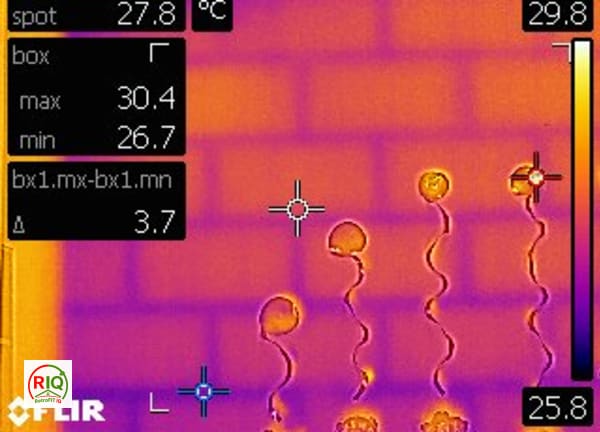
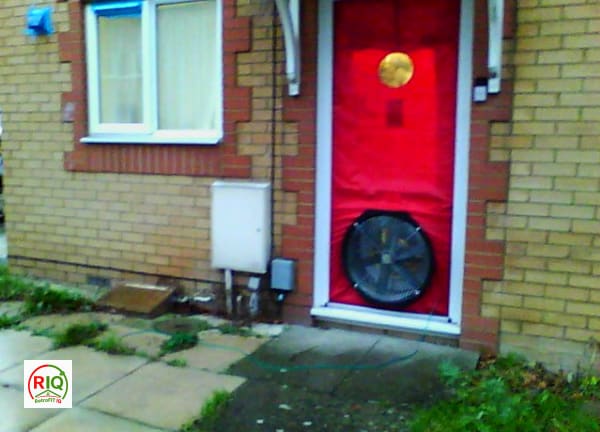
We measure how fast your home loses heat, find the fabric improvements with thermal imaging and a blower door test, and advise a sensible heating pattern and controls — while prioritising the insulation and airtightness that actually cut the bill.
Stop guessing — find the real cause
Do not spend money fixing symptoms before you understand the cause. Every home behaves differently, and the only reliable way to know what is happening in yours is professional building performance diagnostics. At RetrofitIQ we verify buildings using the right combination of investigations:
- Thermal imaging
- Blower door testing
- Moisture & dew point readings
- Ventilation review
- Building physics assessment
- Passive House methodology