
Will underfloor heating warm a cold room?
Underfloor heating can warm a cold room very comfortably, but only if two conditions are met: the floor is insulated beneath the heating, so the warmth goes up into the room rather than down into the ground, and the room does not lose heat faster than the underfloor heating can supply it. Underfloor heating is a gentle, low-temperature heat source with a limited output per square metre, so in a poorly insulated, draughty room it may not keep up. Getting the fabric right first is what makes it work.
 Reviewed by George Sora, Certified Passive House DesignerUpdated July 2026
Quick answer & key takeaways
8 min read- Underfloor heating warms a room well — but only over an insulated floor.
- Without insulation beneath it, much of the heat is lost downward into the ground.
- It is a gentle, low-output heat source, so a leaky room can lose heat faster than it supplies.
- Reducing the room's heat loss first is what lets underfloor heating succeed.
- Biggest misconception: underfloor heating alone will warm any cold room. It needs good fabric.
- Retrofit IQ's approach: insulate the floor and reduce heat loss, then size the heating to suit.
What this usually means
Underfloor heating works by warming the whole floor to a modest temperature and letting it radiate gently into the room. This makes it comfortable — even, draught-free warmth from a low-temperature surface — and efficient, especially with a heat pump. But it has a limited heat output per square metre, because the floor can only be run a few degrees above room temperature for comfort, so unlike a hot radiator it cannot pump out large amounts of heat quickly. Its success therefore depends on the room not demanding more heat than the floor can provide.
The first requirement is insulation beneath the heating. Underfloor heating laid over an uninsulated solid or suspended floor sends much of its warmth downward into the cold ground or void, wasting energy and leaving the room under-heated; the heat takes the path of least resistance, and without insulation a large share goes the wrong way. So floor insulation is not optional with underfloor heating — it is what directs the limited output upward into the room, and skipping it is a common reason underfloor heating disappoints.
The second requirement is that the room's overall heat loss is low enough for the floor's output to match it. In a well-insulated, reasonably airtight room, underfloor heating's gentle output comfortably keeps pace with the heat loss, and the room stays warm. In a poorly insulated, draughty room — single glazing, cold walls, leaks — the heat loss can exceed what the floor can deliver, so the room never quite warms, however the system is run. This is why underfloor heating is best installed as part of a fabric-first approach: insulate the floor, walls and roof and seal draughts first, then the underfloor heating works beautifully; install it into a leaky room and it may underperform.
Common causes
No insulation beneath the heating
Heat laid over uninsulated floor escapes downward into the ground, under-heating the room.
High room heat loss
A poorly insulated, draughty room loses heat faster than the gentle floor output can supply.
Limited output per square metre
Underfloor heating runs at a low temperature, so its heat output is modest, not high like a hot radiator.
Cold walls and windows
Heat lost through cold surfaces can outpace the floor's output, leaving the room cool.
Air leakage
Draughts carry away warmth faster than the underfloor heating can replace it.
Signs and symptoms
Underfloor heating that never quite warms the room
A room that stays cool despite the heating running points to high heat loss or missing insulation.
Floor warm but room cold
A warm floor with a cold room suggests heat loss outpacing the output, or loss downward.
High running cost for modest warmth
Expensive running for little warmth indicates heat escaping down through an uninsulated floor.
Cold walls and draughts persist
Persistent cold surfaces and draughts show fabric work is needed for the heating to succeed.
Slow to respond
Very slow warm-up can reflect heat being lost rather than building in the room.
What most people check first
- Whether there is insulation beneath the underfloor heating.
- Whether the room loses heat faster than the floor can supply.
- Whether the walls, windows and draughts need addressing first.
- Whether underfloor heating is the sole heat source for the room.
What most people miss
- That underfloor heating needs insulation beneath it to work.
- That it is a gentle, limited-output heat source, not a powerful one.
- That a leaky room can lose heat faster than the floor supplies.
- That reducing heat loss first is what makes underfloor heating succeed.
The building physics
Underfloor heating delivers heat from a large, low-temperature surface, and the heat it can emit is limited by the maximum comfortable floor temperature — typically only a few degrees above room temperature — giving a bounded output per square metre. For the room to stay warm, that output must equal or exceed the room's heat-loss rate. In a low-loss room the balance is easily met and the gentle, even warmth is ideal; in a high-loss room the required input can exceed the floor's maximum output, so equilibrium is reached only at a temperature below comfort, and the room feels cold despite the system running.
Insulation beneath the heating governs how much of the output reaches the room. Heat flows toward the cold side, so an uninsulated floor offers a low-resistance path downward into the ground or void, diverting a large fraction of the heat away from the room. Placing insulation below the heating element raises the downward resistance so the heat is directed upward, both improving comfort and cutting waste. This is why floor insulation is integral to any underfloor heating installation rather than an optional extra — without it, the effective upward output, already modest, is reduced further.
The interaction with the heat source matters too. Underfloor heating's low operating temperature makes it an excellent match for a heat pump, which is most efficient at low flow temperatures — but only in a low-loss room where that low-temperature output suffices. Hence underfloor heating, low heat loss and heat pumps form a coherent fabric-first system: reduce the room's heat loss through insulation and air-sealing, insulate beneath the floor heating, and the gentle output then comfortably matches the demand. A heat-loss calculation establishes whether a given room's losses are within the floor's deliverable output, or what fabric improvements are needed first.
How to make underfloor heating warm a cold room
Insulate beneath the heating and reduce the room's heat loss so the floor's gentle output can match the demand, then size and run the system correctly.
- 01
Insulate beneath the heating
Lay floor insulation under the underfloor heating so the warmth is directed up into the room.
- 02
Reduce the room's heat loss
Insulate walls and roof and seal draughts so the room does not lose heat faster than the floor supplies.
- 03
Calculate the heat loss
Check the room's heat-loss rate is within the floor's deliverable output before relying on it.
- 04
Improve cold windows
Upgrade or address cold glazing so surface heat loss does not outpace the gentle output.
- 05
Add supplementary heat if needed
Where the room's losses exceed the floor output, add or retain another heat source.
- 06
Run it steadily
Operate underfloor heating continuously at a low temperature, as it responds gently rather than quickly.
How to prevent it coming back
- Always insulate beneath underfloor heating.
- Reduce the room's heat loss before relying on underfloor heating alone.
- Match the room's heat loss to the floor's achievable output.
- Run underfloor heating steadily at a low temperature.
How Retrofit IQ investigates this
We check the floor insulation and the room's heat loss against the underfloor heating's output, then specify the fabric and system together.
Do not spend money fixing symptoms before you understand the cause — investigate first, then build with confidence.
Do I need a professional investigation?
Before installing underfloor heating, or if it is not warming a room, it is worth a heat-loss assessment to confirm the floor's gentle output can match the room's losses and that there is insulation beneath it. This ensures the fabric is improved first where needed, so the underfloor heating works comfortably and efficiently rather than disappointing.
Where to go next
Relevant services
Related comparisons
From the Academy
Related case studies
Evidence from Real Projects (24)
Real project and investigation images from our own fieldwork, matched to this page — not stock photography.
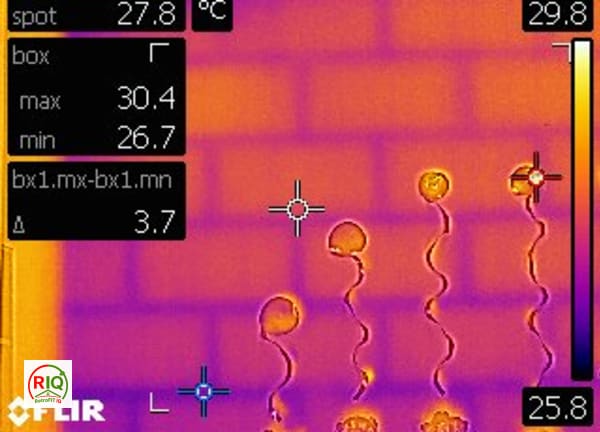
Thermal Bridging Visible Through Masonry Blockwork Wall

Sample Building Performance Investigation Report — Thermal Imaging
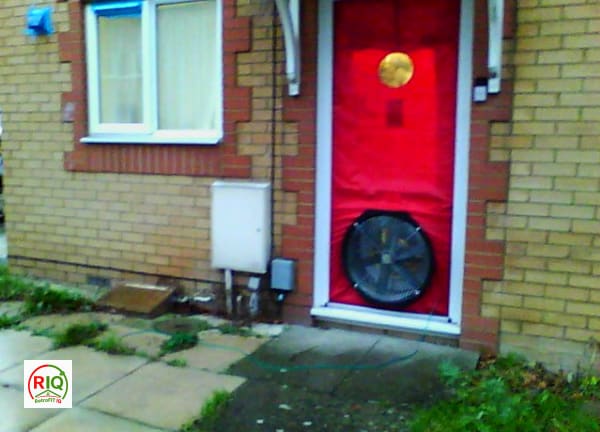
Blower Door Airtightness Test Setup

Thermal Bridge at Wall-Ceiling Junction Near Window

Thermal Bridge at Internal Corner Wall Junction
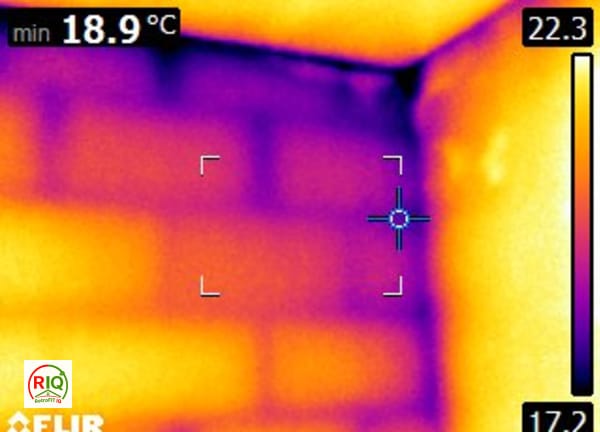
Cold wall surface vs warm ceiling
No related investigations yet.
Browse all investigationsFrequently asked questions
Will underfloor heating warm a cold room?+
Yes, very comfortably — but only if the floor is insulated beneath the heating so the warmth goes up into the room, and the room does not lose heat faster than the heating can supply. Underfloor heating is a gentle, limited-output source, so good fabric is essential.
Why isn't my underfloor heating warming the room?+
Usually because there is no insulation beneath it, so much of the heat escapes downward, or the room loses heat faster than the floor's modest output can supply. Both are fabric issues rather than a fault in the heating itself.
Does underfloor heating need insulation under it?+
Yes — it is essential. Heat flows toward the cold side, so without insulation beneath the element a large share goes down into the ground or void rather than up into the room, wasting energy and under-heating the space.
Can underfloor heating be the only heat source?+
In a well-insulated, reasonably airtight room, yes — its gentle output comfortably matches the low heat loss. In a poorly insulated, draughty room the losses can exceed its output, so the fabric must be improved first or a supplementary source added.
Is underfloor heating good with a heat pump?+
Excellent — its low operating temperature matches a heat pump's most efficient mode. But this only works in a low-loss room where the low-temperature output is enough, which is why fabric improvements come first.
Why is my underfloor heating expensive but the room still cold?+
That points to heat escaping downward through an uninsulated floor, or the room losing heat faster than the floor supplies. Insulating beneath the heating and reducing the room's heat loss fixes both the cost and the comfort.
How do you make sure underfloor heating will work?+
We calculate the room's heat loss, check it against the floor's achievable output, confirm there is insulation beneath the heating, and specify any fabric improvements first, so the underfloor heating warms the room comfortably and efficiently.
Stop guessing — find the real cause
Do not spend money fixing symptoms before you understand the cause. Every home behaves differently, and the only reliable way to know what is happening in yours is professional building performance diagnostics. At RetrofitIQ we verify buildings using the right combination of investigations:
- Thermal imaging
- Blower door testing
- Moisture & dew point readings
- Ventilation review
- Building physics assessment
- Passive House methodology