
Why is my tiled or stone floor so cold?
Tiled and stone floors feel cold for two reasons working together: the material itself conducts heat away from your feet very quickly, so it feels cold even when it is at room temperature, and these floors often sit on an uninsulated solid or suspended base that keeps them genuinely cool. So part of the chill is how the surface feels, and part is real heat loss to the ground below. Distinguishing the two matters, because warming the surface and insulating the floor are different remedies.
 Reviewed by George Sora, Certified Passive House DesignerUpdated July 2026
Quick answer & key takeaways
8 min read- Tile and stone conduct heat from your feet fast, so they feel cold even at room temperature.
- These floors often sit over uninsulated ground, so they are also genuinely cool.
- Part of the chill is the surface feel; part is real heat loss to the ground.
- Underfloor heating warms the surface; floor insulation cuts the heat loss.
- Biggest misconception: a cold tiled floor just needs heating. Often it also needs insulating.
- Retrofit IQ's approach: separate surface feel from heat loss, then warm and insulate as needed.
What this usually means
How cold a floor feels underfoot depends less on its temperature than on how fast it draws heat from your skin. Tile and stone are dense, highly conductive materials, so when your warm foot touches them they conduct heat away rapidly and feel distinctly cold — far colder than a carpet or timber floor at exactly the same temperature, which conducts heat slowly and feels warm. This is why a tiled bathroom or stone-flagged kitchen feels chilly even when the room is warm: it is the high thermal conductivity of the surface, not necessarily a low temperature.
On top of that perceptual effect, these floors are frequently genuinely cool because of what lies beneath. A solid floor cast directly on the ground, or a suspended floor over an unheated, ventilated void, loses heat downward to the cold earth or air below if it is uninsulated, keeping the slab or flags at a low temperature. So the floor is both a fast-conducting surface and, often, a cold one — the two combining to make tile and stone the coldest-feeling surfaces in many homes, particularly around the edges where heat loss to the perimeter is greatest.
Because there are two distinct causes, there are two distinct remedies, and which you need depends on the diagnosis. If the floor is at a reasonable temperature but simply feels cold, warming the surface helps most — underfloor heating turns a cold conductive floor into a gently warm one, and rugs reduce the contact chill. If the floor is genuinely cold because it loses heat to the ground, the lasting fix is to insulate it, which both reduces the heat loss and raises the surface temperature. Often, especially with underfloor heating, insulating the floor first is essential so the heat goes up into the room rather than down into the ground.
Common causes
High conductivity of tile and stone
Dense, conductive materials draw heat from your feet fast, feeling cold even at room temperature.
Uninsulated solid floor
A slab cast on the ground loses heat downward and stays cool if it is not insulated.
Uninsulated suspended floor
A floor over a ventilated void loses heat to the cold air below, keeping it cold.
Perimeter heat loss
Edges of solid floors lose heat to the outside ground, so floors feel coldest near the walls.
No surface heat source
Without underfloor heating, the conductive surface stays at, or below, room temperature.
Signs and symptoms
Cold underfoot even in a warm room
A tiled floor feeling cold while the room is warm reflects the surface's fast heat conduction.
Coldest at the floor edges
A solid floor coldest near the walls indicates perimeter heat loss to the outside ground.
Warmer with rugs or socks
The chill easing with rugs or footwear confirms much of it is the contact-conduction feel.
Genuinely cold to a thermometer
A floor measuring low in temperature shows real heat loss to the ground, not just feel.
Cold floor with cold rooms
A cold floor alongside a cold room suggests heat loss through an uninsulated floor.
What most people check first
- Whether the floor merely feels cold or is genuinely low in temperature.
- Whether the floor is solid (on the ground) or suspended (over a void).
- Whether it is coldest at the edges, indicating perimeter heat loss.
- Whether underfloor heating or insulation, or both, are needed.
What most people miss
- That tile and stone feel cold by conducting heat fast, regardless of temperature.
- That the floor is often also genuinely cold from heat loss to the ground.
- That surface warming and floor insulation are different remedies.
- That underfloor heating needs floor insulation beneath it to work efficiently.
The building physics
The sensation of a cold floor is governed by thermal effusivity — how readily a material exchanges heat with something touching it — rather than by temperature alone. Tile and stone have high effusivity, so on contact they draw heat from the foot quickly and feel cold, while carpet and timber have low effusivity and feel warm at the same temperature. This is why hard floors feel chilly even in a heated room: the perception is driven by the rate of heat extraction from the skin, not the floor's actual temperature.
Superimposed on this is the floor's real temperature, set by heat loss to what lies beneath. A solid floor on the ground loses heat downward and, especially, outward at its perimeter to the cooler external ground, so an uninsulated slab settles at a temperature below the room; a suspended floor over a ventilated void loses heat to the cold moving air below. The colder the base, the colder the surface, compounding the high-effusivity feel. Floors are therefore frequently both fast-conducting and genuinely cool, which is why they dominate the sense of a cold room at low level.
The remedies map onto the two causes. Warming the surface — typically with underfloor heating — raises the floor above room temperature, converting a fast heat-extracting surface into one that gently adds heat, which transforms the comfort of tile and stone. Insulating the floor reduces the downward and perimeter heat loss, raising the surface temperature and cutting energy use. Crucially, the two interact: underfloor heating laid over an uninsulated floor loses much of its heat downward into the ground, so insulation beneath the heating is essential for it to work efficiently. A diagnosis that separates the felt-cold effect from genuine heat loss, and establishes the floor construction, determines whether to warm, insulate, or do both.
How to warm a cold tiled or stone floor
Separate the surface feel from genuine heat loss, then warm the surface with underfloor heating and insulate the floor — insulating beneath any heating so it works efficiently.
- 01
Diagnose feel versus heat loss
Establish whether the floor merely feels cold or is genuinely cool from heat loss to the ground.
- 02
Identify the floor construction
Determine whether it is solid on the ground or suspended over a void, which guides insulation.
- 03
Insulate the floor
Insulate a solid or suspended floor to cut heat loss and raise the surface temperature.
- 04
Add underfloor heating
Warm the surface with underfloor heating so the conductive floor gently adds heat to the room.
- 05
Insulate beneath any heating
Ensure insulation under the heating so the warmth goes up into the room, not down into the ground.
- 06
Use rugs for quick comfort
Add rugs as an immediate measure to reduce the contact chill while planning the fabric work.
How to prevent it coming back
- Insulate solid and suspended floors to keep them warm.
- Lay floor insulation beneath any underfloor heating.
- Warm hard-floor surfaces with underfloor heating where chill persists.
- Use rugs to soften the contact chill of hard floors.
How Retrofit IQ investigates this
We separate the felt-cold effect from genuine heat loss and establish the floor construction, then specify insulation and surface heating.
Do not spend money fixing symptoms before you understand the cause — investigate first, then build with confidence.
Do I need a professional investigation?
A persistently cold tiled or stone floor is worth investigating to separate the surface-feel effect from genuine heat loss, especially before installing underfloor heating. Establishing the floor construction and whether it is losing heat to the ground ensures the right combination of insulation and surface heating, so the floor is warm and efficient.
Where to go next
Relevant services
Related comparisons
From the Academy
Related case studies
Evidence from Real Projects (23)
Real project and investigation images from our own fieldwork, matched to this page — not stock photography.
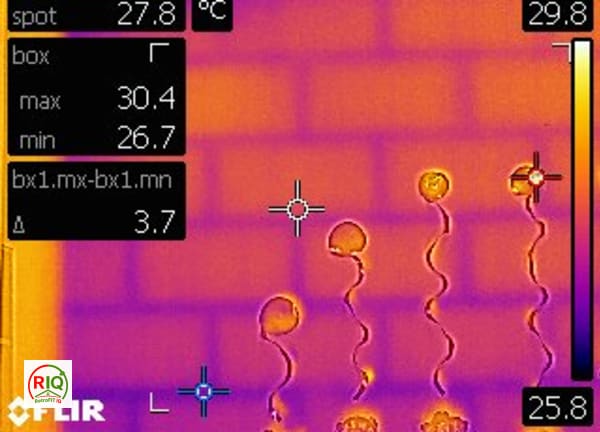
Thermal Bridging Visible Through Masonry Blockwork Wall

Sample Building Performance Investigation Report — Thermal Imaging
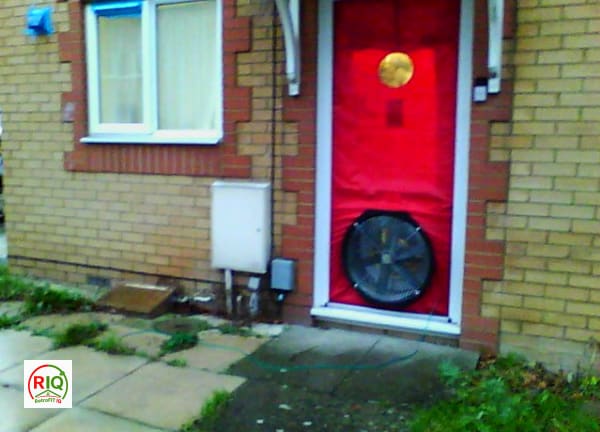
Blower Door Airtightness Test Setup

Thermal Bridge at Internal Corner Wall Junction
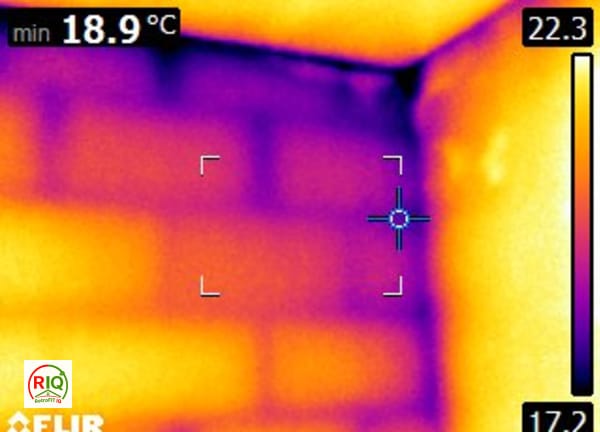
Cold wall surface vs warm ceiling

Acoustic Floor Upgrades: Mineral Wool Insulation Between Joists
No related investigations yet.
Browse all investigationsFrequently asked questions
Why is my tiled or stone floor so cold?+
For two reasons together: tile and stone conduct heat from your feet very fast, so they feel cold even at room temperature, and these floors often sit over uninsulated ground, so they are also genuinely cool. Part is the surface feel and part is real heat loss.
Why does tile feel colder than carpet at the same temperature?+
Because tile and stone have high thermal effusivity — they draw heat from your skin quickly — whereas carpet and timber conduct heat slowly and feel warm. The sensation is about how fast heat leaves your foot, not the floor's actual temperature.
Will underfloor heating fix a cold tiled floor?+
It warms the surface, turning a cold conductive floor into one that gently adds heat, which transforms comfort. But it must be laid over floor insulation, or much of the heat goes down into the ground rather than up into the room.
Do I need to insulate the floor as well?+
Often yes. If the floor is genuinely cold from losing heat to the ground, insulating it reduces that loss and raises the surface temperature, and it is essential beneath underfloor heating so the heat goes upward efficiently.
Why is my floor coldest near the walls?+
A solid floor loses heat outward at its perimeter to the cooler external ground, so the edges are coldest. Perimeter and overall floor insulation reduce this edge heat loss.
Will a rug help?+
Yes, as a quick fix — a rug reduces the contact chill because it conducts heat slowly, so it feels warm underfoot. It does not address genuine heat loss, but it improves comfort while you plan insulation or heating.
How do you decide what a cold floor needs?+
We take surface temperature readings to separate the felt-cold effect from genuine heat loss, establish the floor construction with thermal imaging, and specify floor insulation and underfloor heating as required.
Stop guessing — find the real cause
Do not spend money fixing symptoms before you understand the cause. Every home behaves differently, and the only reliable way to know what is happening in yours is professional building performance diagnostics. At RetrofitIQ we verify buildings using the right combination of investigations:
- Thermal imaging
- Blower door testing
- Moisture & dew point readings
- Ventilation review
- Building physics assessment
- Passive House methodology