
How do I evidence damp and mould for a housing disrepair claim?
If you are pursuing a housing disrepair claim over damp and mould, photographs of the mould are rarely enough on their own. A claim is strengthened by independent, measured evidence that establishes the cause of the damp, links it to a disrepair the landlord is responsible for, and distinguishes it from anything that could be blamed on how the home is used. That is a building-physics question — whether the damp is condensation driven by a building defect or inadequate ventilation, penetrating damp from a fabric failure, or rising damp — answered with monitoring, thermal imaging and inspection, and set out in an expert report. Understanding what such evidence involves helps you commission a report that actually supports the claim.
 Reviewed by George Sora, Certified Passive House DesignerUpdated June 2026
Quick answer & key takeaways
8 min read- Photographs alone rarely prove the cause or the landlord's responsibility.
- An independent, measured survey establishes whether it is condensation, penetrating or rising damp.
- It must link the damp to a building defect or failure the landlord is responsible for.
- Monitoring, thermal imaging and inspection provide objective, documented evidence.
- Biggest misconception: showing the mould is enough. The cause and responsibility must be evidenced.
- Retrofit IQ's approach: diagnose and document the cause independently in a clear expert report.
What this usually means
A housing disrepair claim turns on whether the property is in disrepair that the landlord is obliged to remedy, and whether that disrepair is causing the damp and mould you are experiencing. Mould itself is a symptom; the claim needs to show what is producing it and that the cause is a building failing rather than, say, normal occupation. Landlords frequently attribute damp and mould to 'lifestyle' — cooking, drying washing, not ventilating — so evidence that simply shows mould is present can be countered by that argument. What advances a claim is objective evidence of the underlying cause and its link to a defect or inadequacy in the building.
That evidence is gathered by a proper diagnostic survey, ideally by an independent expert with no interest in the outcome. It records indoor temperature and humidity over time to establish whether the home is at condensation risk and whether the ventilation provided is adequate; it uses thermal imaging to reveal cold surfaces, thermal bridges and missing or failed insulation that cause condensation; and it inspects the fabric for penetrating-damp defects such as failed pointing, render, flashings or guttering, and for rising-damp indicators. By distinguishing the mechanism and identifying the building feature responsible — a cold, uninsulated wall, an absent or broken extractor, a leaking defect — it connects the damp to a disrepair rather than to occupancy.
The result should be a clear, independent expert report that a landlord, solicitor or court can rely on: stating the measured findings, the diagnosed cause, the building defect or inadequacy responsible, and the remedy required. Crucially, an independent building-physics assessment carries weight precisely because it is not selling a treatment and is not the tenant's or landlord's word — it is documented measurement and reasoning. The same report also makes clear what must be put right, which both supports the claim and helps ensure any works actually resolve the problem. Knowing this is what the evidence needs to contain lets you commission the right survey rather than relying on photographs that a landlord can dispute.
Common causes
Condensation from a cold building
Uninsulated cold surfaces and thermal bridges cause condensation the landlord is responsible for.
Inadequate ventilation provided
Missing or broken extraction and ventilation the landlord must provide drives moisture build-up.
Penetrating damp defects
Failed pointing, render, flashings or guttering let water in — a repair obligation.
Rising damp
A failed or absent damp-proof course, where genuinely present, is a building defect.
'Lifestyle' attribution
Landlords may blame occupancy, so evidence must show the building cause instead.
Signs and symptoms
Persistent mould the landlord disputes
Recurring mould blamed on lifestyle needs objective evidence of the building cause.
Cold, uninsulated walls
Cold surfaces causing condensation point to a fabric inadequacy the landlord is responsible for.
No or broken extractor fans
Inadequate ventilation provision is a building failing that drives condensation.
Damp tracking rainfall
Penetrating damp from a fabric defect indicates a repair obligation.
Health effects from the mould
Reported symptoms add weight but still need the cause documented.
What most people check first
- Whether the cause is condensation, penetrating or rising damp.
- Whether the cause links to a building defect or inadequate provision by the landlord.
- Whether the evidence is independent and measured, not just photographs.
- Whether the ventilation the landlord provides is adequate.
What most people miss
- That photos show the symptom, not the cause or responsibility.
- That landlords commonly attribute damp to lifestyle, which evidence must counter.
- That independent, measured evidence carries the weight.
- That the report should also state the remedy required.
The building physics
Establishing responsibility for damp and mould requires separating the contribution of the building from that of occupancy, which is a quantitative question. Every household generates moisture; whether that moisture causes mould depends on the surface temperatures and the ventilation the building provides. If surfaces are cold because walls are uninsulated or bridged, and if the ventilation falls short of what is needed to remove normal moisture, then condensation and mould will occur under ordinary use — making the building the cause. Measurement is what demonstrates this: temperature and relative-humidity logging shows whether surfaces reach the dew point under reasonable conditions, and thermal imaging shows whether the cold surfaces arise from fabric defects rather than from the occupant's behaviour.
The diagnostic distinctions are the same as in any damp survey but the documentation requirement is higher. Condensation is identified from cold surfaces, elevated surface humidity and inadequate ventilation; penetrating damp from rainfall correlation and an identifiable external defect; rising damp from its limited height and salt banding, confirmed rather than presumed. Because the conductance damp meter can mislead, robust evidence rests on logged environmental data, thermal mapping, comparative moisture measurement and fabric inspection, interpreted together. An independent assessment records these objectively and reasons from them to the cause, which is far harder to dispute than a tenant's photographs or a landlord's assertion of lifestyle.
The report's value in a claim lies in its independence and its chain of reasoning: measured findings, diagnosed mechanism, the specific building defect or inadequacy responsible, and the remedy required to resolve it. This converts a contested symptom into documented cause-and-responsibility, the basis on which a disrepair claim proceeds. It also defines the correct remediation — warming and insulating cold surfaces and providing adequate ventilation for condensation, repairing the defect for penetrating damp, addressing the damp-proof course for genuine rising damp — so that, whatever the legal outcome, the work that follows actually fixes the home. A measured, independent building-physics report is therefore the practical foundation of both a credible claim and a genuine resolution.
How to build the evidence for a damp and mould claim
Commission an independent, measured survey that diagnoses the cause, links it to a building defect or inadequacy, and sets it out in a clear expert report — not just a set of photographs.
- 01
Document the conditions
Log the indoor temperature and humidity over time to show whether the home is at condensation risk.
- 02
Map the cold surfaces
Use thermal imaging to reveal cold surfaces, bridges and missing or failed insulation.
- 03
Inspect for defects and ventilation
Check for penetrating-damp defects and whether the ventilation provided is adequate.
- 04
Diagnose the cause
Establish whether it is condensation, penetrating or rising damp and what building feature is responsible.
- 05
Produce an independent report
Set out the measured findings, the cause, the responsibility and the remedy clearly.
- 06
Use it to support the claim
Provide the report to the landlord, solicitor or court as objective expert evidence.
How to prevent it coming back
- Rely on independent, measured evidence rather than photographs alone.
- Document the cause and the building defect, not just the mould.
- Use logged data and thermal imaging that a landlord cannot easily dispute.
- Ensure the report states the remedy required.
How Retrofit IQ investigates this
We diagnose and document the cause of the damp and mould independently, linking it to the building defect and the remedy required, in a clear expert report.
Do not spend money fixing symptoms before you understand the cause — investigate first, then build with confidence.
Do I need a professional investigation?
If you are pursuing a disrepair claim over damp and mould, or the landlord disputes responsibility, an independent measured survey is worth commissioning. Documenting whether the cause is condensation from a cold or under-ventilated building, penetrating damp from a defect, or rising damp — and linking it to the landlord's repair obligation — provides the objective expert evidence a claim needs, and defines the works that will actually resolve it.
Where to go next
Relevant services
Related comparisons
From the Academy
Related case studies
Related problems you may also have
Evidence from Real Projects (10)
Real project and investigation images from our own fieldwork, matched to this page — not stock photography.
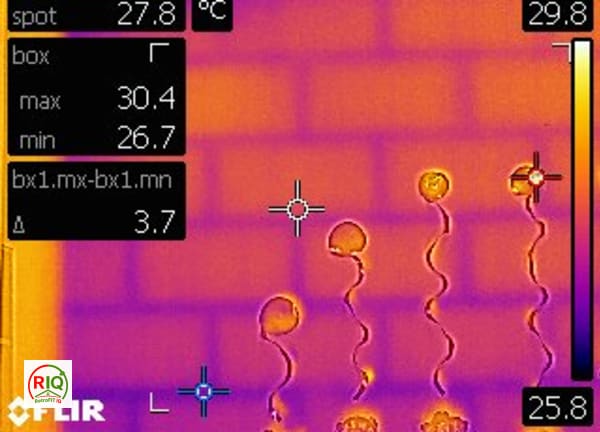
Thermal Bridging Visible Through Masonry Blockwork Wall

Sample Building Performance Investigation Report — Thermal Imaging

Thermal Bridge at Internal Corner Wall Junction

Thermal Bridge at Wall-Ceiling Junction Near Window

Airtightness Testing in a Stratford Victorian Terrace

Bathroom
No related investigations yet.
Browse all investigationsFrequently asked questions
How do I evidence damp and mould for a housing disrepair claim?+
With independent, measured evidence of the cause — not just photographs. An expert survey logs the temperature and humidity, uses thermal imaging to reveal cold surfaces and fabric defects, inspects the ventilation and fabric, and sets out whether the damp is condensation, penetrating or rising, linking it to a defect the landlord is responsible for.
Aren't photos of the mould enough?+
Rarely. Photographs show the symptom but not the cause or who is responsible, and landlords often attribute damp to lifestyle. What advances a claim is objective evidence that the cause is a building defect or inadequate ventilation, which requires measurement, not just images.
Why does it matter whether it's condensation or rising damp?+
Because the cause determines the landlord's repair obligation and the correct remedy. Condensation from cold, uninsulated surfaces or inadequate ventilation, penetrating damp from a defect, and rising damp are all building issues, but they must be distinguished and documented to establish responsibility and the right fix.
Why use an independent surveyor?+
Because an independent building-physics assessment is not selling a treatment and is not the tenant's or landlord's word — it is documented measurement and reasoning, which carries weight with a landlord, solicitor or court and is far harder to dispute.
What should the report contain?+
The measured findings, the diagnosed cause, the specific building defect or inadequacy responsible, and the remedy required to resolve it. That chain of reasoning is what supports the claim and ensures any works actually fix the problem.
Will the report help fix the home too?+
Yes. By identifying the cause and the correct remedy — warming and insulating cold surfaces and providing adequate ventilation, repairing a defect, or addressing the damp-proof course — the report defines the works that will genuinely resolve the damp, whatever the legal outcome.
Stop guessing — find the real cause
Do not spend money fixing symptoms before you understand the cause. Every home behaves differently, and the only reliable way to know what is happening in yours is professional building performance diagnostics. At RetrofitIQ we verify buildings using the right combination of investigations:
- Thermal imaging
- Blower door testing
- Moisture & dew point readings
- Ventilation review
- Building physics assessment
- Passive House methodology