
Why does my new build feel stuffy or have poor air quality?
A new build that feels stuffy, humid or 'airless' is showing the consequence of a very common situation: modern homes are built airtight to save energy, which is good, but that airtightness only works if the ventilation designed to go with it is installed and properly commissioned — and very often it is not. An airtight home with under-performing ventilation cannot bring in enough fresh air or remove moisture and pollutants, so it feels stuffy, gets humid, and can develop condensation and poor indoor air quality. The unit may be present but never balanced, or the extract simply too weak. It is a ventilation defect, and it is both fixable and, where the home is in warranty, something the developer should put right.
 Reviewed by George Sora, Certified Passive House DesignerUpdated June 2026
Quick answer & key takeaways
8 min read- New builds are airtight, so they depend on their designed ventilation working.
- The ventilation is often installed but never properly commissioned.
- Under-performing ventilation leaves the home stuffy, humid and poor in air quality.
- It is a ventilation defect, not simply how the home is.
- Biggest misconception: open a window and live with it. The ventilation should work as designed.
- Retrofit IQ's approach: measure the ventilation, evidence the defect, and get it commissioned or fixed.
What this usually means
Modern new builds are constructed to be airtight, because uncontrolled air leakage wastes energy; the building regulations and the energy calculations assume a tight envelope. But a tight envelope removes the accidental ventilation that older, leaky homes relied on, so a new build must have purpose-provided ventilation — continuous mechanical extract, or a mechanical ventilation with heat recovery (MVHR) system — to supply fresh air and remove the moisture and pollutants a household generates. The airtightness and the ventilation are two halves of one design: tight envelope, controlled ventilation. When the ventilation half does not work, the airtight home has no way to breathe, and it feels stuffy and becomes humid.
The usual reason the ventilation does not work is that it was never properly commissioned. An MVHR or extract system is frequently installed and switched on but never set up to deliver the design airflow to and from each room, so it moves far too little air; or it is out of balance, has its boost functions disabled, or the ducts are poorly run. The occupant is then often told to 'open the windows' — which defeats the airtight, energy-efficient design and still does not provide reliable ventilation. The stuffiness, humidity, lingering cooking smells, and any condensation or mould are the symptoms of a ventilation system that is present but not performing.
Because this is a defect rather than an inherent feature, it should be measured and put right rather than tolerated. Measuring the actual airflow at each terminal reveals whether the system delivers the designed ventilation; checking the commissioning records (or their absence) and the installation shows why it does not. Where the home is in warranty, documenting that the ventilation does not achieve its design flow rates is evidence the developer should act on, because the home does not meet the ventilation standard it was built to. The fix is to commission or correct the system so it delivers fresh air and removes moisture as intended. An assessment establishes the shortfall, provides the evidence, and defines the remedy, so the airtight home gets the working ventilation it depends on.
Common causes
Airtight home, no working ventilation
A tight envelope with under-performing ventilation cannot bring in fresh air.
Ventilation never commissioned
The MVHR or extract was installed but never set to the design flow rates.
System out of balance or weak
Unbalanced or weak ventilation moves too little air to clear moisture and pollutants.
Poor installation
Badly run ducts or disabled functions leave the system ineffective.
Told to open windows
Relying on opening windows defeats the design and gives unreliable ventilation.
Signs and symptoms
Stuffy, airless feel
A home that feels airless indicates too little fresh air is being delivered.
High humidity and condensation
Humid air and condensation show moisture is not being removed.
Lingering smells
Cooking and other smells that linger reveal weak extract ventilation.
Mould appearing
Mould in a new build often reflects ventilation that was never commissioned.
Ventilation unit barely moving air
Little airflow at the vents shows the system is not delivering its design flow.
What most people check first
- Whether the ventilation system was ever commissioned to the design flow rates.
- Whether it is balanced and delivering air to and from each room.
- Whether the ducts and installation are sound.
- Whether the home is in warranty so the developer should act.
What most people miss
- That airtightness requires working ventilation to be healthy.
- That the ventilation is usually uncommissioned, not absent.
- That opening windows defeats the design and is not a fix.
- That a measured shortfall is evidence for a warranty claim.
The building physics
A dwelling's indoor air quality and humidity depend on the rate at which fresh air is supplied and stale, moist air removed. In a leaky older home, infiltration through the envelope provided a large, if uncontrolled, share of this exchange; deliberately airtight modern construction suppresses that infiltration to save energy, so the required air exchange must be delivered by the designed ventilation system. If that system fails to achieve its design flow rates, the air-change rate falls below what is needed to dilute pollutants and remove moisture, and the indoor humidity, carbon dioxide and contaminant levels rise — experienced as stuffiness, condensation and poor air quality. The airtightness is not the fault; the unmet ventilation is.
Ventilation systems deliver their performance only when commissioned and correctly installed. An MVHR or continuous extract system is designed for specific supply and extract rates per room, balanced across the dwelling; commissioning measures and adjusts the terminals and fan to achieve these. Uncommissioned systems run at arbitrary, usually deficient, flows; imbalance, disabled boost, clogged filters, and crushed or poorly routed ducts all reduce the delivered air. The consequence in an airtight home is direct and predictable: insufficient ventilation and the resulting humidity and pollutant build-up, because there is no compensating infiltration. Advising occupants to open windows substitutes an uncontrolled, intermittent, energy-wasting exchange for the designed one and does not reliably meet the ventilation requirement.
Diagnosis is therefore a measurement of the ventilation against its design, and it doubles as evidence. Airflow measurement at each supply and extract terminal establishes whether the system meets the design rates and balance; inspection of the installation and commissioning documentation explains any shortfall; and humidity and air-quality monitoring confirm the effect. Where the home is within warranty, a documented failure to achieve the design ventilation demonstrates that the dwelling does not meet the standard it was built to — the basis for the developer to commission or correct the system. The remedy follows from the measurement: commissioning, re-balancing, duct correction or installation rectification, after which the airtight home receives the controlled ventilation that makes it healthy and efficient. This measured approach both fixes the home and supports a claim, in contrast to living with stuffiness or masking it with open windows.
How to fix a stuffy new build
Measure the ventilation against its design, document the shortfall as a defect, and get the system commissioned or corrected so the airtight home receives the fresh air it depends on.
- 01
Measure the airflow
Check the actual supply and extract rates at each terminal against the design and balance.
- 02
Check commissioning and installation
Establish whether the system was set up and whether the ducts and unit are sound.
- 03
Confirm the air quality
Monitor the humidity and air quality to confirm the ventilation shortfall's effect.
- 04
Document the defect
Record that the ventilation does not meet its design rates as evidence for the developer.
- 05
Commission or correct the system
Set the system to its design flow rates and balance, or rectify the installation.
- 06
Verify the result
Confirm the home no longer feels stuffy and the humidity and air quality have improved.
How to prevent it coming back
- Ensure the ventilation is commissioned with records when handed over.
- Do not rely on opening windows to compensate for failed ventilation.
- Maintain the system's filters and ducts.
- Treat a stuffy airtight home as a ventilation defect to fix.
How Retrofit IQ investigates this
We measure whether the ventilation meets its design and document the shortfall, so the defect can be fixed and, in warranty, evidenced to the developer.
Do not spend money fixing symptoms before you understand the cause — investigate first, then build with confidence.
Do I need a professional investigation?
If a new build feels stuffy or humid, has lingering smells, or is developing condensation or mould, it is worth measuring the ventilation against its design — especially while the home is in warranty. Documenting that the system does not achieve its design flow rates evidences the defect for the developer and defines the remedy, so the airtight home gets the working ventilation it depends on rather than being aired by open windows.
Where to go next
Relevant services
Related comparisons
From the Academy
Related case studies
Related problems you may also have
Evidence from Real Projects (13)
Real project and investigation images from our own fieldwork, matched to this page — not stock photography.
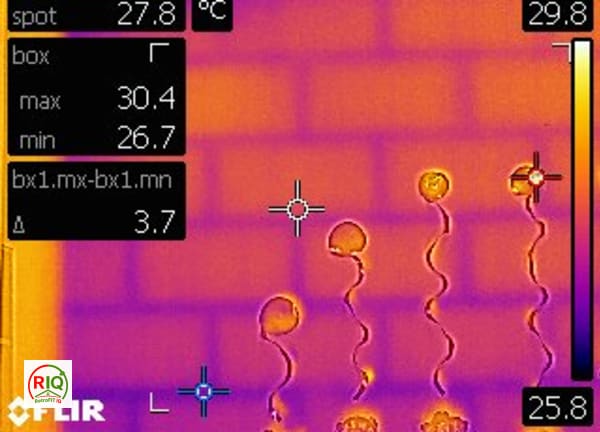
Thermal Bridging Visible Through Masonry Blockwork Wall

Sample Building Performance Investigation Report — Thermal Imaging
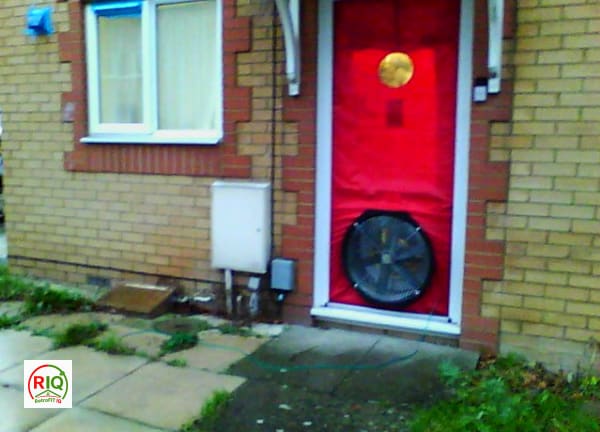
Blower Door Airtightness Test Setup

Calibrated blower door fan installed in the front doorway, sealed with the red airtight pa

Airtightness Testing in a Stratford Victorian Terrace

Ceiling / external-wall junction
No related investigations yet.
Browse all investigationsFrequently asked questions
Why does my new build feel stuffy or have poor air quality?+
Because modern homes are built airtight to save energy, and that only works if the designed ventilation is installed and properly commissioned — which it often is not. An airtight home with under-performing ventilation cannot bring in enough fresh air or remove moisture, so it feels stuffy and humid and can develop condensation and poor air quality. It is a ventilation defect, not just how the home is.
Isn't an airtight home meant to be sealed?+
Airtight, yes — but not unventilated. Airtightness removes the accidental ventilation that leaky old homes relied on, so a new build must have purpose-provided ventilation (MVHR or continuous extract) to supply fresh air and remove moisture. Tight envelope and controlled ventilation are two halves of one design; when the ventilation half fails, the home cannot breathe.
Why is the ventilation not working?+
Most often because it was installed but never commissioned — never set to deliver the design airflow to and from each room — or it is out of balance, weak, or has poorly run ducts. The unit is usually present and not faulty; it simply was not set up to perform.
Should I just open the windows?+
That defeats the airtight, energy-efficient design and gives unreliable, intermittent ventilation. It is a workaround, not a fix. The proper solution is to get the ventilation system commissioned or corrected so it delivers controlled fresh air as intended.
Can I get the developer to fix it?+
Where the home is in warranty, yes — if the ventilation does not achieve its design flow rates, the home does not meet the standard it was built to, which is a defect the developer should remedy. Measuring and documenting the shortfall provides the evidence to require that.
How do you diagnose and fix it?+
We measure the actual airflow at each terminal against the design and balance, review the commissioning and installation, and monitor the humidity and air quality — then document the defect and specify commissioning or correction, so the airtight home receives the working ventilation it depends on.
Stop guessing — find the real cause
Do not spend money fixing symptoms before you understand the cause. Every home behaves differently, and the only reliable way to know what is happening in yours is professional building performance diagnostics. At RetrofitIQ we verify buildings using the right combination of investigations:
- Thermal imaging
- Blower door testing
- Moisture & dew point readings
- Ventilation review
- Building physics assessment
- Passive House methodology