
Why is my new-build warranty not covering damp?
Many homeowners find their new-build warranty rejects a damp or mould claim on the grounds that it is 'condensation' or caused by their 'lifestyle' rather than a building defect — a frequent and frustrating outcome. Warranties typically exclude condensation and routine maintenance, so developers and warranty providers lean on that exclusion, attributing damp to how the home is used. But condensation in a new build is very often the symptom of a genuine defect — inadequate ventilation that was never properly installed or commissioned, missing or bridged insulation creating cold spots, or airtightness and thermal-bridging failures. Independent evidence is what reframes the problem from blamed lifestyle to provable defect, which is the basis of a successful claim.
 Reviewed by George Sora, Certified Passive House DesignerUpdated June 2026
Quick answer & key takeaways
6 min read- Warranties commonly exclude condensation, so damp claims are often rejected.
- Developers tend to blame 'lifestyle' rather than the building.
- New-build condensation is frequently caused by a real defect.
- Inadequate ventilation, cold spots and bridging are common culprits.
- Biggest misconception: condensation can't be a defect. Often it's the symptom of one.
- RetrofitIQ's approach: independent evidence linking the damp to a building defect.
What this usually means
New-build warranties — such as those from the major providers — cover defects in workmanship and materials, but they almost always exclude condensation, normal shrinkage and matters of maintenance or 'lifestyle'. That exclusion gives developers and warranty assessors an easy line: when damp or mould appears, it is labelled condensation caused by the occupants drying washing, not opening windows, or 'not heating the home properly', and the claim is declined. For a homeowner who keeps the house reasonably warm and ventilated, this feels both unfair and hard to argue against without evidence.
The reality is that condensation in a new build is very often the visible symptom of a defect that is covered. The ventilation system may have been installed but never commissioned, set too low, ducted badly, or not running — so the home cannot remove the moisture a household normally produces. Insulation may be missing, gapped or compressed, and thermal bridges at junctions left uncorrected, creating cold surfaces where condensation forms. Airtightness defects can let humid air into cold cavities. In each case the condensation is not a lifestyle issue; it is the result of the home not being built or finished as designed, which is exactly what the warranty should cover.
Turning a rejected claim around therefore depends on independent evidence that distinguishes occupant behaviour from building defect. Logging the indoor humidity and CO₂ shows whether ventilation is inadequate; testing the ventilation system shows whether it delivers its design airflow; thermal imaging reveals missing insulation and cold bridges; and a moisture assessment confirms the damp is condensation on defectively cold surfaces, not just high living moisture. A report that ties the damp to specific, covered defects reframes the claim — and gives you the basis to press the developer or warranty provider for a remedy rather than accept the 'lifestyle' brush-off.
Common causes
Condensation exclusion
Warranties exclude condensation, so damp is labelled lifestyle and declined.
Uncommissioned ventilation
Ventilation installed but never set up to deliver its design airflow.
Missing or bridged insulation
Gaps and cold bridges create surfaces where condensation forms.
Airtightness defects
Humid air leaking into cold cavities and condensing out of sight.
Signs and symptoms
Claim rejected as 'lifestyle'
The standard line when condensation is the visible symptom.
Mould despite reasonable use
Suggests a defect, not occupant behaviour, is driving the damp.
Ventilation that barely runs
An uncommissioned or under-set system unable to remove moisture.
Cold patches where mould forms
Points to missing insulation or thermal bridging.
What most people check first
- Whether the ventilation system actually delivers its design airflow.
- Whether indoor humidity is high because ventilation is inadequate.
- Whether insulation is missing, gapped or bridged at the damp spots.
- Whether airtightness defects let humid air into cold areas.
What most people miss
- That condensation can be the symptom of a covered defect.
- That uncommissioned ventilation is a building fault, not lifestyle.
- That cold spots from bad insulation cause the condensation.
- That evidence is what overturns a 'lifestyle' rejection.
The building physics
Condensation forms when humid air meets a surface below its dew point, so a new build develops condensation either because the moisture load is not being removed (a ventilation defect) or because surfaces are abnormally cold (an insulation or thermal-bridging defect) — usually both. A correctly built and commissioned home with working ventilation and continuous insulation should handle a normal household's moisture without persistent condensation; when it cannot, the cause is generally a shortfall against the design, not the occupants. The distinction between 'lifestyle' and 'defect' is therefore testable: it turns on whether the ventilation delivers its design airflow and whether the surfaces are as warm as the specification intended.
Independent measurement makes that distinction. Data-logging humidity and CO₂ against occupancy establishes whether the air change is adequate; measuring the ventilation flow rates shows whether the installed system performs as designed; thermal imaging maps cold surfaces and reveals missing or discontinuous insulation and uncorrected thermal bridges; and a blower door test exposes airtightness defects that channel humid air to cold zones. Where these show the home cannot manage normal moisture because of how it was built, the condensation is reframed as the symptom of covered workmanship and materials defects. That evidence base is what shifts a rejected, 'lifestyle'-blamed claim onto the firmer ground of demonstrable building defect.
How to challenge a rejected new-build damp claim
Gather independent evidence — ventilation testing, humidity logging, thermal imaging and airtightness — that links the damp to specific building defects, then press for a warranty remedy.
- 01
Log the conditions
Record humidity and CO₂ to show whether ventilation is inadequate.
- 02
Test the ventilation
Measure whether the installed system delivers its design airflow.
- 03
Map cold surfaces
Use thermal imaging to reveal missing insulation and cold bridges.
- 04
Check airtightness
Identify defects channelling humid air into cold cavities.
- 05
Document the defects
Compile an independent report linking the damp to covered faults.
- 06
Pursue the remedy
Use the evidence to press the developer or warranty provider.
How to prevent it coming back
- Commission an independent survey early if damp appears.
- Don't accept a 'lifestyle' rejection without evidence.
- Keep records of reasonable heating and ventilation use.
- Have the ventilation system tested for its design airflow.
How Retrofit IQ investigates this
We gather independent evidence linking new-build damp to building defects, not occupant lifestyle.
Do not spend money fixing symptoms before you understand the cause — investigate first, then build with confidence.
Do I need a professional investigation?
If your new-build warranty has rejected a damp or mould claim as condensation or lifestyle, it is worth an independent investigation before accepting it. Testing the ventilation, logging humidity and mapping cold surfaces can reframe the damp as the symptom of a covered defect — giving you the evidence to pursue a proper remedy.
Prove your new build underperforms
We measure the home against its design and certification, building the evidence pack that reframes 'lifestyle' as a covered defect.
- Blower door test vs the design figure
- Thermal imaging & ventilation measurement
- Independent evidence pack for your claim
Where to go next
Relevant services
Related comparisons
Related case studies
Related problems you may also have
Evidence from Real Projects (16)
Real project and investigation images from our own fieldwork, matched to this page — not stock photography.

Sample Building Performance Investigation Report — Thermal Imaging

Thermal Bridge at Internal Corner Wall Junction

Thermal Bridge at Wall-Ceiling Junction Near Window
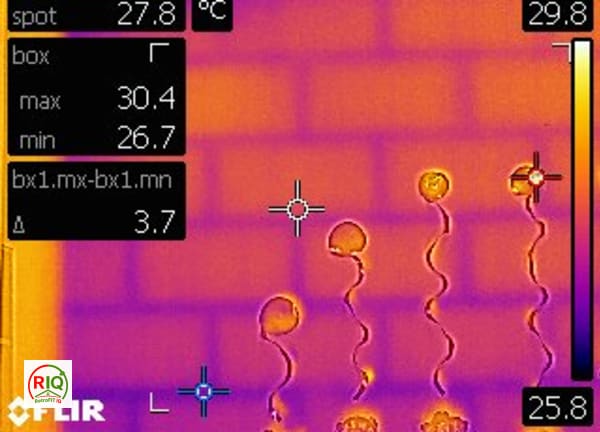
Thermal Bridging Visible Through Masonry Blockwork Wall

Airtightness Testing in a Stratford Victorian Terrace
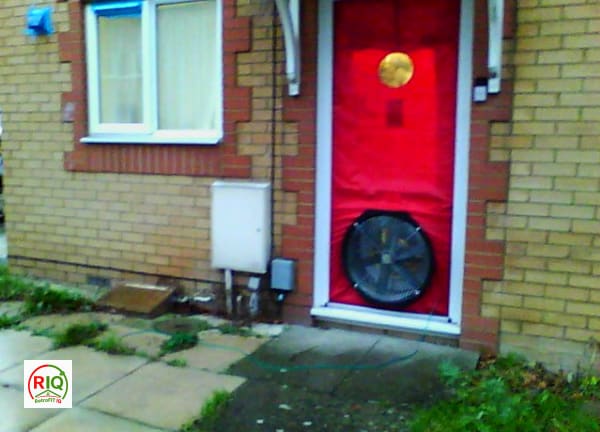
Blower Door Airtightness Test Setup
No related investigations yet.
Browse all investigationsFrequently asked questions
Why is my new-build warranty not covering damp?+
Because warranties typically exclude condensation and 'lifestyle' issues, and developers lean on that to attribute damp to how you use the home. But new-build condensation is often the symptom of a covered defect — uncommissioned ventilation, missing insulation or thermal bridging. Independent evidence is what reframes it from blamed lifestyle to provable defect.
Isn't condensation always the occupant's fault?+
No. A correctly built home with working ventilation and continuous insulation should handle a normal household's moisture without persistent condensation. When it can't, the cause is usually a shortfall against the design — inadequate ventilation or cold surfaces — not the occupants, and that is testable.
How do I prove it's a defect, not lifestyle?+
By measuring. Logging humidity and CO₂ shows whether ventilation is inadequate; testing the ventilation shows whether it delivers its design airflow; thermal imaging reveals missing insulation and cold bridges. A report tying the damp to those defects shifts the claim onto the ground the warranty should cover.
What if the ventilation 'is installed'?+
Installed isn't the same as working. Ventilation is frequently fitted but never commissioned, set too low or ducted badly, so it doesn't deliver its design airflow. Measuring the actual flow rates often shows the system can't remove normal household moisture — a defect, not a lifestyle choice.
Is it worth challenging the rejection?+
Often, yes. Damp remediation and the underlying defects can be costly, and an independent investigation that evidences covered defects gives you a real basis to press the developer or warranty provider for a remedy, rather than accepting a 'lifestyle' brush-off.
Stop guessing — find the real cause
Do not spend money fixing symptoms before you understand the cause. Every home behaves differently, and the only reliable way to know what is happening in yours is professional building performance diagnostics. At RetrofitIQ we verify buildings using the right combination of investigations:
- Thermal imaging
- Blower door testing
- Moisture & dew point readings
- Ventilation review
- Building physics assessment
- Passive House methodology