
How do I prove my new build is underperforming?
Proving that a new build is underperforming — cold, draughty, damp or expensive to run despite its modern specification — means measuring how the home actually behaves and comparing it with how it was designed and certified to perform. Subjective complaints ('it feels cold', 'the bills are high') are easy for a developer to dismiss; measured evidence is not. The tests that build a credible evidence pack are an airtightness (blower door) test against the design figure, thermal imaging against the insulation specification, ventilation flow measurement against the design rates, and humidity and temperature logging. Together they show whether the home was built as designed, which is the basis for a snagging or warranty claim.
 Reviewed by George Sora, Certified Passive House DesignerUpdated June 2026
Quick answer & key takeaways
6 min read- Underperformance is proven by measuring the home against its design.
- Subjective complaints are dismissed; measured evidence is not.
- Key tests: airtightness, thermal imaging, ventilation flow, humidity logging.
- The aim is to show the home wasn't built as designed or certified.
- Biggest misconception: you can't challenge a new build. Measurement gives you grounds.
- RetrofitIQ's approach: an independent evidence pack comparing actual to designed performance.
What this usually means
A new build is designed and certified to specific performance standards — an airtightness target, insulation U-values, ventilation rates and an energy assessment — and those design figures are the benchmark against which underperformance is judged. The problem for homeowners is that the symptoms they notice are subjective and easily deflected: a developer can attribute 'cold' to the weather or the heating, and 'damp' to lifestyle. The way to make the complaint stick is to convert the symptoms into measurements and set them against the design, so the question becomes simply whether the as-built home meets the figures it was supposed to.
Each test targets a likely failure. A blower door test measures the actual air leakage and compares it with the design air-permeability figure used in the energy assessment — new builds frequently leak more than the figure claimed, which proves the draughts and heat loss. Thermal imaging reveals whether the insulation is continuous and the thermal bridges corrected as specified, exposing missing, gapped or compressed insulation. Ventilation flow measurement checks whether the installed system delivers its design airflow, which is often where damp originates. Humidity and temperature logging documents the conditions the occupants actually experience. None of these rely on opinion.
Assembled into an independent report, these measurements form an evidence pack that compares actual performance with the design and identifies specific defects. That is what gives a homeowner leverage: a developer or warranty provider can argue with a feeling, but not with an airtightness result that fails the design figure, or a thermal image showing a roof with missing insulation. The pack supports a snagging claim during the defects period or a warranty claim after, and frames the remedy in terms of bringing the home up to the standard it was sold and certified to meet.
Common causes
Airtightness worse than designed
Actual leakage exceeding the design figure, causing draughts and heat loss.
Missing or discontinuous insulation
Gaps, compression and uncorrected bridges below the specified U-values.
Ventilation below design airflow
Systems not delivering their design rates, driving damp.
As-built gap from certification
The finished home not meeting the figures it was certified to.
Signs and symptoms
Cold and draughty despite modern spec
Suggests airtightness and insulation defects worth measuring.
High bills for an efficient home
Points to heat loss above the designed performance.
Condensation and mould
Often ventilation underperformance against the design rates.
Developer dismissing complaints
Exactly where measured evidence changes the conversation.
What most people check first
- The design airtightness, U-values and ventilation rates the home was certified to.
- Whether the actual air leakage exceeds the design figure.
- Whether the insulation is continuous and bridges corrected.
- Whether the ventilation delivers its design airflow.
What most people miss
- That the design figures are the benchmark for a claim.
- That measurement defeats 'it's the weather/lifestyle' deflections.
- That airtightness is often worse as-built than certified.
- That an independent evidence pack creates real leverage.
The building physics
A new build's performance is the product of several measurable quantities — air permeability, fabric U-values and continuity, thermal-bridge correction, and ventilation flow rates — each of which has a design value recorded in the energy and compliance assessments. Underperformance is, precisely, the as-built values falling short of those design values, and because each can be measured directly, the gap is provable rather than a matter of opinion. The blower door test quantifies air permeability; thermal imaging under a temperature difference reveals fabric continuity and bridging; flow measurement quantifies ventilation; and logging captures the resulting internal conditions. The comparison of measured-to-design is the proof.
This matters because the symptoms a homeowner feels are downstream of these quantities. Excess air leakage and fabric shortfalls produce the cold, draughts and high bills; ventilation below design produces the damp; and all of them trace back to the home not being built as the assessment assumed. An independent investigation that runs the tests and presents the results against the design figures therefore does two things: it identifies the specific defects to be remedied, and it establishes that the home does not meet the standard it was certified and sold to. That evidence base is what converts a dismissed complaint into a defensible snagging or warranty claim with a clear, measurable remedy.
How to build the evidence that a new build underperforms
Measure the home against its design — airtightness, insulation, ventilation and conditions — and assemble an independent report comparing actual to designed performance to support a claim.
- 01
Obtain the design figures
Get the certified airtightness, U-values and ventilation rates.
- 02
Test the airtightness
Run a blower door test and compare it with the design figure.
- 03
Image the fabric
Use thermal imaging to expose missing insulation and bridges.
- 04
Measure the ventilation
Check the installed system against its design airflow.
- 05
Log the conditions
Record humidity and temperature the occupants experience.
- 06
Compile the evidence pack
Present actual versus designed performance with the defects identified.
How to prevent it coming back
- Commission tests within the defects/snagging period where possible.
- Keep the design and certification documents for comparison.
- Use independent measurement, not subjective complaints.
- Frame the remedy as meeting the certified standard.
How Retrofit IQ investigates this
We measure a new build against its design and certification to evidence underperformance and defects.
Do not spend money fixing symptoms before you understand the cause — investigate first, then build with confidence.
Do I need a professional investigation?
If your new build is cold, draughty, damp or expensive despite its specification, and the developer is dismissing your complaints, it is worth an independent performance investigation. Measuring the home against its design figures produces the evidence pack needed to support a snagging or warranty claim and to define a proper remedy.
Prove your new build underperforms
We measure the home against its design and certification, building the evidence pack that reframes 'lifestyle' as a covered defect.
- Blower door test vs the design figure
- Thermal imaging & ventilation measurement
- Independent evidence pack for your claim
Where to go next
Relevant services
Related comparisons
Related case studies
Related problems you may also have
Evidence from Real Projects (18)
Real project and investigation images from our own fieldwork, matched to this page — not stock photography.

Sample Building Performance Investigation Report — Thermal Imaging
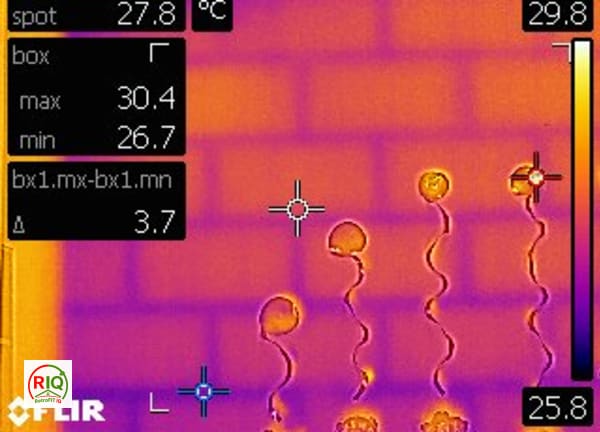
Thermal Bridging Visible Through Masonry Blockwork Wall
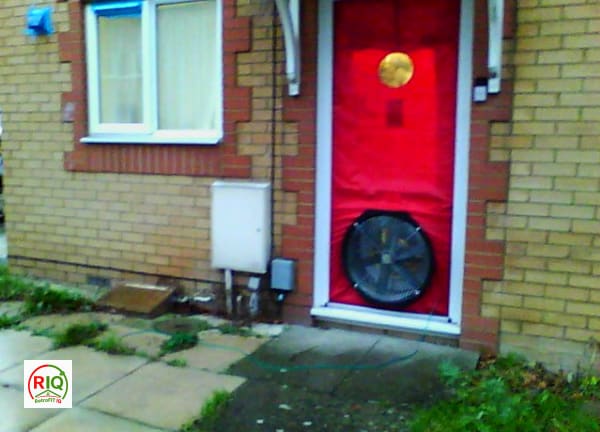
Blower Door Airtightness Test Setup

Thermal Bridge at Internal Corner Wall Junction

Thermal Bridge at Wall-Ceiling Junction Near Window

Airtightness Testing in a Stratford Victorian Terrace
No related investigations yet.
Browse all investigationsFrequently asked questions
How do I prove my new build is underperforming?+
By measuring how it actually behaves and comparing it with its design and certification. A blower door test against the design airtightness, thermal imaging against the insulation spec, ventilation flow measurement against the design rates, and humidity logging together show whether the home was built as designed — which is the basis for a snagging or warranty claim.
Why won't my developer take my complaints seriously?+
Because subjective complaints — 'it feels cold', 'the bills are high' — are easy to attribute to the weather or your lifestyle. Measured evidence isn't. An airtightness result that fails the design figure, or a thermal image showing missing insulation, changes the conversation from opinion to fact.
What tests should I get?+
The core set is a blower door (airtightness) test, thermal imaging, ventilation flow measurement and humidity/temperature logging. Each targets a common new-build failure and is compared with the design value, so the package evidences both the underperformance and the specific defects behind it.
Can I still claim after the snagging period?+
Often, yes — structural and defect warranties run for years, and an evidence pack of measured underperformance supports a warranty claim as well as snagging. The sooner you measure the better, but the design-versus-actual comparison remains valid throughout the warranty.
What does the evidence pack achieve?+
It identifies the specific defects to be remedied and establishes that the home doesn't meet the standard it was certified and sold to. That gives you leverage to press the developer or warranty provider for a remedy framed as bringing the home up to its designed performance.
Stop guessing — find the real cause
Do not spend money fixing symptoms before you understand the cause. Every home behaves differently, and the only reliable way to know what is happening in yours is professional building performance diagnostics. At RetrofitIQ we verify buildings using the right combination of investigations:
- Thermal imaging
- Blower door testing
- Moisture & dew point readings
- Ventilation review
- Building physics assessment
- Passive House methodology