
Why is my MVHR not working properly?
When a mechanical ventilation with heat recovery (MVHR) system does not seem to be working — the home feels stuffy or humid, there is condensation, or the unit is noisy or draughty — the cause is rarely a faulty unit. Far more often the system was never properly commissioned, is out of balance, has blocked filters or ducts, or was poorly designed and installed. An MVHR only delivers good air quality and heat recovery if it is set up to move the right amount of air to and from each room and kept maintained; without that, even a good unit underperforms. Diagnosing which of these is at fault — commissioning, balance, blockage, design or maintenance — is what gets the system actually working.
 Reviewed by George Sora, Certified Passive House DesignerUpdated June 2026
Quick answer & key takeaways
8 min read- An underperforming MVHR is usually uncommissioned or unbalanced, not faulty.
- Blocked filters and ducts and poor installation are common causes.
- It must move the right airflow to and from each room to work.
- Symptoms include stuffiness, humidity, condensation, noise and draughts.
- Biggest misconception: the unit is broken. It is usually set up or maintained wrongly.
- Retrofit IQ's approach: check commissioning, balance, ducts and filters, then put it right.
What this usually means
An MVHR system continuously extracts stale, humid air from wet rooms (kitchens, bathrooms) and supplies fresh, filtered air to living rooms and bedrooms, recovering heat from the outgoing air to warm the incoming. For it to work, it has to be commissioned — set up so the airflow to and from each room matches the design, and the supply and extract are balanced — and kept maintained, with clean filters and clear ducts. A great many MVHR systems that 'do not work' were simply never commissioned: installed and switched on but never adjusted to the correct flow rates, so they move far too little air, or are out of balance, and cannot do their job.
Beyond commissioning, several faults degrade performance. Filters that are never changed clog and choke the airflow; ducts that are crushed, kinked, too long, poorly routed or full of debris add resistance and cut the flow; and poor installation — undersized or leaky ductwork, the unit sited in a cold loft without insulated ducts, or condensate drainage not provided — undermines the system. The symptoms map onto these causes: stuffiness and humidity mean too little fresh air is being delivered or extracted; condensation can indicate poor airflow or cold, uninsulated ducts; noise often points to ducts or settings; and draughts or a cold feel can mean the balance or the supply temperature is wrong. The unit itself is usually sound.
Because the causes are specific and different, the fix begins with diagnosis rather than replacing the unit. Measuring the actual airflow at each supply and extract terminal reveals whether the system is moving the designed volumes and is in balance; inspecting the filters and ducts finds blockages and installation faults; and checking the commissioning records (or their absence) and the unit settings shows whether it was ever set up. From that, the remedy follows — commissioning or re-balancing the system, replacing filters and clearing or correcting ducts, insulating ducts in cold spaces, or remedying an installation defect. An assessment that establishes which fault is present gets the MVHR delivering the air quality and heat recovery it was installed for, rather than leaving an expensive system running ineffectively or, as often happens, switched off in frustration.
Common causes
Never commissioned
Installed but never set to the design flow rates, so it moves too little air.
Out of balance
Supply and extract not balanced, so ventilation and heat recovery are impaired.
Blocked filters or ducts
Clogged filters and crushed, kinked or dirty ducts choke the airflow.
Poor installation
Undersized or leaky ducts, an uninsulated unit in a cold loft, or no condensate drainage.
Wrong settings or maintenance
Incorrect speed settings or neglected maintenance leave the system underperforming.
Signs and symptoms
Stuffy or humid air
Stale, humid air indicates too little fresh air is being supplied or extracted.
Condensation despite the MVHR
Condensation suggests poor airflow or cold, uninsulated ducts.
Noisy unit or vents
Excessive noise often points to duct problems or incorrect settings.
Cold draughts from supply vents
A cold feel can mean imbalance or supply air not being tempered.
Weak airflow at the vents
Little air at the terminals shows blockage, imbalance or no commissioning.
What most people check first
- Whether the system was ever commissioned to the design flow rates.
- Whether the supply and extract are balanced.
- Whether the filters and ducts are clean and clear.
- Whether the installation (duct insulation, drainage) is sound.
What most people miss
- That most MVHR problems are commissioning, not a faulty unit.
- That clogged filters and ducts severely cut the airflow.
- That ducts in cold spaces must be insulated to avoid condensation.
- That measuring the airflow diagnoses the problem.
The building physics
An MVHR system is designed to deliver specified supply and extract airflow rates to each room, balanced so the whole-house ventilation rate and the room-by-room distribution meet the design, with the heat exchanger recovering warmth from the balanced extract stream. Its effectiveness depends entirely on achieving those flow rates: commissioning adjusts the terminals and the fan speed so the measured flows match the design and the supply and extract are in balance. Without commissioning, the as-installed flows are essentially arbitrary — typically far below design — so the system under-ventilates, humidity and pollutants are not removed, and the occupant experiences stuffiness and condensation despite a running system.
Airflow is also degraded by resistance and leakage in the distribution. Duct systems are sized for a given pressure drop; crushed, kinked, over-long or poorly routed ducts, and clogged filters, raise the resistance so the fan delivers less than its design flow, while leaky ductwork loses conditioned air into voids. Heat-recovery performance and condensation control depend further on the unit and ducts being correctly sited and insulated: an MVHR or its ducts in a cold loft without insulation cools the air and can cause condensation within the ducts, and the unit's condensate must be drained. These are installation and maintenance properties, not faults of the heat-exchange principle, and each suppresses performance in a characteristic way.
Diagnosis therefore rests on measuring the system's actual behaviour against its design. Airflow measurement at each supply and extract terminal establishes whether the design rates and balance are achieved; inspection of filters, ducts and the unit's siting and drainage identifies resistance, leakage and installation defects; and the commissioning documentation (or its absence) and the control settings reveal whether the system was ever set up. The remedy follows directly — commissioning or re-balancing, filter replacement and duct cleaning or correction, duct insulation in cold spaces, or rectification of an installation defect. This measured approach restores the designed ventilation and heat recovery, in contrast to assuming a faulty unit or, as commonly happens, abandoning a sound but uncommissioned system because it never appeared to work.
How to get an MVHR system working properly
Diagnose before replacing: measure the airflow and balance, inspect the filters, ducts and installation, and confirm commissioning — then put right whichever fault is suppressing the system.
- 01
Measure the airflow and balance
Check the actual supply and extract rates at each terminal against the design.
- 02
Check the commissioning
Establish whether the system was ever set up to the design flow rates and balanced.
- 03
Inspect filters and ducts
Find clogged filters and crushed, kinked or dirty ducts choking the airflow.
- 04
Check the installation
Confirm the ducts are insulated in cold spaces and the condensate is drained.
- 05
Commission or re-balance
Set the system to the design flow rates and balance, replacing filters and clearing ducts.
- 06
Verify the result
Confirm the air quality, humidity and comfort have improved as intended.
How to prevent it coming back
- Insist on proper commissioning records when MVHR is installed.
- Change filters and check ducts on a regular schedule.
- Insulate ducts and the unit in cold spaces.
- Diagnose the airflow before assuming the unit is faulty.
How Retrofit IQ investigates this
We measure the MVHR's actual airflow and balance and inspect the installation, so the real fault is found and corrected.
Do not spend money fixing symptoms before you understand the cause — investigate first, then build with confidence.
Do I need a professional investigation?
If your MVHR leaves the home stuffy or humid, causes condensation, or is noisy or draughty, it is worth having it assessed before assuming the unit is faulty. Measuring the airflow and balance and inspecting the filters, ducts and installation identifies whether it was never commissioned, is blocked, or was poorly installed — so the system can be put right and deliver the air quality and heat recovery it was meant to.
Where to go next
Relevant services
Related comparisons
Related case studies
Evidence from Real Projects (7)
Real project and investigation images from our own fieldwork, matched to this page — not stock photography.
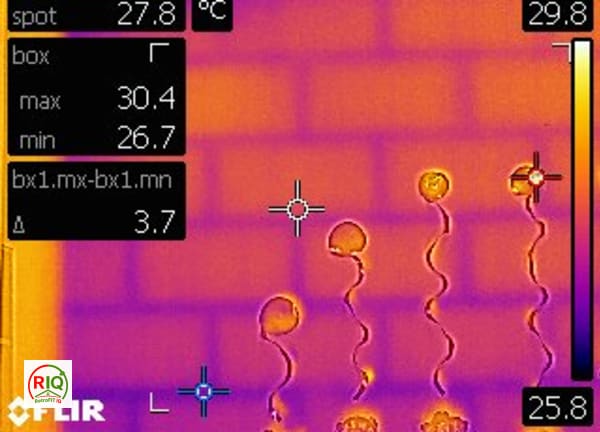
Thermal Bridging Visible Through Masonry Blockwork Wall

Sample Building Performance Investigation Report — Thermal Imaging

Brick-slip cladding installed onto the panel system with fresh mortar pointing

Brick-slip panels being installed onto the metal rail system over the mineral wool insulat
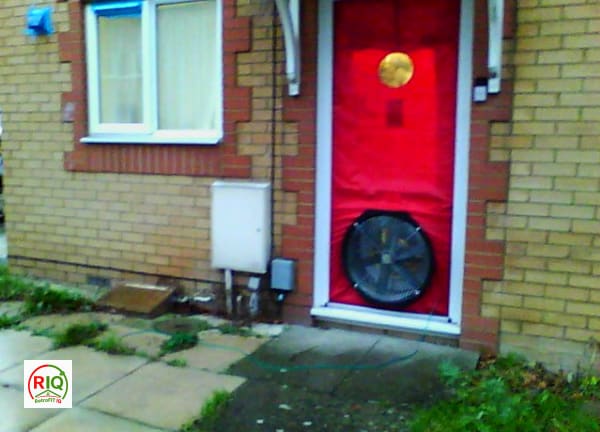
Blower Door Airtightness Test Setup

Thermal Bridge at Internal Corner Wall Junction
No related investigations yet.
Browse all investigationsFrequently asked questions
Why is my MVHR not working properly?+
Usually not because the unit is faulty, but because it was never properly commissioned, is out of balance, has blocked filters or ducts, or was poorly installed. An MVHR only works if it moves the right amount of air to and from each room and is maintained, so a stuffy, humid or noisy home with MVHR usually points to one of those set-up or maintenance issues.
What does 'commissioning' mean for MVHR?+
Commissioning is setting the system up after installation so the measured airflow to and from each room matches the design and the supply and extract are balanced. A great many MVHR systems were installed and switched on but never commissioned, so they move far too little air and cannot ventilate properly — even though the unit is fine.
Why is there still condensation with MVHR running?+
Because the system is probably not moving enough air to remove the moisture — through lack of commissioning, imbalance or blockage — or the ducts in a cold space are uninsulated and condensing internally. Measuring the airflow and checking the duct installation identifies which it is.
Could dirty filters be the problem?+
Yes, commonly. Filters that are never changed clog and choke the airflow, and dirty or crushed ducts add resistance, so the system delivers far less than its design flow. Regular filter changes and clear ducts are essential to keep an MVHR working.
Should I just replace the unit?+
Usually not before diagnosing. The unit itself is rarely the fault — the problem is far more often commissioning, balance, blocked filters or ducts, or installation. Measuring the airflow and inspecting the system identifies the real cause, so you avoid replacing a sound unit and instead fix what is actually wrong.
How do you diagnose it?+
We measure the actual supply and extract airflow at each terminal against the design and balance, review whether the system was commissioned, and inspect the filters, ducts and installation — then specify commissioning, re-balancing, filter and duct remedies, or fixing an installation defect, so the MVHR delivers its designed ventilation and heat recovery.
Stop guessing — find the real cause
Do not spend money fixing symptoms before you understand the cause. Every home behaves differently, and the only reliable way to know what is happening in yours is professional building performance diagnostics. At RetrofitIQ we verify buildings using the right combination of investigations:
- Thermal imaging
- Blower door testing
- Moisture & dew point readings
- Ventilation review
- Building physics assessment
- Passive House methodology