
How do thermostatic radiator valves work, and where should I set them?
A thermostatic radiator valve (TRV) controls the temperature of the room, not the heat of the radiator: it senses the air temperature around it and throttles the flow of hot water to the radiator to hold that room at the level you set. The numbers on the dial are not heat settings but target temperatures, so you set each room to the comfort you want — typically a mid setting for living rooms and lower for bedrooms — and the valve does the rest, letting you heat each room only as much as it needs.
 Reviewed by George Sora, Certified Passive House DesignerUpdated June 2026
Quick answer & key takeaways
8 min read- A TRV controls the room's temperature, not the radiator's heat output directly.
- The dial numbers are target temperatures, not heat levels or flow rates.
- Set each room to the comfort it needs — living rooms mid, bedrooms lower.
- TRVs work with, not instead of, the main room thermostat and boiler control.
- Biggest misconception: a higher number heats the room faster. It only sets a higher target.
- Retrofit IQ's approach: set TRVs by room, and reduce heat loss so lower settings suffice.
What this usually means
A TRV is a self-regulating valve fitted to a radiator. Inside its head is a temperature-sensitive element that expands as the surrounding air warms and contracts as it cools; this movement opens and closes the valve, increasing or reducing the flow of hot water to the radiator. So the valve continuously adjusts the radiator to keep the air around it at the temperature you have dialled in. It is a local, room-by-room thermostat, allowing each room to be held at a different temperature rather than heating the whole house to one level.
The numbers on the dial are the commonest source of confusion. They are not power settings, flow rates or 'how hot the radiator gets' — they correspond to target room temperatures, with higher numbers meaning a warmer target. Turning a TRV to its maximum does not heat the room faster; it simply sets a high target the valve will keep feeding the radiator to reach, which often means the room overheats and energy is wasted. A mid setting typically corresponds to a comfortable living temperature, with frost-protection at the lowest mark.
Used well, TRVs let you tailor heat to each room: a higher setting where you spend time, lower in bedrooms and unused rooms, and a low frost setting where heat is rarely needed. They work alongside the main heating controls, not instead of them — the boiler or heat pump and the main room thermostat or programmer decide when and at what temperature the system runs, while the TRVs fine-tune each room. And because a TRV can only reduce the heat to a room, never add more than the system provides, the comfort you can achieve still depends on the radiator being adequate and the room not losing heat too fast.
Common causes
Misreading the numbers
Treating dial numbers as heat levels rather than target temperatures leads to overheating and waste.
Setting everything to maximum
Turning all TRVs to max heats rooms beyond comfort and wastes energy without warming faster.
TRV near a heat or cold source
A valve sited by a draught, sun or another heat source senses the wrong temperature and misbehaves.
Seized or stuck valves
A pin stuck in a TRV can leave a radiator permanently off or on, regardless of the setting.
Conflict with the room thermostat
TRVs and the main thermostat must be set sensibly together, especially in the thermostat's room.
Signs and symptoms
Rooms too hot or too cold
Discomfort despite TRVs usually means they are mis-set or the dial numbers misunderstood.
A radiator always cold or always hot
A radiator ignoring its TRV setting suggests a stuck pin or seized valve.
High bills from overheating
All TRVs on high heats rooms beyond need and raises running cost.
A room that never reaches the target
A room that stays cold at a high TRV setting points to an undersized radiator or high heat loss.
Uneven temperatures between rooms
Wildly different room temperatures indicate TRVs need setting room by room.
What most people check first
- Whether the dial numbers are understood as target temperatures, not heat levels.
- Whether each room's TRV is set to the comfort that room needs.
- Whether any valve is stuck, leaving a radiator always on or off.
- Whether TRVs and the main room thermostat are set sensibly together.
What most people miss
- That a TRV controls the room temperature, not the radiator directly.
- That the numbers are target temperatures, so higher is not faster.
- That a TRV can only reduce heat, never exceed what the system provides.
- That comfort still depends on adequate radiators and low heat loss.
The building physics
A TRV is a proportional, self-acting control: its sensing element responds to the local air temperature and modulates the valve opening so that heat input to the room balances heat loss at the set point. As the room approaches the target, the valve closes progressively, reducing flow; if the room cools, it opens again. This proportional action holds the room near its set temperature without the on/off swings of a simple switch, provided the valve senses representative room air and is not influenced by a nearby draught, sunlight or heat source.
Crucially, a TRV is a flow-reducing device: it can only restrict the hot water reaching its radiator, so the maximum heat a room can receive is set by the radiator's output at the system's flow temperature, not by the valve. If a room loses heat faster than its radiator can supply at full flow, no TRV setting will make it warm — the limit is the emitter and the fabric. This is why a room that stays cold at a high TRV setting is signalling an undersized radiator or excessive heat loss, not a valve fault, and why turning the dial higher cannot overcome it.
TRVs operate within a hierarchy of controls. The boiler or heat pump sets the water temperature, the programmer sets when heating runs, and the main room thermostat sets a reference temperature for the system; TRVs then trim each room around that. A common pitfall is fitting a TRV in the same room as the main thermostat, where the two can fight; guidance is to leave that radiator without a TRV or set it fully open. Setting TRVs by room — warmer where occupied, cooler in bedrooms, frost-protect where unused — and pairing this with reduced heat loss lets the home be both comfortable and economical, since lower targets and lower flow temperatures both save energy.
How to set thermostatic radiator valves
Set each room to the temperature it needs, understanding the dial as a target not a heat level — and reduce heat loss so lower, cheaper settings keep every room comfortable.
- 01
Understand the dial
Read the numbers as target room temperatures, with higher meaning warmer, not faster heating.
- 02
Set TRVs room by room
Choose a comfortable mid setting for living rooms, lower for bedrooms, frost-protect for unused rooms.
- 03
Coordinate with the thermostat
Leave the main-thermostat room's radiator without a TRV or fully open to avoid them conflicting.
- 04
Free any stuck valves
Check that pins move freely so radiators respond to their settings rather than sticking on or off.
- 05
Address rooms that stay cold
Where a room won't reach its target, look at radiator size and heat loss rather than turning the dial higher.
- 06
Lower targets as fabric improves
After insulation and air-sealing, comfortable lower settings reduce running cost further.
How to prevent it coming back
- Set TRVs to the temperature each room needs, not all to maximum.
- Keep valves free-moving so they respond correctly.
- Avoid siting TRVs where draughts, sun or heat sources mislead them.
- Reduce heat loss so lower settings and flow temperatures suffice.
How Retrofit IQ investigates this
We check whether comfort problems are control, emitter or fabric issues, and set the home up to be warm and economical.
Do not spend money fixing symptoms before you understand the cause — investigate first, then build with confidence.
Do I need a professional investigation?
If rooms stay too cold or too hot however the TRVs are set, or a room won't reach its target at a high setting, it is worth checking the radiator sizing and the room's heat loss rather than just the valves. A heat-loss assessment shows whether the limit is the emitter or the fabric, so the right fix is made.
Where to go next
Relevant services
Related comparisons
From the Academy
Related case studies
Related problems you may also have
Evidence from Real Projects (21)
Real project and investigation images from our own fieldwork, matched to this page — not stock photography.

Sample Building Performance Investigation Report — Thermal Imaging
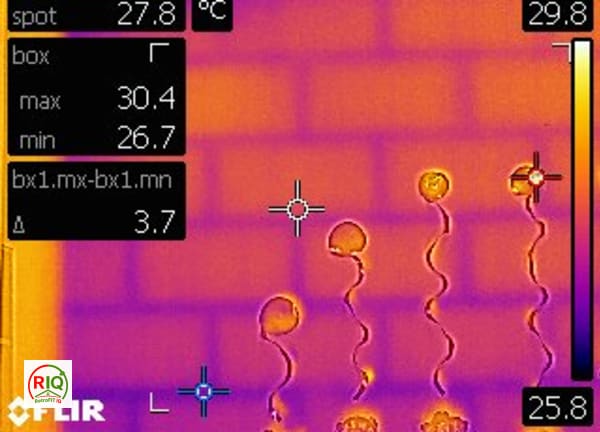
Thermal Bridging Visible Through Masonry Blockwork Wall

Thermal Bridge at Wall-Ceiling Junction Near Window
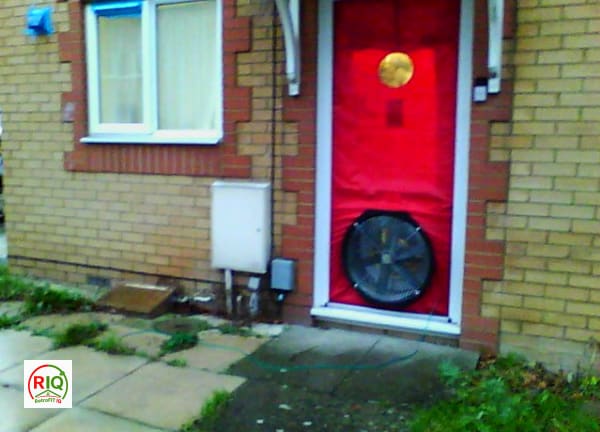
Blower Door Airtightness Test Setup

Thermal Bridge at Internal Corner Wall Junction
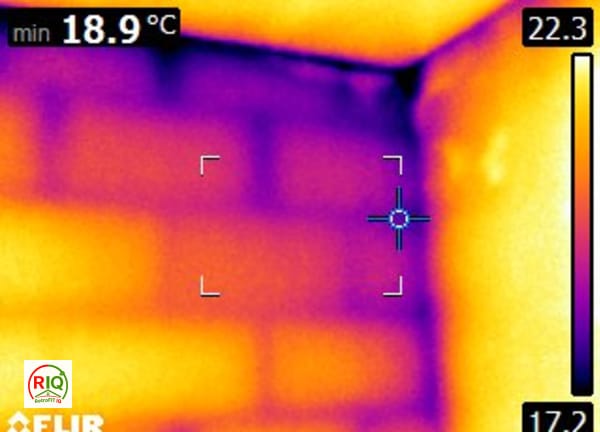
Cold wall surface vs warm ceiling
No related investigations yet.
Browse all investigationsFrequently asked questions
How do thermostatic radiator valves work?+
A TRV senses the air temperature around it and throttles the flow of hot water to the radiator to hold the room at the temperature you set. It is a local, room-by-room thermostat, so each room can be kept at a different temperature.
What do the numbers on a TRV mean?+
They are target room temperatures, not heat levels or flow rates — higher numbers mean a warmer target. A mid setting is usually a comfortable living temperature, while the lowest mark is frost protection.
Where should I set my TRVs?+
Set each room to the comfort it needs: a mid setting for living rooms, lower for bedrooms, and frost-protect for rooms you rarely use. There is no single 'best' number — it depends on the room and your comfort.
Does turning a TRV higher heat the room faster?+
No. It only sets a higher target temperature; the radiator still heats at the same rate. Turning it to maximum tends to overheat the room and waste energy rather than warming it more quickly.
Why won't a room get warm even with the TRV on high?+
Because a TRV can only reduce heat, not add more than the system provides. If the room loses heat faster than its radiator can supply, the limit is the radiator size or the fabric — not the valve setting.
Should I fit a TRV on the radiator near my room thermostat?+
Generally no — the TRV and the main thermostat can conflict. Guidance is to leave that radiator without a TRV or set it fully open so the two controls do not fight.
How do you set a home up for comfortable, economical heating?+
We check the TRVs and controls, calculate the heat loss to confirm radiators are adequate, find any fabric improvements with thermal imaging and a blower door test, and set targets and flow temperatures for comfort and economy.
Stop guessing — find the real cause
Do not spend money fixing symptoms before you understand the cause. Every home behaves differently, and the only reliable way to know what is happening in yours is professional building performance diagnostics. At RetrofitIQ we verify buildings using the right combination of investigations:
- Thermal imaging
- Blower door testing
- Moisture & dew point readings
- Ventilation review
- Building physics assessment
- Passive House methodology