
Why is my ground floor so draughty?
A draughty ground floor is usually cold air leaking up from the ventilated space beneath a suspended timber floor, through the gaps between floorboards and around the skirtings. The under-floor ventilation is there for a good reason — to keep the timbers dry — but the gaps let that cold air into the room. The fix is to seal the room side without blocking the ventilation the floor structure needs.
 Reviewed by George Sora, Certified Passive House DesignerUpdated June 2026
Quick answer & key takeaways
7 min read- Ground-floor draughts are cold air leaking up from the ventilated void below.
- Floorboard gaps and skirting junctions are the main leakage paths.
- The under-floor ventilation is essential and must not be blocked.
- The draught can make the whole room feel cold, not just the floor.
- Biggest misconception: block the air bricks to stop the draught. That risks rot.
- Retrofit IQ's approach: locate the leakage with a blower door test and seal the room side safely.
What this usually means
Most older homes have a suspended timber ground floor: floorboards on joists, with a ventilated air space beneath. That void is deliberately connected to the outside through air bricks so moving air keeps the timbers dry and prevents rot. The downside is that the void is cold — close to outdoor temperature — and any gaps in the floor above let that cold air leak up into the room, driven by the pressure differences across the building.
Those gaps are easy to underestimate. The small spaces between floorboards, and the junction where the floorboards meet the skirting and wall, add up to a large leakage area, and because the void connects to outside, the air coming through is genuinely cold. The result is a draught felt across the floor and around the room edges, and a steady loss of warm air being pulled out elsewhere as cold air enters here.
The instinct to block the air bricks to stop the draught is exactly the wrong move: it traps moisture in the void and risks rotting the floor timbers. The correct approach is to seal the room side — the board gaps and the perimeter — so the cold void air can no longer leak into the room, while keeping the void itself fully ventilated. Done properly, the draught stops and the floor structure stays protected.
Common causes
Gaps between floorboards
The spaces between boards add up to a large path for cold void air to leak into the room.
Skirting and perimeter junctions
The gap where floor meets wall and skirting lets cold air in around the room edges.
Cold, ventilated under-floor void
The void is near outdoor temperature, so the air leaking up is genuinely cold.
Pressure differences across the home
Stack and wind effects draw cold air up through the floor as warm air escapes higher up.
Service penetrations through the floor
Pipes and cables passing through the floor create extra leakage points.
Signs and symptoms
Cold air moving across the floor
A felt draught at floor level is the clearest sign of leakage up through the floor.
Draughts worse around the room edges
Cold air at the perimeter points to the floor-to-wall and skirting junctions.
Cold air near pipe and cable penetrations
Draughts at services through the floor reveal extra leakage points.
Whole room feels cold and hard to heat
Continuous cold-air entry through the floor pulls warmth out and chills the room.
Draught stronger on windy days
Leakage that worsens with wind confirms pressure-driven air movement through the floor.
What most people check first
- Whether the floor is suspended timber over a ventilated void.
- Whether you can feel cold air at the floorboards, skirtings or penetrations.
- Whether the draught worsens on windy days.
- Whether any air bricks have been blocked (which must be reopened).
What most people miss
- That the under-floor void is meant to be ventilated and must stay so.
- That sealing the room side, not blocking air bricks, is the correct fix.
- That the floor perimeter and penetrations leak as much as the board gaps.
- That floor draughts can chill the whole room, not just the floor.
The building physics
Air leakage through a suspended floor is pressure-driven. The stack effect — warm air rising and escaping high in the building — creates a slight negative pressure low down, which draws replacement air in wherever it can, including up through the floor from the ventilated void. Wind adds to and varies this pressure, which is why floor draughts are often worse on windy days. Because the void is connected to outside and stays cold, the air drawn up is at close to outdoor temperature, so it is felt as a distinct cold draught.
The leakage area is the sum of many small gaps: board-to-board joints, the floor-to-skirting junction, and service penetrations. Individually minor, together they form a significant opening, and air takes the easiest path through all of them. This is why piecemeal draught-stripping often disappoints — the air simply uses the gaps that remain — and why measuring the leakage under the steady pressure of a blower door test, with smoke to reveal the paths, gives a far more reliable picture than feeling for draughts by hand.
The safe remedy separates two air spaces that must stay separate: the ventilated void and the heated room. Sealing the room side — board gaps, perimeter and penetrations — stops void air entering the room, while the air bricks keep the void ventilated so the timbers stay dry. Blocking the air bricks to stop the draught would join the problem to a worse one, trapping moisture and risking decay. Targeted room-side sealing, verified by re-testing, stops the draught without endangering the floor.
How to stop ground-floor draughts safely
Seal the room side of the floor so cold void air cannot leak up, while keeping the under-floor ventilation intact. Find the paths first so the sealing is complete.
- 01
Locate the leakage paths
Use a blower door test with smoke to find where void air enters — board gaps, skirtings and penetrations.
- 02
Seal between the floorboards
Close the gaps between boards so cold air can no longer leak up through them.
- 03
Seal the floor perimeter
Seal the floor-to-wall and skirting junction to stop cold air entering around the room edges.
- 04
Seal service penetrations
Seal around pipes and cables passing through the floor.
- 05
Keep the air bricks clear
Ensure the under-floor void stays ventilated so the sealed floor's timbers remain dry — never block the air bricks.
- 06
Re-test to confirm
Re-run the airtightness test to verify the floor draughts have been removed.
How to prevent it coming back
- Seal floorboard and skirting gaps on the room side, not the void.
- Keep air bricks and under-floor ventilation clear at all times.
- Seal new floor penetrations as services are added.
- Re-check floor sealing after lifting boards for any work.
How Retrofit IQ investigates this
We locate the floor leakage paths and confirm the void stays ventilated before sealing.
Do not spend money fixing symptoms before you understand the cause — investigate first, then build with confidence.
Do I need a professional investigation?
If a ground-floor room is draughty and hard to heat, it is worth locating the leakage with a blower door test so the room side can be sealed completely and safely — stopping the draught while keeping the under-floor void ventilated and the timbers protected.
Where to go next
Relevant services
Related comparisons
From the Academy
Evidence from Real Projects (27)
Real project and investigation images from our own fieldwork, matched to this page — not stock photography.

Thermal Bridging Visible Through Masonry Blockwork Wall
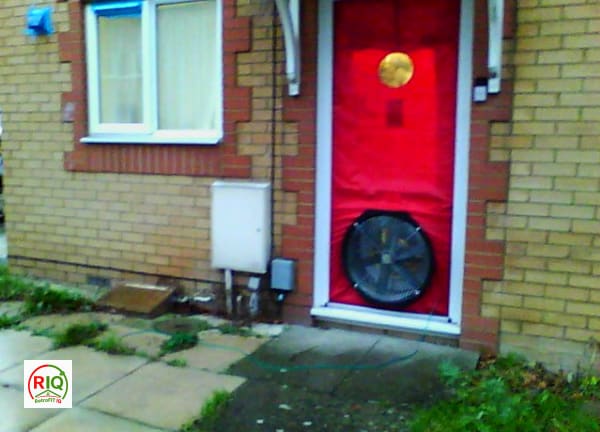
Blower Door Airtightness Test Setup

Sample Building Performance Investigation Report — Thermal Imaging

Thermal Bridge at Wall-Ceiling Junction Near Window

Thermal Bridge at Internal Corner Wall Junction

Acoustic Floor Upgrades: Mineral Wool Insulation Between Joists
No related investigations yet.
Browse all investigationsFrequently asked questions
Why is my ground floor so draughty?+
Because cold air leaks up from the ventilated void beneath a suspended timber floor, through the gaps between floorboards and around the skirtings. The void is meant to be ventilated, so the air coming up is cold.
Should I block the air bricks to stop the draught?+
No — that traps moisture in the void and risks rotting the floor timbers. The correct fix is to seal the room side of the floor while keeping the air bricks and void ventilation clear.
Where do floor draughts come in?+
Mainly through the gaps between floorboards, the floor-to-wall and skirting junction, and around pipes and cables passing through the floor. Together these add up to a large leakage area.
Why is the draught worse on windy days?+
Floor draughts are pressure-driven. Wind increases the pressure difference across the building, drawing more cold air up through the floor, so the draught feels stronger.
Can sealing the floor cause damp?+
Not if you seal only the room side and keep the under-floor void ventilated. Problems arise only if the air bricks are blocked, trapping moisture below.
Will stopping floor draughts warm the room?+
Yes — cold air entering through the floor chills the room and pulls warmth out elsewhere. Sealing it, ideally with floor insulation, makes the room noticeably warmer and easier to heat.
How do you find floor draughts?+
We use a blower door test with smoke to locate the leakage paths, inspect the floor and void, and confirm the ventilation, then seal the room side safely and re-test to verify.
Stop guessing — find the real cause
Do not spend money fixing symptoms before you understand the cause. Every home behaves differently, and the only reliable way to know what is happening in yours is professional building performance diagnostics. At RetrofitIQ we verify buildings using the right combination of investigations:
- Thermal imaging
- Blower door testing
- Moisture & dew point readings
- Ventilation review
- Building physics assessment
- Passive House methodology