
Do I need a survey before buying a leasehold flat?
Before buying a leasehold flat, a survey is worth considering — but the questions that most affect your daily comfort and running costs are ones a standard valuation or homebuyer survey rarely answers. A flat's warmth, damp risk, ventilation and, crucially, how much noise you will hear from neighbours are determined by its construction and its position in the building, and these performance issues are common in flats yet largely invisible to a visual inspection. A building performance survey measures how the flat actually behaves — heat loss, airtightness, condensation risk and acoustic transmission — so you know what living there will really be like, and can negotiate or budget, before you commit to a lease you cannot easily change.
 Reviewed by George Sora, Certified Passive House DesignerUpdated June 2026
Quick answer & key takeaways
8 min read- A flat's comfort and running costs hinge on construction and position in the building.
- Cold, damp, poor ventilation and noise are common in flats but invisible to a visual survey.
- Noise from neighbours is a frequent, hard-to-fix problem worth assessing before buying.
- A performance survey measures heat loss, airtightness, condensation risk and noise transfer.
- Biggest misconception: a flat needs no survey. Its performance risks are real and hidden.
- Retrofit IQ's approach: measure how the flat performs so you buy with your eyes open.
What this usually means
Buyers often assume a flat — being smaller and newer than a house — needs little scrutiny, and a mortgage valuation or basic homebuyer report reinforces that by focusing on visible condition and value. But the things that determine whether you enjoy living in a flat are largely about performance: how warm it is and what it costs to heat, whether it suffers condensation and mould, whether the ventilation is adequate, and how much noise comes through the walls, floors and ceilings from neighbours. These depend on the flat's construction and where it sits in the building — top floor, ground floor, mid-block, above a communal area — and they are precisely the issues a visual survey does not measure.
Several performance risks are particularly common in flats. Mid-floor flats can be cold on exposed elevations and suffer condensation on poorly insulated external walls; top-floor flats can be cold in winter and overheat in summer under the roof; and ventilation in flats is frequently inadequate, especially where windows are limited or a mechanical system was never commissioned, leading to humidity and mould. Above all, noise transmission between flats — voices, footsteps, music, plumbing — is one of the most frequent and most intractable complaints, because it is built into the separating floors and walls and is very expensive to remedy after purchase. A flat that looks immaculate can be cold, damp-prone or noisy in ways no viewing will reveal.
A building performance survey addresses exactly these unknowns. It measures the flat's heat loss and likely running cost, tests airtightness and assesses the ventilation, maps cold surfaces and condensation risk with thermal imaging and monitoring, and assesses the acoustic transmission through the separating structure. For a leasehold flat — where you cannot alter the building and remedying a noise or damp problem may be impossible or require freeholder consent — knowing this before you commit is decisive: it can justify a lower offer, reveal a problem worth walking away from, or simply confirm the flat performs well. The survey is most valuable precisely where the standard reports are weakest and the consequences hardest to undo, which is why it is worth commissioning before, not after, you buy.
Common causes
Position in the building
Top, ground or mid-floor and adjacency to communal areas drive a flat's comfort and noise.
Cold external walls and condensation
Poorly insulated walls on exposed elevations cause cold and condensation in flats.
Inadequate ventilation
Limited windows or an uncommissioned system leave flats humid and prone to mould.
Noise transmission between flats
Voices, footsteps and plumbing transfer through separating floors and walls — hard to fix later.
Hidden running costs
Heat loss and airtightness, unseen on a viewing, set what the flat costs to run.
Signs and symptoms
Noise heard during the viewing
Any audible neighbour noise warrants an acoustic assessment before buying.
Cold or exposed elevation
An exposed mid- or top-floor flat may be cold and condensation-prone.
Signs of condensation or mould
Staining or fresh paint can hide a moisture and ventilation problem.
Limited or no ventilation
Few windows or no working extract suggests humidity and mould risk.
A high or unclear EPC cost
A poor or implausible rating signals the running cost needs measuring.
What most people check first
- How much noise transfers from neighbours and communal areas.
- Whether the external walls are cold and at condensation risk.
- Whether the ventilation is adequate and any system commissioned.
- What the flat will really cost to heat and run.
What most people miss
- That a flat's performance risks are hidden from a visual survey.
- That noise transmission is common and very hard to fix after buying.
- That position in the building strongly affects comfort.
- That measuring before you buy gives grounds to negotiate or walk away.
The building physics
A flat's performance is set by its envelope and its party constructions, both of which require measurement rather than inspection to assess. Its heat loss and running cost depend on the external wall, window and (for top or ground flats) roof or floor areas, their U-values and the air leakage — quantities established by a heat-loss calculation, thermal imaging and a blower door test, not by a visual condition survey. Condensation risk follows from the surface temperatures of the external elements and the indoor humidity and ventilation; mid-floor flats on exposed elevations and top-floor flats under the roof are characteristically vulnerable, and the ventilation provision — often minimal or uncommissioned in flats — determines whether moisture is removed.
Acoustic performance is the distinctive and frequently decisive issue in flats, and it is governed by the sound insulation of the separating floors and walls and by flanking transmission around them. Airborne sound (voices, music) is resisted by the mass and isolation of the separating construction; impact sound (footsteps) is injected into the structure and propagates through it; and flanking through the continuous walls, floors and risers can dominate. These are properties of the building as built, assessable by acoustic measurement and inspection of the construction, and — critically — they cannot be altered by the leaseholder without major, often impractical, intervention and freeholder consent, so a noise problem identified after purchase may be effectively unfixable.
A building performance survey therefore supplies the information that determines liveability and is absent from the standard transactional reports: measured heat loss and running cost, airtightness, condensation risk, ventilation adequacy and acoustic transmission. Interpreted together, these reveal whether the flat will be warm, dry, healthy and quiet, and at what cost — converting the irreversible commitment of a lease into an informed decision. Because the consequences in a leasehold flat are hard or impossible to remedy and the standard surveys do not measure them, the value of an independent performance assessment is at its highest here, which is why it is worth commissioning before exchange rather than discovering the flat's true behaviour after moving in.
How to survey a leasehold flat properly before buying
Add a building performance survey to the standard checks — measuring heat loss, airtightness, condensation risk, ventilation and noise transfer — so you know how the flat really performs before you commit to the lease.
- 01
Assess the position and construction
Establish how the flat's location in the building affects its comfort and noise exposure.
- 02
Measure the heat loss and airtightness
Quantify the running cost and draughts the flat will have.
- 03
Check condensation risk and ventilation
Map cold surfaces and assess whether the ventilation removes moisture.
- 04
Assess the noise transmission
Evaluate airborne and impact sound transfer through the separating structure.
- 05
Get the findings before exchange
Use the measured results while you can still negotiate or withdraw.
- 06
Negotiate or budget
Apply the evidence to your offer, or decide whether to proceed.
How to prevent it coming back
- Assess a flat's performance, not just its condition, before buying.
- Check noise transmission early — it is hard to fix after purchase.
- Measure heat loss, ventilation and condensation risk before exchange.
- Use the evidence to negotiate or to walk away.
How Retrofit IQ investigates this
We measure how a leasehold flat actually performs — warmth, damp, ventilation and noise — so you commit to the lease on facts.
Do not spend money fixing symptoms before you understand the cause — investigate first, then build with confidence.
Do I need a professional investigation?
Before buying a leasehold flat — especially if you noticed any noise, cold or signs of damp on the viewing — it is worth commissioning a performance survey. Measuring the heat loss, airtightness, condensation risk, ventilation and noise transfer tells you how the flat will really perform, while you can still negotiate or withdraw, rather than discovering an unfixable noise or damp problem after committing to the lease.
Get an independent, product-neutral survey
We are paid for the diagnosis, not the cure — so the report finds the real cause and the cheapest correct fix, with nothing to sell you.
- Paid for the findings, no treatment to sell
- Thermal imaging, airtightness & moisture readings
- Written report with the least-cost remedy
Where to go next
Relevant services
Related comparisons
From the Academy
Related case studies
Related problems you may also have
Evidence from Real Projects (18)
Real project and investigation images from our own fieldwork, matched to this page — not stock photography.

Acoustic Floor Upgrades: Mineral Wool Insulation Between Joists
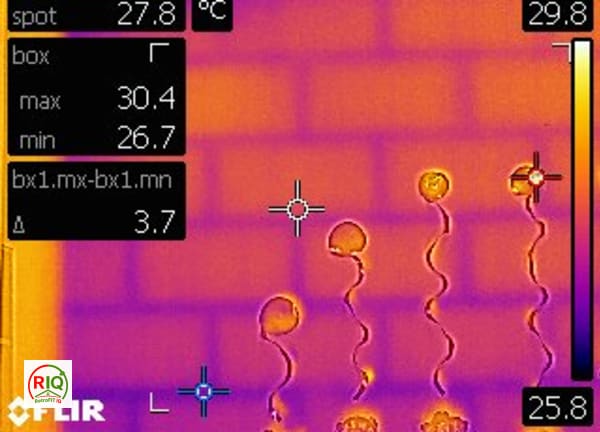
Thermal Bridging Visible Through Masonry Blockwork Wall

Sample Building Performance Investigation Report — Thermal Imaging

Thermal Bridge at Internal Corner Wall Junction

Thermal Bridge at Wall-Ceiling Junction Near Window
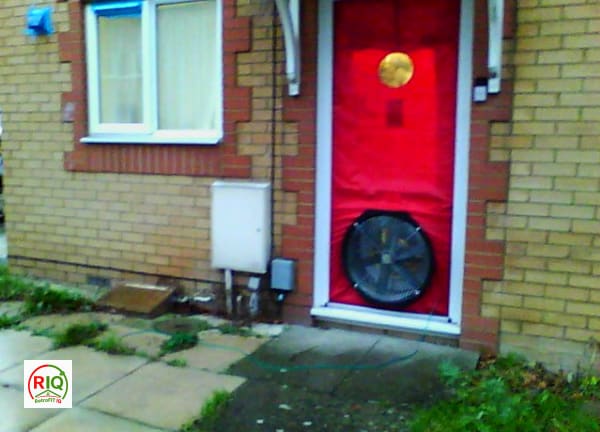
Blower Door Airtightness Test Setup
No related investigations yet.
Browse all investigationsFrequently asked questions
Do I need a survey before buying a leasehold flat?+
It is worth considering, because the things that most affect living in a flat — warmth, running cost, damp risk, ventilation and especially noise from neighbours — are performance issues that a standard valuation or homebuyer survey does not measure. A building performance survey assesses how the flat actually behaves, so you can buy, negotiate or withdraw on facts before committing to the lease.
Why does noise matter so much in a flat?+
Because noise transmission between flats — voices, footsteps, music, plumbing — is one of the most common and most intractable problems, and it is built into the separating floors and walls. As a leaseholder you usually cannot alter the building, and remedying a noise problem after purchase can be impossible or need freeholder consent, so assessing it beforehand is important.
Doesn't a flat need less surveying than a house?+
Not for performance. A flat may be smaller, but its comfort and costs depend on its construction and position in the building — top, ground or mid-floor — and on the separating structures, none of which a visual survey measures. The performance risks are real and hidden, regardless of how immaculate the flat looks.
What performance problems are common in flats?+
Cold and condensation on poorly insulated external walls (especially exposed mid-floor flats), winter cold and summer overheating in top-floor flats under the roof, inadequate or uncommissioned ventilation causing humidity and mould, and noise transmission between flats. A performance survey checks for all of these.
Can't I fix problems after I move in?+
Often not easily. In a leasehold flat you cannot alter the building, and noise or damp problems built into the structure may be impractical or impossible to remedy without major work and freeholder consent. That is why measuring before you commit — while you can still negotiate or withdraw — is so valuable.
What does the survey measure?+
The flat's heat loss and running cost, airtightness, condensation risk and ventilation adequacy, and the acoustic transmission through the separating floors and walls. Interpreted together, these tell you whether the flat will be warm, dry, healthy and quiet, and at what cost — the information the standard reports leave out.
Stop guessing — find the real cause
Do not spend money fixing symptoms before you understand the cause. Every home behaves differently, and the only reliable way to know what is happening in yours is professional building performance diagnostics. At RetrofitIQ we verify buildings using the right combination of investigations:
- Thermal imaging
- Blower door testing
- Moisture & dew point readings
- Ventilation review
- Building physics assessment
- Passive House methodology