
Why is there mould in my wardrobe or cupboard?
Mould in a wardrobe or cupboard almost always forms for the same reason: it is a still, unventilated pocket of air pressed against a cold external wall, so moist air condenses on the cold surface behind it and mould grows on the back panel, the wall and your belongings. The contents block air movement and trap humidity, while the wall behind — usually an uninsulated external wall — stays cold enough to condense. It is a localised condensation problem, and it is solved by warming that cold surface, letting air move behind the furniture, and reducing the room's humidity, rather than by repeatedly cleaning the mould off.
 Reviewed by George Sora, Certified Passive House DesignerUpdated June 2026
Quick answer & key takeaways
8 min read- A wardrobe or cupboard is a still, unventilated pocket against a cold wall.
- Moist air condenses on the cold surface behind it, growing mould.
- The contents trap humidity and block the air movement that would dry it.
- It is usually against an uninsulated external wall that stays cold.
- Biggest misconception: it's dirty clothes. It's condensation on a cold, unventilated surface.
- Retrofit IQ's approach: warm the cold wall, allow air movement, and reduce the room humidity.
What this usually means
A wardrobe or cupboard against an external wall creates exactly the conditions mould needs. The wall behind it, if uninsulated, is one of the coldest surfaces in the room; the furniture and its contents press against that wall and fill the space, so air cannot circulate; and the trapped, still air holds moisture. When the room's humid air reaches that cold, unventilated pocket, it condenses on the cold back panel and wall, and because the air never moves to dry it, the surface stays damp and mould establishes on the panel, the wall and the clothes or items stored there. It is the same surface condensation that causes mould elsewhere, concentrated in a hidden, badly ventilated spot.
Several things make it worse. The wardrobe being pushed tight against the wall removes the small air gap that would let some air move and the surface dry; an external corner or a north-facing wall behind it is colder still; and a bedroom with high overnight humidity — from breathing, drying clothes, or poor ventilation — supplies plenty of moisture. Storing slightly damp items, or packing the wardrobe full so air cannot circulate at all, adds to it. The mould is often discovered only when clothes start to smell musty or spots appear on the back wall, because the problem is hidden behind the furniture.
The cure follows from the cause: warm the cold surface, let air move, and lower the humidity. Allowing a gap between the furniture and the wall so air can circulate, not over-packing it, and improving the room's ventilation all help the surface stay dry; but the most reliable fix where the wall is the problem is to warm that cold external wall — insulating it raises its surface temperature above the dew point so condensation no longer forms behind the furniture. Simply cleaning the mould or moving the contents treats the symptom while the cold, unventilated pocket remains. An assessment of the wall's surface temperature and the room's humidity confirms whether warming the wall, improving ventilation, or both is needed, so the mould does not return.
Common causes
Cold external wall behind
An uninsulated external wall behind the furniture stays cold enough to condense.
No air movement
Furniture pressed to the wall traps still air that cannot dry the surface.
Trapped humidity
The enclosed space holds the room's moisture against the cold surface.
Cold corner or north wall
An external corner or north-facing wall behind it is colder still.
High room humidity
A humid, poorly ventilated bedroom supplies the moisture that condenses.
Signs and symptoms
Mould on the back panel and wall
Mould behind the wardrobe shows condensation on the cold, unventilated surface.
Musty-smelling clothes
A musty smell on stored items reflects persistent damp in the enclosed space.
Wardrobe against an external wall
Furniture on an external wall is the classic location for this mould.
Damp, cold back wall
A cold, damp wall behind the furniture confirms the surface is condensing.
Worse in winter
Cold-weather worsening reflects the colder wall surface in winter.
What most people check first
- Whether the furniture is against a cold external wall.
- Whether there is any air gap allowing the surface to dry.
- Whether the room's humidity is high and ventilation poor.
- Whether the wall behind is uninsulated or a cold corner.
What most people miss
- That it is condensation on a cold, unventilated surface, not dirty items.
- That pressing furniture to the wall removes the drying air gap.
- That warming the cold wall is the most reliable fix.
- That room humidity and ventilation feed the problem.
The building physics
The back of a wardrobe against an external wall is a microclimate that maximises condensation risk. The external wall, particularly if uninsulated, is among the coldest internal surfaces; the furniture creates an enclosed cavity with negligible air exchange, so the surface there is decoupled from the room's warmth and air movement; and the still air traps moisture. Surface relative humidity rises wherever the surface is cold and the air is humid and stagnant, so this pocket reaches mould-supporting humidity readily, even when the open room seems unremarkable. Mould requires only a persistently high surface humidity, which these conditions provide behind the furniture.
Two physical factors dominate: surface temperature and air movement. The surface temperature behind the furniture is lower than the room surfaces because the external wall is cold and the enclosure shields it from room heat, pushing it toward the dew point; the lack of air movement prevents the moisture being carried away and the surface drying between humid episodes. Pressing the furniture flush removes even the small convective exchange a gap would allow, and a north-facing or corner wall is colder still, deepening the effect. The room's humidity sets the dew point the surface is compared against, so a humid, under-ventilated bedroom raises the risk everywhere, with the cold pocket the first to condense.
The remedy targets these factors. Raising the surface temperature of the wall — by insulating the cold external wall — lifts it above the dew point so condensation does not form, the most durable fix where the wall is the cause; allowing air movement, by leaving a gap behind the furniture and not over-packing it, lets the surface dry; and reducing the room humidity through ventilation lowers the dew point. An assessment that measures the surface temperature behind the furniture and the room humidity establishes whether warming the wall, improving ventilation, or both is required. This addresses the cold, unventilated pocket at its cause, in contrast to cleaning the mould or relocating belongings while the condensing surface remains.
How to stop mould in a wardrobe or cupboard
Warm the cold wall behind it, allow air to move, and lower the room's humidity, so the surface behind the furniture stays above the dew point.
- 01
Confirm the cause
Establish that the wall behind is cold and the pocket unventilated, causing condensation.
- 02
Allow air movement
Leave a gap between the furniture and the wall and avoid over-packing so air can circulate.
- 03
Warm the cold wall
Insulate the cold external wall so its surface stays above the dew point.
- 04
Reduce the room humidity
Improve the bedroom's ventilation and avoid drying clothes in the room.
- 05
Avoid storing damp items
Do not store slightly damp clothing or items in the enclosed space.
- 06
Verify it stays dry
Confirm the surface behind the furniture no longer condenses or grows mould.
How to prevent it coming back
- Leave a gap behind furniture on external walls for air movement.
- Warm cold external walls so surfaces stay above the dew point.
- Keep the room ventilated and humidity moderate.
- Avoid over-packing wardrobes and storing damp items.
How Retrofit IQ investigates this
We measure the cold surface behind the furniture and the room's humidity, so the wardrobe mould is stopped at its cause.
Do not spend money fixing symptoms before you understand the cause — investigate first, then build with confidence.
Do I need a professional investigation?
If mould keeps returning in a wardrobe or cupboard against an external wall, it is worth assessing the wall's surface temperature and the room's humidity. Establishing whether the wall is too cold, the pocket too still, or the room too humid identifies whether warming the wall, improving ventilation, or both is needed — so the mould is stopped at its cause rather than repeatedly cleaned.
Where to go next
Relevant services
Related comparisons
From the Academy
Related case studies
Evidence from Real Projects (19)
Real project and investigation images from our own fieldwork, matched to this page — not stock photography.
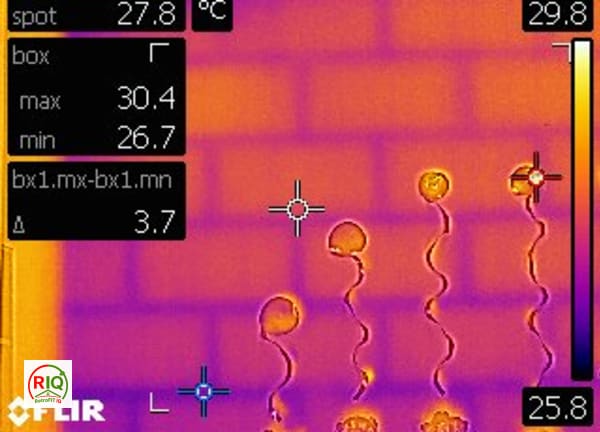
Thermal Bridging Visible Through Masonry Blockwork Wall

Thermal Bridge at Internal Corner Wall Junction

Thermal Bridge at Wall-Ceiling Junction Near Window

Sample Building Performance Investigation Report — Thermal Imaging

Bathroom external wall

Cold wall mapped against warm radiator and surrounding fabric
No related investigations yet.
Browse all investigationsFrequently asked questions
Why is there mould in my wardrobe or cupboard?+
Because it is a still, unventilated pocket of air against a cold external wall: the furniture traps the room's moist air with no circulation, and the cold wall behind condenses it, so mould grows on the back panel, the wall and your belongings. It is localised condensation, solved by warming the cold wall, allowing air to move, and reducing the room's humidity — not by repeatedly cleaning it.
Is it because my clothes are dirty?+
No — it is condensation on a cold, unventilated surface. The wall behind the wardrobe is cold (usually uninsulated), the furniture blocks air movement, and the room's humidity condenses there. Clean clothes will still grow mould in those conditions, which is why the surface and air, not the items, are the issue.
Why is it always on an external wall?+
Because an external wall, especially if uninsulated or on a north-facing or corner elevation, is one of the coldest surfaces in the room, and the wardrobe shields it from the room's warmth and air. That makes the surface behind the furniture the first place the humid air condenses.
Will leaving a gap behind the furniture help?+
It helps — a gap lets some air circulate so the surface can dry between humid episodes, rather than staying permanently damp when the furniture is pressed flush. But where the wall itself is very cold, warming it with insulation is the more reliable fix.
Should I just use mould spray or a moisture absorber?+
Those manage the symptom temporarily. While the wall stays cold and the pocket unventilated, the condensation returns and so does the mould. Warming the cold wall, allowing air movement and reducing the room humidity address the cause so it does not come back.
How do you find the cause?+
We map the cold wall behind the furniture with thermal imaging, check whether its surface falls below the dew point, and log the room's humidity and ventilation — which establishes whether warming the wall, improving ventilation, or both will stop the mould at its cause.
Stop guessing — find the real cause
Do not spend money fixing symptoms before you understand the cause. Every home behaves differently, and the only reliable way to know what is happening in yours is professional building performance diagnostics. At RetrofitIQ we verify buildings using the right combination of investigations:
- Thermal imaging
- Blower door testing
- Moisture & dew point readings
- Ventilation review
- Building physics assessment
- Passive House methodology