
Should I get room-in-roof insulation?
Room-in-roof insulation — insulating the sloping ceilings, dwarf walls and flat ceiling of a converted loft or attic room — is usually worth it if the room is cold, hot in summer or expensive to heat, because these rooms have a lot of roof area exposed on all sides and are often poorly insulated. But it only delivers if it is detailed continuously: the insulation must be unbroken across the slopes, the dwarf walls, the little 'eaves' cupboards and the floor of the space behind them, with no gaps where heat can bypass it. Patchy room-in-roof insulation is one of the most common reasons a loft room stays cold despite 'being insulated'.
 Reviewed by George Sora, Certified Passive House DesignerUpdated June 2026
Quick answer & key takeaways
5 min read- Room-in-roof spaces have a lot of exposed roof and are often poorly insulated.
- Insulating them warms a cold loft room and tames summer heat.
- It only works if the insulation is continuous across all surfaces.
- Gaps at dwarf walls and eaves cupboards are the usual failure.
- Biggest misconception: any loft insulation is enough. Continuity is everything.
- RetrofitIQ's approach: image the space and detail the insulation as an unbroken envelope.
What this usually means
A room in the roof is surrounded by roof on almost every side — sloping ceilings, vertical dwarf (knee) walls, and the ceiling — so it has far more exposed surface than a normal room and loses (or gains) heat through all of it. Many were converted with thin or incomplete insulation, leaving them cold in winter, hot in summer and expensive to keep comfortable. Properly insulating the slopes, dwarf walls and the areas behind them addresses the large heat loss and the summer overheating together, which is why it is usually worthwhile in an uncomfortable loft room.
The catch is continuity. The insulated envelope must be unbroken: across the sloping ceilings, down the dwarf walls, and crucially across the floor and back of the little storage voids behind the dwarf walls (the 'eaves cupboards') and around dormers. If the insulation stops at a dwarf wall but the eaves void behind it is left cold and open to the room, heat bypasses the insulation entirely and the room stays cold. Mapping the space with thermal imaging and detailing the insulation as a continuous line — choosing whether to insulate at the rafter line or wrap the room — is what makes room-in-roof insulation actually perform.
Common causes
Large exposed roof area
Slopes, dwarf walls and ceiling all lose heat.
Thin or incomplete original insulation
Many conversions were under-insulated.
Gaps at eaves cupboards
Heat bypasses insulation through open storage voids.
Discontinuous detailing
Breaks at junctions and dormers undermine the whole.
Signs and symptoms
Cold loft room in winter
Large, poorly insulated roof area losing heat.
Hot loft room in summer
Thin roof insulation letting solar heat in.
Cold eaves cupboards
Open, uninsulated voids bypassing the insulation.
High cost to heat the loft
Excessive heat loss through the roof envelope.
What most people check first
- Whether the slopes, dwarf walls and ceiling are all insulated.
- Whether the eaves cupboards are insulated and sealed.
- Whether the insulation is continuous across junctions.
- Whether ventilation behind the insulation is maintained.
What most people miss
- That the eaves voids are a major bypass if left cold.
- That continuity matters more than insulation thickness.
- That the same insulation tames winter cold and summer heat.
- That roof ventilation must be preserved when insulating slopes.
The building physics
A room in the roof presents roof surface in several planes, so its total heat loss is high and concentrated in the sloping and vertical roof elements. Insulation only reduces that loss if it forms a continuous thermal envelope around the heated space; any break — an uninsulated dwarf wall, an open eaves cupboard, a gap at a dormer — creates a thermal bypass where air can circulate around the insulation and heat escapes as if it were not there. This is why the location of the insulated line matters: it must enclose the room without interruption, whether followed at the rafters or wrapped around the room's surfaces.
Detailing must also respect moisture and ventilation. Insulating at the rafter line in a cold-roof construction requires maintaining a ventilation gap above the insulation, or using a warm-roof build-up, to avoid condensation in the roof structure; sealing the eaves voids needs care not to block necessary roof ventilation. Thermal imaging reveals where the existing insulation is missing or bypassed, and a moisture-aware design ensures the continuous envelope does not trap condensation. Done this way, room-in-roof insulation cuts the winter heat loss and the summer solar gain together and makes the space genuinely comfortable.
How to insulate a room in the roof properly
Map the cold areas, then insulate the slopes, dwarf walls and eaves voids as one continuous envelope, maintaining roof ventilation and managing moisture.
- 01
Image the space
Use thermal imaging to find missing insulation and bypasses.
- 02
Insulate all surfaces
Cover slopes, dwarf walls and ceiling continuously.
- 03
Address the eaves voids
Insulate and seal the storage voids behind dwarf walls.
- 04
Maintain ventilation
Keep the roof ventilation gap or use a warm-roof build-up.
- 05
Manage moisture
Detail vapour control to avoid condensation in the roof.
- 06
Verify comfort
Confirm the room is warmer in winter and cooler in summer.
How to prevent it coming back
- Insulate the whole roof envelope, not just the obvious slopes.
- Never leave eaves cupboards as cold bypasses.
- Keep roof ventilation when insulating at the rafters.
- Detail vapour control to avoid trapped condensation.
How Retrofit IQ investigates this
We map the roof envelope so room-in-roof insulation is continuous and actually performs.
Do not spend money fixing symptoms before you understand the cause — investigate first, then build with confidence.
Do I need a professional investigation?
If a loft or attic room is cold, overheats in summer or is costly to heat, it is worth thermal imaging to see where the roof insulation is missing or bypassed. That reveals whether room-in-roof insulation will help and how to detail it continuously, so the space becomes comfortable year-round.
Make your loft work — warm and dry
We map where the roof loses heat or traps moisture so insulation is continuous and ventilation correct, not patchy.
- Thermal imaging of the roof envelope
- Insulation continuity & air-sealing check
- Moisture-safe detailing plan
Where to go next
Relevant services
Related comparisons
From the Academy
Related case studies
Evidence from Real Projects (18)
Real project and investigation images from our own fieldwork, matched to this page — not stock photography.
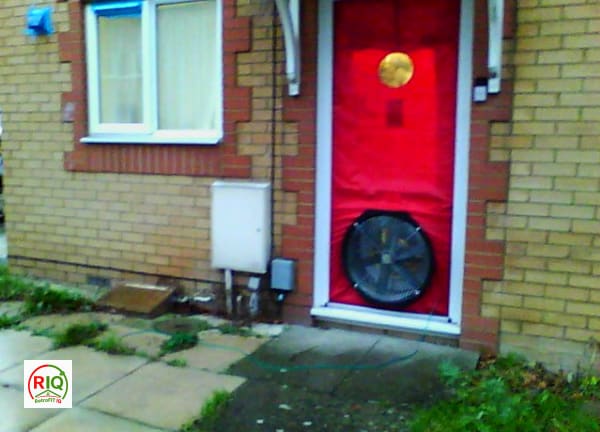
Blower Door Airtightness Test Setup

Sample Building Performance Investigation Report — Thermal Imaging
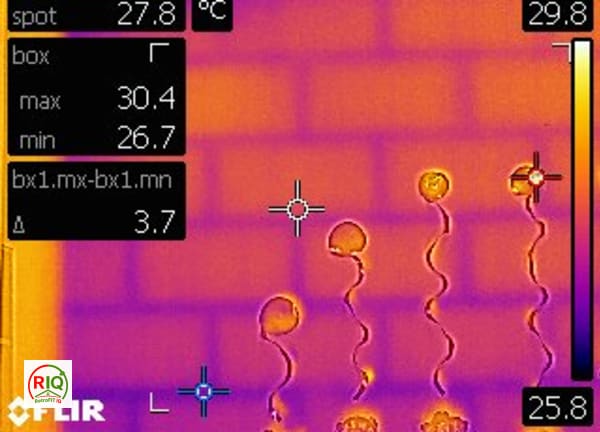
Thermal Bridging Visible Through Masonry Blockwork Wall

Thermal Bridge at Wall-Ceiling Junction Near Window
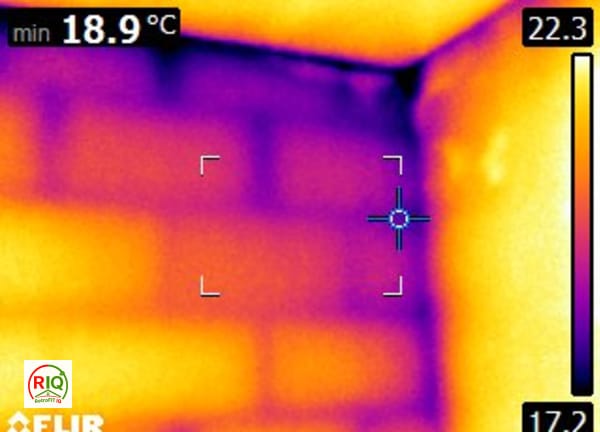
Cold wall surface vs warm ceiling

Thermal Bridge at Internal Corner Wall Junction
No related investigations yet.
Browse all investigationsFrequently asked questions
Should I get room-in-roof insulation?+
Usually yes if the loft room is cold, overheats in summer or is expensive to heat — these rooms have a lot of exposed roof and are often poorly insulated. But it only works if the insulation is continuous across the slopes, dwarf walls and eaves voids; patchy insulation leaves the room cold despite 'being insulated'.
Why is my converted loft still cold after insulation?+
Almost always because the insulation isn't continuous. A common culprit is the eaves cupboards behind the dwarf walls being left cold and open to the room, so heat bypasses the insulation. Thermal imaging reveals these bypasses, which then need insulating and sealing.
Will it help with summer overheating too?+
Yes. The same roof insulation that cuts winter heat loss also reduces the solar heat entering through the roof in summer, so a properly insulated room in the roof is more comfortable year-round, not just warmer in winter.
Do I need to keep the roof ventilated?+
If insulating at the rafter line in a cold-roof construction, yes — you must maintain a ventilation gap above the insulation, or use a warm-roof build-up, to avoid condensation in the roof structure. The detailing must manage moisture as well as heat.
How do I know what's missing?+
Thermal imaging maps where insulation is absent or bypassed across the slopes, dwarf walls and eaves voids, and a roof review establishes the right detailing. That lets the insulation be designed as a continuous envelope so it actually performs.
Stop guessing — find the real cause
Do not spend money fixing symptoms before you understand the cause. Every home behaves differently, and the only reliable way to know what is happening in yours is professional building performance diagnostics. At RetrofitIQ we verify buildings using the right combination of investigations:
- Thermal imaging
- Blower door testing
- Moisture & dew point readings
- Ventilation review
- Building physics assessment
- Passive House methodology