
What is the difference between a HomeBuyers Report and a building survey?
When you buy a home you will be offered different 'levels' of survey, and the names cause real confusion. A HomeBuyers Report (often called a Level 2 survey) is a moderate, mostly visual overview that flags obvious defects and gives a condition rating; a building survey (Level 3, sometimes called a full structural survey) is a deeper, more detailed inspection suited to older, larger, altered or unusual properties. Choosing between them depends on the age, type and condition of the house and how much risk you are willing to carry. But there is a third issue both share: a standard survey is about defects and condition, not how the building actually performs — so neither tells you whether the home will be cold, draughty, damp or expensive to run.
 Reviewed by George Sora, Certified Passive House DesignerUpdated June 2026
Quick answer & key takeaways
7 min read- A HomeBuyers Report (Level 2) is a moderate, mostly visual condition overview.
- A building survey (Level 3) is a deeper inspection for older, altered or unusual homes.
- Choose by age, type, condition and how much risk you want to carry.
- Neither standard survey measures thermal, airtightness or ventilation performance.
- Biggest misconception: a passed survey means a warm, dry, efficient home. It does not.
- RetrofitIQ's approach: add a performance survey where running cost and comfort matter.
What this usually means
A HomeBuyers Report is designed for conventional, reasonably modern houses in apparently sound condition. It is largely a visual inspection of the parts that are readily accessible, giving traffic-light condition ratings to the main elements, flagging urgent or significant defects, and commenting on matters that affect value. It is proportionate and cheaper, but it does not lift carpets, open up construction or investigate causes in depth — so it is the right choice when the property is unremarkable and you mainly want reassurance and a heads-up on obvious problems.
A building survey is a more thorough, narrative inspection suited to older properties, period or non-standard construction, homes that have been extended or substantially altered, those in visibly poor condition, or where you plan major works. The surveyor examines more elements in more detail, comments on the likely cause and significance of defects, and gives more guidance on repairs and maintenance. It costs more and takes longer, but for a Victorian terrace, a converted or extended home, or anything unusual, the extra depth typically pays for itself by surfacing problems a lighter report would only note in passing.
What neither standard level reliably covers is performance — and this is where homeowners are most often caught out. A property can pass a survey with good condition ratings and still be cold, draughty, prone to condensation and mould, and expensive to heat, because those are functions of insulation, airtightness, thermal bridging and ventilation rather than visible defects. Surveys are not generally designed to measure U-values, air leakage or moisture risk. If running cost, comfort or a planned retrofit matters to you, a building-performance survey — thermal imaging, airtightness testing and moisture assessment — answers the questions a condition survey cannot.
Common causes
Confusing survey names
Level 2 / HomeBuyers and Level 3 / building survey describe different depths of inspection.
Property age and type
Older, altered or unusual homes warrant the deeper Level 3 survey.
Visible vs hidden problems
Standard surveys catch visible defects but not hidden performance issues.
Performance not assessed
Neither level measures heat loss, air leakage or ventilation adequacy.
Signs and symptoms
Older or period property
Age and traditional construction point towards a building survey.
Extensions or alterations
Changes to the original structure justify a deeper inspection.
Visible disrepair
Obvious defects mean the deeper survey will likely find more.
Concern about running costs
Worry about warmth or bills calls for a performance survey, not just condition.
What most people check first
- The property's age, construction type and apparent condition.
- Whether it has been extended, converted or significantly altered.
- How much risk you are comfortable carrying on hidden defects.
- Whether comfort and running cost matter enough to add a performance survey.
What most people miss
- That the survey levels describe depth, not pass or fail.
- That a good condition rating says nothing about warmth or bills.
- That older and altered homes usually merit the deeper survey.
- That performance defects need a different, measurement-based survey.
The building physics
Condition surveys and performance surveys answer fundamentally different questions. A condition survey asks 'is anything broken, deteriorating or a defect?' and is largely visual and qualitative; a performance survey asks 'how does this building behave thermally and with respect to moisture and air movement?' and is quantitative and instrument-based. A home can be in excellent condition and perform poorly — solid walls with no insulation, generous air leakage, cold thermal bridges at junctions and inadequate ventilation are not defects in the surveyor's sense, yet they determine whether the house is comfortable and affordable to run. That is why a clean survey and a cold, costly home are entirely compatible.
Choosing the right combination is therefore about matching the inspection to your risks. For an unremarkable modern house, a HomeBuyers Report may suffice; for an older, altered or unusual property, a building survey reduces the risk of an expensive surprise; and where comfort, condensation risk or running cost matter — or you intend to retrofit — a building-performance survey adds the thermal imaging, airtightness measurement and moisture assessment that reveal how the building will actually live and what it will cost to put right. Used together, they cover both whether the house is sound and whether it will be warm, dry and economical.
How to choose the right survey when buying
Match the survey to the property and your risk: HomeBuyers for conventional homes, a building survey for older or altered ones, and add a performance survey where comfort and running cost matter.
- 01
Assess the property
Weigh its age, construction, condition and any alterations.
- 02
Pick the condition level
Choose HomeBuyers for conventional homes, a building survey for older or unusual ones.
- 03
Consider your risk appetite
Pay for more depth where a hidden defect would be costly.
- 04
Add a performance survey
Where warmth, damp risk or bills matter, add thermal and airtightness assessment.
- 05
Read the report fully
Act on the caveats and recommendations, not just the headline ratings.
- 06
Investigate flagged issues
Commission a focused investigation where a survey flags damp or cold.
How to prevent it coming back
- Choose the survey level before exchange, not after a problem appears.
- Don't assume a good condition rating means a warm, dry, cheap home.
- Add a performance survey for older or higher-spend purchases.
- Follow up every flagged defect with a targeted investigation.
How Retrofit IQ investigates this
We add the performance picture a condition survey omits, so you buy with the running cost and comfort known.
Do not spend money fixing symptoms before you understand the cause — investigate first, then build with confidence.
Do I need a professional investigation?
Before committing to a purchase — particularly an older, altered or unusual home, or where comfort and running cost matter — it is worth pairing the right condition survey with a building-performance survey. Thermal imaging, airtightness testing and a moisture assessment reveal whether the home will be warm, dry and affordable, which a standard survey is not designed to tell you.
Get an independent, product-neutral survey
We are paid for the diagnosis, not the cure — so the report finds the real cause and the cheapest correct fix, with nothing to sell you.
- Paid for the findings, no treatment to sell
- Thermal imaging, airtightness & moisture readings
- Written report with the least-cost remedy
Where to go next
Relevant services
Related comparisons
Related case studies
Related problems you may also have
Evidence from Real Projects (13)
Real project and investigation images from our own fieldwork, matched to this page — not stock photography.

Sample Building Performance Investigation Report — Thermal Imaging
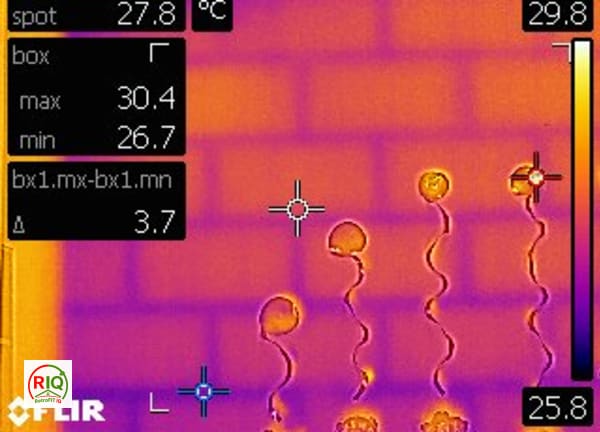
Thermal Bridging Visible Through Masonry Blockwork Wall

Thermal Bridge at Wall-Ceiling Junction Near Window

Airtightness Testing in a Stratford Victorian Terrace
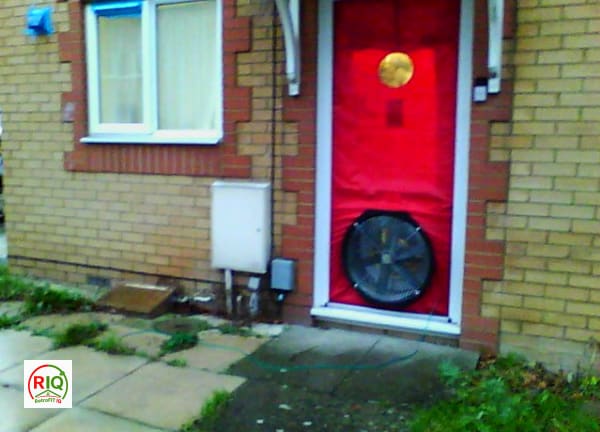
Blower Door Airtightness Test Setup

Thermal Bridge at Internal Corner Wall Junction
No related investigations yet.
Browse all investigationsFrequently asked questions
What's the difference between a HomeBuyers Report and a building survey?+
A HomeBuyers Report (Level 2) is a moderate, mostly visual overview with condition ratings, suited to conventional modern homes. A building survey (Level 3) is a deeper, more detailed inspection for older, altered or unusual properties, with more comment on causes and repairs. The difference is depth, not pass or fail.
Which survey do I need?+
For an unremarkable, reasonably modern house, a HomeBuyers Report is often enough. For an older, period, extended or visibly worn property — or if you plan major works — a building survey is the safer choice. If warmth, damp risk or running cost matter, add a building-performance survey on top.
Does a survey tell me if a house will be warm and cheap to run?+
No. Standard condition surveys assess defects and condition, not thermal performance, airtightness or ventilation. A home can pass with good ratings and still be cold, draughty, damp-prone and expensive. A building-performance survey, using thermal imaging and airtightness testing, answers that question.
Is a building survey worth the extra cost?+
For older, altered or unusual homes, usually yes — the extra depth tends to surface problems a lighter report would only note in passing, and one avoided surprise normally outweighs the higher fee. For a straightforward modern house, the lighter report may be proportionate.
Can I add a performance survey to a standard one?+
Yes, and it is often the most useful combination. The condition survey tells you whether the house is sound; the performance survey tells you whether it will be warm, dry and affordable, and what retrofit it needs. Together they cover both risks before you commit.
Stop guessing — find the real cause
Do not spend money fixing symptoms before you understand the cause. Every home behaves differently, and the only reliable way to know what is happening in yours is professional building performance diagnostics. At RetrofitIQ we verify buildings using the right combination of investigations:
- Thermal imaging
- Blower door testing
- Moisture & dew point readings
- Ventilation review
- Building physics assessment
- Passive House methodology