
Why did sealing my draughts make the air feel stuffy?
If the air feels stuffy after you sealed up draughts, you have run into the central rule of airtightness: sealing the uncontrolled air leakage that used to ventilate a home, without providing controlled ventilation to replace it, leaves the air stale and humid. Those draughts, though wasteful of heat, were carrying away moisture, CO₂ and stale air. Seal them and the moisture and CO₂ build up — the air feels stuffy, windows mist, and mould can follow — unless you add deliberate ventilation. The answer is not to undo the sealing (which wastes heat again) but to ventilate properly, so the home is both airtight and well-ventilated.
 Reviewed by George Sora, Certified Passive House DesignerUpdated June 2026
Quick answer & key takeaways
5 min read- Draughts ventilate a home, wastefully, by removing moisture and stale air.
- Sealing them without adding ventilation traps that air.
- Stuffiness, high humidity and CO₂ result.
- The rule: seal tight, then ventilate right.
- Biggest misconception: sealing draughts is all you need. Ventilation must replace them.
- RetrofitIQ's approach: keep the sealing and add controlled ventilation.
What this usually means
Draught-proofing is one of the cheapest ways to cut heat loss, and it works — but the draughts it removes were doing a job: providing a large, uncontrolled air change that carried away the moisture from cooking, washing and breathing, the CO₂ occupants exhale, and other indoor pollutants. Remove that air change and, unless something replaces it, the moisture and CO₂ accumulate. The air feels stuffy and stale, humidity rises so windows mist and surfaces grow mould, and bedrooms feel airless overnight. This is the predictable consequence of becoming airtight without becoming ventilated.
The fix is the governing principle of any good retrofit: 'build tight, ventilate right'. Keep the draught-proofing — it saves heat and improves comfort — and add controlled ventilation to replace the air change you removed: trickle vents, demand-controlled extract in kitchens and bathrooms, a PIV unit, or whole-house MVHR depending on how tight the home now is. Controlled ventilation delivers the fresh air the draughts used to, but deliberately and (with heat recovery) without throwing away the warmth. Measuring the humidity and CO₂ confirms the deficit and shows how much ventilation is needed, so the home ends up both efficient and healthy rather than trading one for the other.
Common causes
Lost accidental ventilation
Sealed draughts removed the air change that vented the home.
Moisture build-up
Trapped humidity makes the air feel stuffy and mists windows.
CO₂ accumulation
Exhaled CO₂ rising without enough fresh air.
No controlled ventilation added
Nothing deliberate replaced the lost air change.
Signs and symptoms
Stuffy, stale air after sealing
Inadequate air change since the draughts went.
Windows misting more
Trapped humidity condensing on cold glass.
Airless bedrooms overnight
CO₂ and moisture building up in sealed rooms.
New or worse mould
Higher humidity on cold surfaces.
What most people check first
- Whether any controlled ventilation was added with the sealing.
- Whether indoor humidity and CO₂ are now high.
- Whether trickle vents and extract fans exist and work.
- How airtight the home has become.
What most people miss
- That draughts were ventilating the home, wastefully.
- That sealing must be paired with ventilation.
- That the fix isn't undoing the sealing.
- That controlled ventilation gives fresh air without the heat loss.
The building physics
Indoor air quality depends on the air-change rate relative to the generation of moisture, CO₂ and pollutants. Uncontrolled infiltration through draughts provides a variable, weather-driven air change that, while wasteful of heat, keeps these contaminants diluted; draught-proofing reduces that infiltration, so unless purpose-provided ventilation makes up the difference, the contaminant concentrations rise — humidity towards condensation, CO₂ towards levels that feel stuffy and impair sleep. The stuffiness is therefore a direct signal that the air change has fallen below what the occupancy requires.
The principle 'build tight, ventilate right' resolves this by separating the two functions: make the envelope airtight to control heat loss, then supply ventilation deliberately and at a controlled rate to maintain air quality. Trickle ventilators and demand-controlled extract suit moderately sealed homes; PIV dilutes whole-house humidity; and in an airtight home, MVHR supplies measured fresh air while recovering most of the heat. Measuring the humidity and CO₂ quantifies the shortfall and sizes the ventilation, so the draught-proofing is retained for its energy benefit and the controlled ventilation restores fresh air — delivering an efficient and healthy home rather than forcing a choice between warmth and air quality.
How to fix stuffy air after sealing draughts
Keep the draught-proofing and add controlled ventilation — trickle vents, extract, PIV or MVHR — sized from the measured humidity and CO₂, so the home is both airtight and fresh.
- 01
Measure the air quality
Log humidity and CO₂ to confirm the ventilation deficit.
- 02
Keep the sealing
Retain the draught-proofing for its energy benefit.
- 03
Add background ventilation
Fit or open trickle vents for continuous fresh air.
- 04
Improve extract
Run effective kitchen and bathroom extract at source.
- 05
Add mechanical ventilation if tight
Use PIV or MVHR where the home is now airtight.
- 06
Verify the air
Confirm humidity and CO₂ fall to healthy levels.
How to prevent it coming back
- Always pair draught-proofing with controlled ventilation.
- Follow 'build tight, ventilate right'.
- Don't block trickle vents or disable extract.
- Use heat recovery in airtight homes to keep the warmth.
How Retrofit IQ investigates this
We measure the air quality after draught-proofing and specify the controlled ventilation to restore it.
Do not spend money fixing symptoms before you understand the cause — investigate first, then build with confidence.
Do I need a professional investigation?
If the air turned stuffy after you sealed draughts, it is worth logging the humidity and CO₂ to confirm the ventilation deficit. That shows how much controlled ventilation is needed, so the draught-proofing can stay for its energy benefit while the air becomes fresh again.
Where to go next
Relevant services
Related comparisons
Evidence from Real Projects (18)
Real project and investigation images from our own fieldwork, matched to this page — not stock photography.
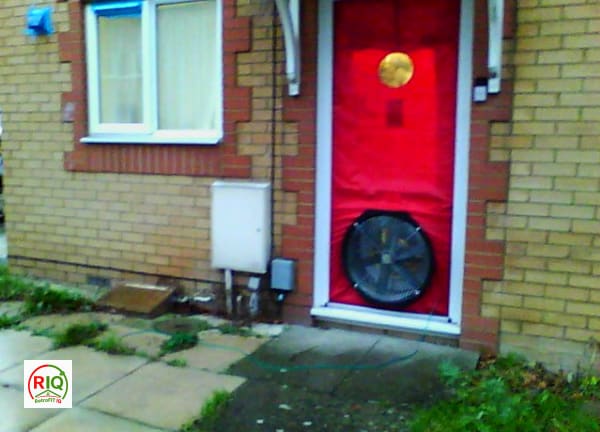
Blower Door Airtightness Test Setup

Sample Building Performance Investigation Report — Thermal Imaging
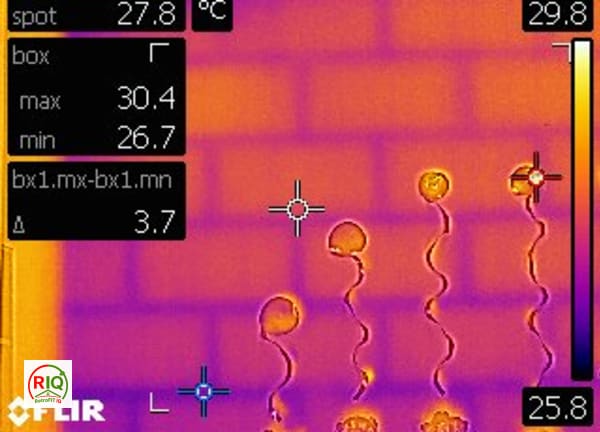
Thermal Bridging Visible Through Masonry Blockwork Wall

Thermal Bridge at Internal Corner Wall Junction

Thermal Bridge at Wall-Ceiling Junction Near Window

Airtightness Testing in a Stratford Victorian Terrace
No related investigations yet.
Browse all investigationsFrequently asked questions
Why did sealing my draughts make the air feel stuffy?+
Because those draughts, though wasteful of heat, were ventilating the home — carrying away moisture, CO₂ and stale air. Sealing them without adding controlled ventilation leaves that air trapped, so it feels stuffy and humid. The rule is 'build tight, ventilate right': keep the sealing and add deliberate ventilation.
Should I undo the draught-proofing?+
No — that just wastes heat again. The draught-proofing is valuable; what's missing is ventilation to replace the air change it removed. Adding trickle vents, extract or mechanical ventilation gives you fresh air without losing the energy benefit of being airtight.
Why are my windows misting more since I sealed up?+
Because the trapped moisture has nowhere to go, so indoor humidity rises and condenses on the cold glass. It's the same ventilation deficit that makes the air feel stuffy, and the same fix — controlled ventilation — resolves both.
What ventilation do I need?+
It depends how tight the home now is. Trickle vents and demand-controlled extract suit moderately sealed homes; PIV dilutes whole-house humidity; and an airtight home is best served by MVHR, which supplies fresh air and recovers the heat. Measuring humidity and CO₂ shows how much is needed.
Can I be airtight and have fresh air?+
Absolutely — that's the whole point of 'build tight, ventilate right'. A sealed envelope controls heat loss, and controlled ventilation delivers fresh air deliberately, with heat recovery keeping the warmth. Done together, the home is efficient and healthy at once.
Stop guessing — find the real cause
Do not spend money fixing symptoms before you understand the cause. Every home behaves differently, and the only reliable way to know what is happening in yours is professional building performance diagnostics. At RetrofitIQ we verify buildings using the right combination of investigations:
- Thermal imaging
- Blower door testing
- Moisture & dew point readings
- Ventilation review
- Building physics assessment
- Passive House methodology