
Why does my bedroom stay hot all night?
A bedroom that stays hot all night has absorbed more heat during the day than it can release after dark, and cannot purge it because night ventilation is inadequate. Bedrooms — especially upstairs and under the roof — gain heat through sunlit windows and a hot roof during the day, and store it in the walls, ceiling and contents; if the room is closed up and there is little cool night air flushing through, that stored heat keeps radiating into the room overnight, so it never cools enough to sleep comfortably. The fix is to keep the heat out by day and purge it by night, not to add air conditioning.
 Reviewed by George Sora, Certified Passive House DesignerUpdated June 2026
Quick answer & key takeaways
5 min read- An overnight-hot bedroom absorbed daytime heat it can't release.
- Sunlit windows and a hot roof are the main daytime gains.
- Stored heat keeps radiating overnight without night ventilation.
- Shading by day and night purge ventilation cool it.
- Biggest misconception: you need air conditioning. Shading and night ventilation usually suffice.
- RetrofitIQ's approach: cut daytime gain and enable secure night purge.
What this usually means
During a hot day, a bedroom gains heat from sunlight through the windows and, if it is upstairs or in the roof, from the hot roof and loft above. That heat is absorbed by the room's surfaces and contents, which warm up and then re-radiate it. If the room is shut up by day to 'keep the heat out' but the heat has already entered through the glass, and is then not flushed out at night, the stored warmth keeps the room hot for hours after sunset — which is why it feels hottest just when you are trying to sleep.
Two things break this cycle. First, reduce the daytime gain: shade the windows from the outside (external blinds, shutters or even closing internal blinds and curtains helps less but still helps), and improve the roof insulation if the room is under it, so less heat enters in the first place. Second, purge the stored heat at night by ventilating with cool night air — opening windows securely, or using night ventilation — so the room and its surfaces shed their heat before you sleep. Where the roof and glazing gains are large, a thermal assessment shows which dominates, so the cooling effort goes where it works, keeping the room comfortable without resorting to air conditioning.
Common causes
Solar gain through windows
Sunlit glazing admits heat that the room stores.
Hot roof above
Poor roof insulation lets heat into an upstairs or loft room.
Stored heat re-radiating
Warm surfaces keep heating the room overnight.
Inadequate night ventilation
No cool night air to purge the stored heat.
Signs and symptoms
Room hottest at bedtime
Stored daytime heat radiating after sunset.
Upstairs or loft bedroom
More exposed to roof and solar gain.
Hot even after the sun's gone
Heat retained with no night purge.
Stuffy and warm overnight
Closed room trapping heat and moisture.
What most people check first
- Whether the windows get strong sun during the day.
- Whether the room is under a poorly insulated roof.
- Whether the room is purged with cool air at night.
- Whether external shading is feasible.
What most people miss
- That shutting up a sunlit room traps the heat that already entered.
- That external shading beats internal blinds.
- That night purge ventilation is essential.
- That roof insulation cools as well as warms.
The building physics
Overheating is a balance of heat gains by day against heat losses by night, mediated by the building's thermal mass. Solar radiation through glazing is usually the dominant gain, and it is best stopped outside the glass — external shading rejects the heat before it enters, whereas internal blinds stop only some of the re-radiated heat once it is already inside. Roof gain adds to this in upstairs and loft rooms where insulation is thin. The absorbed heat is stored in the mass and contents and released slowly, so without a means to remove it the room stays warm long after sunset.
Night purge ventilation is the release valve: flushing the room with cooler night air carries away the stored heat, lowering the surface temperatures so the room starts the next day cool and stays comfortable for sleep. The effectiveness depends on secure openable area and a temperature difference between inside and out. A thermal assessment quantifies the solar and roof gains and the available night cooling, so measures are prioritised — external shading on the worst windows, improved roof insulation, and secure night ventilation — to keep the room within comfort without mechanical cooling. This passive approach is both cheaper and lower-carbon than air conditioning, and addresses the cause rather than masking it.
How to keep a bedroom cool overnight
Cut the daytime gain with external shading and better roof insulation, and purge the stored heat with secure night ventilation, so the room cools before you sleep.
- 01
Shade the windows
Add external shading to reject solar gain before it enters.
- 02
Improve roof insulation
Insulate the roof above an upstairs or loft bedroom.
- 03
Purge at night
Ventilate with cool night air to shed stored heat.
- 04
Enable secure openings
Allow windows to be open safely overnight.
- 05
Reduce internal gains
Limit heat from electronics and lighting in the room.
- 06
Verify comfort
Confirm the room cools enough for comfortable sleep.
How to prevent it coming back
- Shade windows externally during sunny days.
- Keep the roof above bedrooms well insulated.
- Purge stored heat with night ventilation.
- Avoid relying on air conditioning to mask the cause.
How Retrofit IQ investigates this
We assess the daytime gains and night cooling so an overheating bedroom is cooled passively.
Do not spend money fixing symptoms before you understand the cause — investigate first, then build with confidence.
Do I need a professional investigation?
If a bedroom stays uncomfortably hot overnight, it is worth a thermal assessment of the solar and roof gains and the night-cooling potential. That shows whether external shading, roof insulation or better night ventilation will cool it, so the room becomes comfortable for sleep without air conditioning.
Where to go next
Relevant services
Related comparisons
From the Academy
Related case studies
Related problems you may also have
Evidence from Real Projects (18)
Real project and investigation images from our own fieldwork, matched to this page — not stock photography.
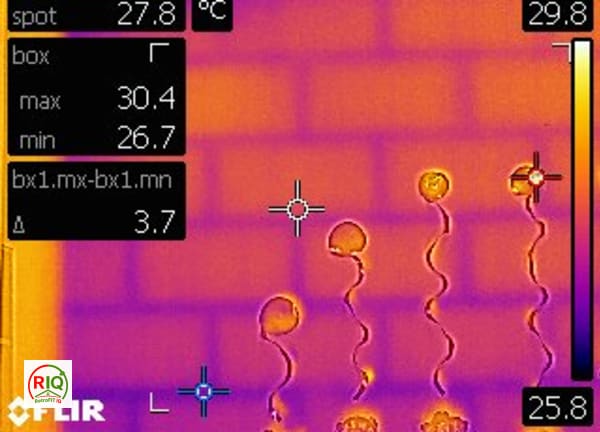
Thermal Bridging Visible Through Masonry Blockwork Wall

Sample Building Performance Investigation Report — Thermal Imaging

Thermal Bridge at Wall-Ceiling Junction Near Window
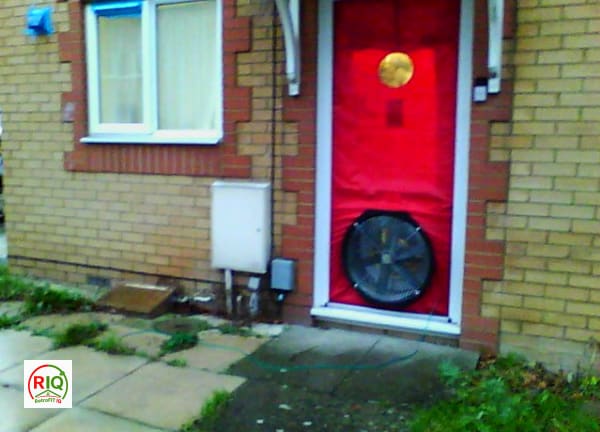
Blower Door Airtightness Test Setup

Airtightness Testing in a Stratford Victorian Terrace

Thermal Bridge at Internal Corner Wall Junction
No related investigations yet.
Browse all investigationsFrequently asked questions
Why does my bedroom stay hot all night?+
Because it absorbed more heat during the day — through sunlit windows and a hot roof — than it can release at night. The stored heat keeps radiating from the warm surfaces, and without cool night air flushing through, the room never cools enough to sleep comfortably.
Do I need air conditioning?+
Usually not. Reducing the daytime gain with external shading and better roof insulation, and purging the stored heat with secure night ventilation, keeps most bedrooms comfortable without air conditioning — and it's cheaper and lower-carbon than mechanical cooling.
Should I keep the windows shut to keep the heat out?+
Shut by day if it's hotter outside, but the heat mainly enters through the glass as sunlight, so external shading matters more. At night, open the windows (securely) to purge the stored heat — keeping them shut overnight just traps the warmth.
Why is my loft or top-floor bedroom worst?+
Because it's most exposed to the hot roof and to solar gain, and heat rises through the house to collect there. Improving the roof insulation and shading the windows makes the biggest difference to these rooms.
How do I find the main cause?+
An overheating assessment quantifies the solar gain through the windows and the roof gain, and the night-cooling potential, so you know whether shading, roof insulation or night ventilation will help most — and cool the room where it counts.
Stop guessing — find the real cause
Do not spend money fixing symptoms before you understand the cause. Every home behaves differently, and the only reliable way to know what is happening in yours is professional building performance diagnostics. At RetrofitIQ we verify buildings using the right combination of investigations:
- Thermal imaging
- Blower door testing
- Moisture & dew point readings
- Ventilation review
- Building physics assessment
- Passive House methodology