How do I stop my loft conversion overheating?
Loft conversions overheat in summer because they combine the worst gains in the house: a large roof surface baking in the sun above thin insulation, roof windows (rooflights) that admit intense overhead sunlight, and a position at the top of the house where heat collects. The result is a room that becomes uncomfortably hot and stays hot. The way to cool it without air conditioning is to cut those gains — improve the roof insulation, shade the rooflights externally — and to purge the stored heat with night ventilation, so the conversion becomes comfortable in summer as well as warm in winter.
 Reviewed by George Sora, Certified Passive House DesignerUpdated June 2026
Quick answer & key takeaways
5 min read- Loft conversions overheat from roof gain, rooflights and their top-of-house position.
- Thin roof insulation lets solar heat pour in through the roof.
- Rooflights admit intense overhead sun.
- External shading and night ventilation cool it passively.
- Biggest misconception: it's unavoidable in a loft. Shading and insulation fix it.
- RetrofitIQ's approach: cut roof and rooflight gain, then purge heat at night.
What this usually means
A loft conversion sits directly under the roof, which is the surface most exposed to the summer sun, so if the roof insulation is thin or discontinuous — common in conversions — a great deal of solar heat conducts straight through into the room. Rooflights make it worse: glass set into the roof faces the high summer sun almost square-on, admitting intense direct sunlight that heats the room rapidly. And because warm air rises, heat from the rest of the house collects at the top, so the conversion bears the brunt of overheating from several directions at once.
Cooling it passively means attacking each gain. Improving the roof insulation — continuous, at the rafter line with proper detailing — reduces the heat conducting through the roof and also helps in winter. Shading the rooflights from outside (external blinds or shutters) rejects the overhead sun before it enters, far more effectively than internal blinds. And purging the room with cool night air, through securely openable windows or rooflights, removes the stored heat so the room starts each day cool. Where it is unclear which gain dominates, a thermal assessment shows whether the roof or the rooflights are the bigger problem, so the cooling effort is targeted — keeping the conversion comfortable without mechanical cooling.
Common causes
Thin roof insulation
Solar heat conducts through the poorly insulated roof.
Rooflights admitting overhead sun
Roof glazing faces the high summer sun directly.
Top-of-house position
Heat rising through the house collects in the loft.
Little night purge
Stored heat not flushed out overnight.
Signs and symptoms
Loft room very hot in summer
Combined roof and rooflight gain.
Hot directly under rooflights
Intense overhead sun through roof glazing.
Hot even at night
Stored heat with no night purge.
Hotter than rooms below
Heat rising and collecting at the top.
What most people check first
- Whether the roof insulation is continuous and adequate.
- Whether rooflights admit strong direct sun.
- Whether the room can be purged with night air.
- Whether external shading is feasible on the rooflights.
What most people miss
- That thin roof insulation drives summer gain as well as winter loss.
- That rooflights need external shading, not just internal blinds.
- That night ventilation is essential at the top of the house.
- That the same insulation helps in both seasons.
The building physics
A loft conversion's summer heat balance is dominated by roof-borne gains. The roof receives the most intense solar radiation of any surface, and a thin or discontinuous insulation layer offers little resistance, so heat conducts into the room; meanwhile rooflights, inclined towards the high summer sun, transmit strong direct solar gain that internal blinds can only partly reject once it is inside. The room's position at the top means buoyant warm air from below adds to the load. With high gains and limited loss, the room's temperature climbs and the stored heat sustains it after dark.
The passive remedy raises the roof's thermal resistance and rejects the rooflight gain at source, then purges what remains. Continuous rafter-line insulation with correct ventilation and vapour detailing cuts the conductive roof gain (and the winter loss); external shading on the rooflights stops the direct sun before it enters; and secure night ventilation flushes the stored heat using the cooler night air, aided by the stack effect through high openings. A thermal assessment apportions the gains so the investment targets the dominant one. Combined, these keep a loft conversion within comfort in summer without air conditioning, while improving its winter performance too.
How to stop a loft conversion overheating
Improve the roof insulation, shade the rooflights externally, and purge the room with night ventilation, so the conversion stays comfortable in summer and warm in winter.
- 01
Assess the gains
Determine whether the roof or rooflights dominate the heat gain.
- 02
Improve roof insulation
Add continuous rafter-line insulation with proper detailing.
- 03
Shade the rooflights
Fit external shading to reject overhead sun.
- 04
Purge at night
Ventilate with cool night air through secure openings.
- 05
Use the stack effect
Let warm air escape through high openings overnight.
- 06
Verify comfort
Confirm the conversion stays comfortable in summer.
How to prevent it coming back
- Insulate the roof continuously for both seasons.
- Shade rooflights externally against summer sun.
- Provide secure night ventilation at the top of the house.
- Avoid relying on air conditioning.
How Retrofit IQ investigates this
We assess a loft conversion's summer gains and cooling potential to keep it comfortable passively.
Do not spend money fixing symptoms before you understand the cause — investigate first, then build with confidence.
Do I need a professional investigation?
If a loft conversion overheats in summer, it is worth a thermal assessment of the roof and rooflight gains and the night-cooling potential. That shows whether better roof insulation, external rooflight shading or night ventilation will cool it, so the room becomes comfortable year-round without air conditioning.
Where to go next
Relevant services
Related comparisons
From the Academy
Related case studies
Evidence from Real Projects (15)
Real project and investigation images from our own fieldwork, matched to this page — not stock photography.

Sample Building Performance Investigation Report — Thermal Imaging
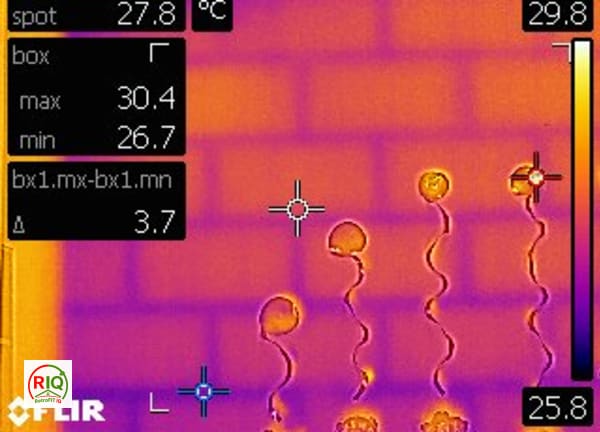
Thermal Bridging Visible Through Masonry Blockwork Wall

Thermal Bridge at Wall-Ceiling Junction Near Window

Airtightness Testing in a Stratford Victorian Terrace
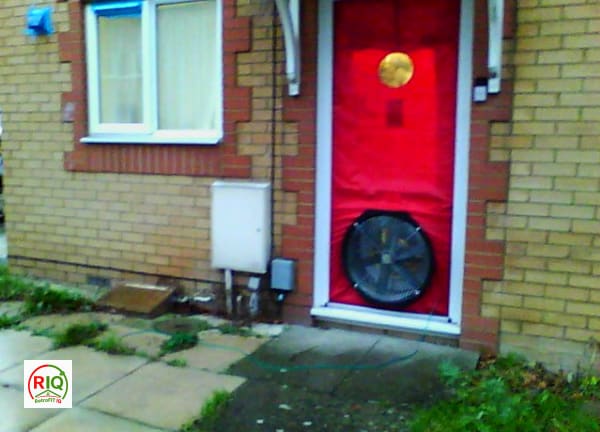
Blower Door Airtightness Test Setup

Thermal Bridge at Internal Corner Wall Junction
No related investigations yet.
Browse all investigationsFrequently asked questions
How do I stop my loft conversion overheating?+
By cutting the gains and purging the heat: improve the roof insulation so less solar heat conducts through, shade the rooflights externally to reject overhead sun, and ventilate with cool night air to flush out stored heat. Together these keep a conversion comfortable in summer without air conditioning.
Why does my loft conversion get so hot?+
Because it combines the worst gains — a large sun-baked roof above often-thin insulation, rooflights admitting intense overhead sunlight, and a top-of-house position where heat rising from below collects. Several heat sources hit it at once, so it overheats more than the rooms below.
Will better insulation help in summer or just winter?+
Both. Continuous roof insulation reduces the solar heat conducting in during summer as well as the heat lost in winter, so it improves comfort year-round — one of the reasons it's the highest-value measure for a loft conversion.
Are internal blinds on the rooflights enough?+
Not really — internal blinds stop only some of the heat once the sun has already passed through the glass. External shading rejects the overhead sun before it enters, which is far more effective for rooflights facing the high summer sun.
Do I need air conditioning?+
Usually not. With improved roof insulation, external rooflight shading and secure night ventilation, most loft conversions can be kept comfortable passively. A thermal assessment shows which measure matters most, so the cooling effort is targeted rather than defaulting to air conditioning.
Stop guessing — find the real cause
Do not spend money fixing symptoms before you understand the cause. Every home behaves differently, and the only reliable way to know what is happening in yours is professional building performance diagnostics. At RetrofitIQ we verify buildings using the right combination of investigations:
- Thermal imaging
- Blower door testing
- Moisture & dew point readings
- Ventilation review
- Building physics assessment
- Passive House methodology