
Why is my top-floor flat or loft room so hot in summer?
Top-floor flats and loft rooms overheat in summer because they sit directly beneath the roof, which is the surface of the building exposed to the most intense solar heat — and they usually have the least insulation and the poorest night-time cooling above them. The roof absorbs a great deal of heat through the day and radiates it down into the room; rooflights and dormer windows add direct solar gain; and the heat that builds up has nowhere to escape because hot air collects at the top of the building and there is no purge route. It is a combination of solar gain through the roof and glazing, weak insulation, and a lack of night ventilation — all of which can be addressed once the dominant cause is identified.
 Reviewed by George Sora, Certified Passive House DesignerUpdated June 2026
Quick answer & key takeaways
8 min read- The roof receives the most intense solar heat and radiates it into the room below.
- Loft rooms and top floors often have the thinnest insulation in the building.
- Rooflights and dormer windows add strong direct solar gain.
- Heat collects at the top of the building with no purge route to escape.
- Biggest misconception: it is just a hot summer. The roof and glazing are the controllable causes.
- Retrofit IQ's approach: cut the solar gain, improve the roof, and create night-purge ventilation.
What this usually means
A top-floor flat or a loft room is uniquely exposed to summer heat because it sits under the roof. Of all a building's surfaces, the roof receives the most intense and prolonged solar radiation — it faces the sky for the whole day — so it heats up dramatically, and that heat conducts and radiates down through the ceiling into the room beneath. Lower floors are shielded by the storeys above; the top floor is not, which is why it can be markedly hotter than the rest of the home even when the rest feels comfortable. The roof, in effect, becomes a large warm radiator above the room for much of the afternoon and evening.
Two other factors usually compound this. First, loft rooms and top floors frequently have the least insulation: a converted loft may have only a thin layer in the sloping ceiling, and many roofs are poorly insulated against summer heat gain even where they meet winter standards. Thin insulation does little to slow the heat coming down from the hot roof. Second, glazing in these rooms is often overhead or in dormers — rooflights in particular admit very strong solar gain because they face upwards towards the sun — and unshaded glass turns sunlight directly into heat inside the room. The room therefore gains heat from above through both the roof fabric and the glazing.
The final piece is that the heat cannot easily escape. Warm air rises and accumulates at the highest point of the building, so the top floor collects the heat that the whole dwelling sheds upward, and without a deliberate route to purge it — opening up at night to let cool air flush through and carry the day's heat away — the room stays hot well into the night. Effective cooling therefore works on all three fronts: reducing the solar gain (shading the rooflights and dormers, solar-control glazing), slowing the heat from the roof (better roof insulation and reflective measures), and enabling night-purge ventilation so the accumulated heat is removed. Identifying which of these dominates in a given room is what makes the remedy efficient rather than a guess.
Common causes
Intense solar gain on the roof
The roof receives the most solar radiation of any surface and radiates that heat into the room below.
Thin roof or ceiling insulation
Loft rooms and top floors often have the least insulation, so the roof's heat passes through readily.
Rooflights and dormer glazing
Upward-facing rooflights admit very strong direct solar gain into the room.
Heat collecting at the top
Warm air rises and accumulates on the top floor with no route to escape.
No night-purge ventilation
Without a way to flush cool night air through, the day's heat stays in the room.
Signs and symptoms
Top floor far hotter than the rest
A marked temperature gap between the top floor and lower rooms points to roof solar gain.
Room hot into the night
Heat persisting after dark indicates trapped heat with no purge route.
Strong heat under rooflights
Intense warmth beneath rooflights reveals direct solar gain through the glazing.
Ceiling warm to the touch
A warm sloping ceiling shows heat conducting down from the hot roof.
Bedroom too hot to sleep
A loft bedroom that will not cool down reflects combined gain and poor night cooling.
What most people check first
- Whether the heat comes mainly through the roof, the rooflights or both.
- How much insulation the sloping ceiling or top-floor roof actually has.
- Whether the rooflights and dormers are shaded against direct sun.
- Whether there is any night-purge route to flush the heat out.
What most people miss
- That the roof is the most solar-exposed surface and the main heat source.
- That rooflights admit far more solar gain than vertical windows.
- That night-purge ventilation is essential to remove accumulated heat.
- That summer roof insulation matters as much as winter insulation.
The building physics
A roof intercepts more solar radiation over a summer day than any other surface of a building because it presents a large area to the high midday sun and is exposed from sunrise to sunset. Dark roof coverings absorb a high fraction of that radiation, reaching very high surface temperatures, and the heat then flows inward by conduction through the roof build-up and is re-radiated from the warm ceiling into the room. The rate and timing of that inward heat flow depend on the insulation and on the thermal mass of the construction: lightweight, thinly insulated roofs — typical of loft conversions — transmit the heat quickly and with little delay, so the room heats up through the afternoon almost in step with the roof.
Glazing orientation makes overhead glass the strongest gain path. Solar gain through glazing scales with the intensity of radiation striking the glass, and a horizontal or near-horizontal rooflight faces the high summer sun far more directly than a vertical window, admitting a large solar heat flux straight into the room. Because this gain is transmitted instantly as the sun strikes the glass, unshaded rooflights produce sharp, intense heating directly beneath them. Shading that intercepts the radiation before it passes the glass — external blinds, solar-control glazing — is therefore far more effective than internal blinds, which stop the light only after it has already entered and become heat inside the room.
Removing accumulated heat depends on ventilation driven by temperature and height. Warm air is buoyant and collects at the top of the dwelling, so the top floor receives heat rising from below as well as its own gains. Night-purge ventilation exploits the cooler night air and the stack effect: opening high and low, or across the space, lets cool air flush through and carry the stored heat out, allowing the fabric to re-cool before the next day. Without such a purge, the heat stored in the roof and the room persists overnight, which is why loft bedrooms stay uncomfortable after dark. The efficient remedy combines reducing the gains (external shading, solar-control glazing, improved and where possible reflective roof insulation) with a reliable night-purge route — and an assessment of which gain path and which constraint dominates ensures the measures are targeted rather than generic.
How to cool a top-floor flat or loft room
Cut the solar gain through the roof and glazing, slow the heat from the roof with better insulation, and create a reliable night-purge route to flush the accumulated heat out.
- 01
Shade the rooflights and dormers
Use external shading or solar-control glazing to intercept solar gain before it enters the room.
- 02
Improve the roof insulation
Increase the insulation in the sloping ceiling to slow the heat coming down from the hot roof.
- 03
Reduce the roof's heat absorption
Consider reflective or lighter measures where the roof covering drives high surface temperatures.
- 04
Create a night-purge route
Enable secure openings to flush cool night air through and carry the day's heat away.
- 05
Use the stack effect
Open high and low or across the space so warm air can escape and cool air replace it.
- 06
Verify the dominant cause
Confirm whether the roof, the glazing or the lack of purge governs, so the measures are targeted.
How to prevent it coming back
- Shade overhead glazing externally rather than with internal blinds.
- Insulate the roof against summer heat, not just winter cold.
- Build in a secure night-purge ventilation route.
- Address the roof gain rather than relying on air conditioning.
How Retrofit IQ investigates this
We identify which heat path dominates — roof, glazing or trapped air — so the cooling measures are targeted at the real cause.
Do not spend money fixing symptoms before you understand the cause — investigate first, then build with confidence.
Do I need a professional investigation?
If a top-floor flat or loft room overheats so badly it is hard to use or sleep in, it is worth investigating which gain path dominates before spending on remedies. Logging the temperatures and assessing the roof, the rooflights and the night-purge potential identifies whether shading, roof insulation or ventilation will deliver the most cooling — avoiding generic fixes and the cost of air conditioning.
Where to go next
Relevant services
Related comparisons
From the Academy
Related case studies
Evidence from Real Projects (14)
Real project and investigation images from our own fieldwork, matched to this page — not stock photography.

Sample Building Performance Investigation Report — Thermal Imaging
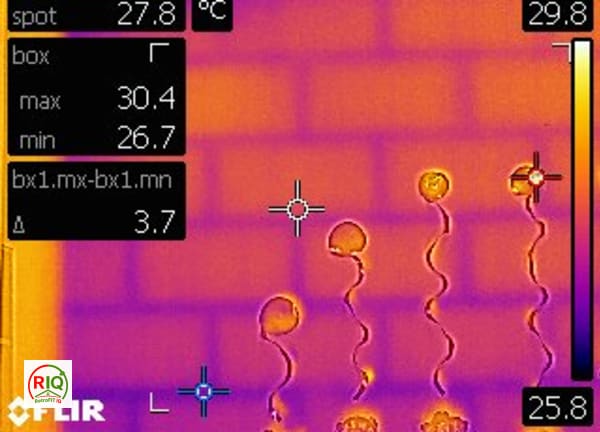
Thermal Bridging Visible Through Masonry Blockwork Wall

Thermal Bridge at Wall-Ceiling Junction Near Window

Thermal Bridge at Internal Corner Wall Junction

Acoustic Floor Upgrades: Mineral Wool Insulation Between Joists
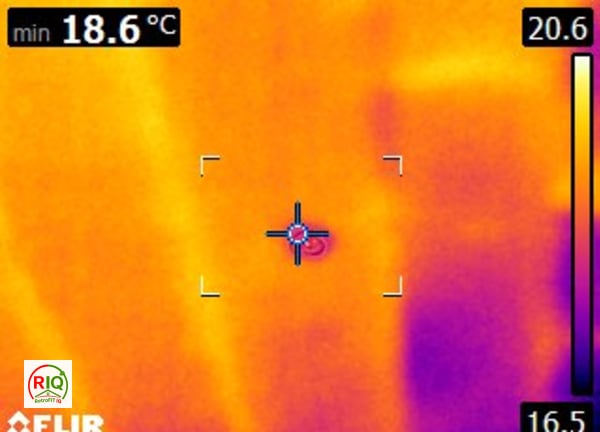
Wall / floor junction
No related investigations yet.
Browse all investigationsFrequently asked questions
Why is my top-floor flat or loft room so hot in summer?+
Because it sits directly under the roof, which is the most solar-exposed surface of the building and radiates its heat down into the room. Top floors also tend to have the thinnest insulation, often have rooflights admitting strong solar gain, and collect the warm air that rises through the building with no route to escape.
Why do rooflights make it so much hotter?+
Rooflights face upwards towards the high summer sun, so they admit a far stronger solar heat flux than vertical windows, and that gain enters the room instantly as the sun strikes the glass. Shading them externally is much more effective than internal blinds, which only stop the light after it has already become heat indoors.
Will more insulation help in summer?+
Yes — loft rooms often have only thin insulation in the sloping ceiling, which does little to slow the heat coming down from the hot roof. Improving the roof insulation reduces that inward heat flow, complementing shading and night ventilation.
Why does the room stay hot into the night?+
Because warm air collects at the top of the building and the heat stored in the roof has no route to escape. Without a night-purge — opening up to flush cool night air through — the accumulated heat persists after dark, which is why loft bedrooms stay uncomfortable.
Do I need air conditioning?+
Usually not. Reducing the solar gain with external shading and solar-control glazing, improving the roof insulation, and creating a reliable night-purge route will cool most top-floor and loft rooms without the cost and energy of air conditioning. The key is targeting the dominant heat path.
How do you work out what will cool it best?+
We log the temperatures through the day and night, assess the roof and the rooflights for solar gain, and check the night-purge potential — so we can specify the shading, roof insulation and ventilation that address the path actually driving the overheating.
Stop guessing — find the real cause
Do not spend money fixing symptoms before you understand the cause. Every home behaves differently, and the only reliable way to know what is happening in yours is professional building performance diagnostics. At RetrofitIQ we verify buildings using the right combination of investigations:
- Thermal imaging
- Blower door testing
- Moisture & dew point readings
- Ventilation review
- Building physics assessment
- Passive House methodology