
Is mould in my rented home the landlord's responsibility?
Mould in a rented home is, in most cases where it stems from the condition of the building, the landlord's responsibility — but the question turns on what is actually causing it, and that is where tenants and landlords often disagree. If the mould results from a building defect or from inadequate provision the landlord is responsible for — cold, uninsulated walls causing condensation, a leak, or ventilation that does not work — then it is generally the landlord's to remedy. Landlords frequently attribute it instead to 'lifestyle'. The way to resolve that is independent, measured evidence of the cause: showing whether the building, not the occupant's normal use, is producing the conditions in which mould grows.
 Reviewed by George Sora, Certified Passive House DesignerUpdated June 2026
Quick answer & key takeaways
8 min read- Mould from a building defect or inadequate ventilation is usually the landlord's responsibility.
- The question hinges on the cause, which landlords often dispute as 'lifestyle'.
- Cold uninsulated walls, leaks and failed ventilation are the landlord's to remedy.
- Independent, measured evidence of the cause is what resolves the dispute.
- Biggest misconception: mould is always the tenant's fault. Often the building causes it.
- Retrofit IQ's approach: diagnose and document the cause independently to establish responsibility.
What this usually means
Most mould in homes is the result of condensation — humid indoor air meeting cold surfaces — and whether that is the tenant's doing or the building's depends on the balance between the moisture a normal household produces and the building's ability to handle it through warm surfaces and adequate ventilation. Every household cooks, washes and breathes, generating moisture; if the building has cold, uninsulated walls that condense, or ventilation that does not remove that normal moisture, then mould will grow under ordinary use — and the cause is the building, which is the landlord's responsibility to keep in a fit condition. If, by contrast, the building is sound and well ventilated and the mould arises from genuinely excessive moisture with no ventilation, the picture differs.
The dispute almost always centres on this distinction, because a landlord can deflect a mould complaint by blaming 'lifestyle' — drying washing, not opening windows, not heating enough. A tenant showing photographs of mould cannot easily counter that, because the photos show the symptom, not the cause. What settles it is objective evidence of why the mould forms: whether the walls are cold because they are uninsulated or bridged, whether the ventilation provided actually works, and whether the surfaces reach condensing conditions under reasonable use. That is a building-physics question answered with measurement, not assertion.
An independent assessment provides exactly that. By logging the temperature and humidity, mapping the cold surfaces with thermal imaging, checking the ventilation provision, and inspecting for leaks and defects, it establishes whether the mould is driven by the building — cold uninsulated surfaces, inadequate or broken ventilation, a defect — or genuinely by excessive moisture the building could reasonably handle. Where the building is the cause, that documented evidence establishes the landlord's responsibility and supports a request to remedy it, and it can underpin a formal disrepair complaint. It also defines what must be put right — insulation and warm surfaces, working ventilation, repair of a defect — so the remedy actually resolves the mould rather than the cause being argued about indefinitely.
Common causes
Cold, uninsulated walls
Cold surfaces that condense under normal use are a building issue the landlord should remedy.
Inadequate or broken ventilation
Ventilation the landlord provides that does not work drives condensation and mould.
Leaks and defects
Penetrating damp from a defect is a repair the landlord is responsible for.
'Lifestyle' attribution
Landlords often blame occupancy, which measured evidence can counter.
Excessive moisture with no ventilation
Where moisture is genuinely excessive and the building sound, the picture differs.
Signs and symptoms
Recurring mould the landlord blames on you
Mould attributed to lifestyle needs objective evidence of the building cause.
Cold walls behind the mould
Mould on cold, uninsulated surfaces points to a fabric issue.
No working extractor
Missing or broken ventilation provision is a building failing.
Damp tracking a leak
Mould near a leak or penetrating damp indicates a repair obligation.
Mould despite reasonable use
Mould under normal heating and ventilation suggests the building, not the tenant.
What most people check first
- Whether the mould stems from cold surfaces, a leak or failed ventilation.
- Whether the ventilation the landlord provides actually works.
- Whether the cause is the building or genuinely excessive moisture.
- Whether independent, measured evidence of the cause exists.
What most people miss
- That building-caused mould is usually the landlord's responsibility.
- That photos show the symptom, not the cause or responsibility.
- That a 'lifestyle' claim is countered by measured evidence.
- That the evidence also defines the correct remedy.
The building physics
Whether mould under normal occupancy is attributable to the building is a quantitative question of surface temperature, humidity and ventilation. A household's moisture generation is broadly predictable; whether it produces mould depends on whether the building keeps surfaces above the dew point and removes the moisture. Cold, uninsulated or thermally bridged surfaces fall below the dew point of the indoor air at reasonable humidities, and ventilation that falls short of removing the normal moisture load lets humidity accumulate — so under ordinary use the building creates the conditions for mould, making it the cause. Temperature and relative-humidity logging establishes whether surfaces condense under reasonable conditions, and thermal imaging shows whether the cold surfaces arise from fabric defects rather than from the occupant.
The diagnostic distinctions mirror any damp assessment but the evidential bar is higher because responsibility is contested. Condensation is identified from cold surfaces, elevated surface humidity and inadequate ventilation; penetrating damp from a defect and rainfall correlation; and the adequacy of the landlord-provided ventilation is tested by measuring whether it achieves the airflow needed. Because a conductance damp meter and photographs cannot establish cause, robust evidence rests on logged environmental data, thermal mapping, ventilation measurement and fabric inspection, interpreted together — which can demonstrate that a normally occupied dwelling condenses because its fabric is cold or its ventilation deficient, both within the landlord's responsibility to remedy.
An independent building-physics assessment converts the contested symptom into documented cause-and-responsibility and defines the remedy. Recording that surfaces reach condensing conditions under reasonable use because of uninsulated walls or non-functioning ventilation, or that a leak is wetting the fabric, establishes the building as the cause and the landlord as responsible, supporting a request to remedy and, if needed, a disrepair complaint. The same findings specify the fix — insulating and warming cold surfaces, providing working ventilation, repairing the defect — so the mould is actually resolved. Because the assessment is independent and measured, it carries the weight that a tenant's photographs or a landlord's lifestyle assertion do not, which is what moves a stalled dispute toward a genuine resolution.
How to establish responsibility for mould in a rental
Get the cause independently diagnosed and documented — showing whether the building's cold surfaces, leak or failed ventilation, rather than normal use, produce the mould — to establish the landlord's responsibility and the remedy.
- 01
Report it in writing
Notify the landlord of the mould in writing and request that the cause be investigated.
- 02
Get an independent diagnosis
Have the cause assessed by someone not acting for either party, with measurement.
- 03
Document the cold surfaces and ventilation
Use thermal imaging and humidity logging to show whether the building condenses under normal use.
- 04
Check for leaks and defects
Identify any penetrating damp or defect the landlord must repair.
- 05
Establish responsibility
Use the measured evidence to show the building, not lifestyle, is the cause.
- 06
Require the correct remedy
Press for insulation, working ventilation or repair that actually resolves the mould.
How to prevent it coming back
- Report mould in writing and keep a record.
- Rely on measured evidence of the cause, not photographs alone.
- Establish whether the building or genuine excess moisture is to blame.
- Ensure the remedy addresses the diagnosed cause.
How Retrofit IQ investigates this
We diagnose and document the cause of the mould independently, establishing whether the building is responsible and what must be put right.
Do not spend money fixing symptoms before you understand the cause — investigate first, then build with confidence.
Do I need a professional investigation?
If mould keeps returning in a rented home and the landlord disputes responsibility or blames lifestyle, an independent measured assessment is worth commissioning. Documenting whether the cause is cold uninsulated surfaces, a leak, or failed ventilation — within the landlord's responsibility — provides the objective evidence to establish that and to require the correct remedy, rather than the cause being argued about while the mould persists.
Where to go next
Relevant services
Related comparisons
From the Academy
Related case studies
Evidence from Real Projects (14)
Real project and investigation images from our own fieldwork, matched to this page — not stock photography.

Sample Building Performance Investigation Report — Thermal Imaging
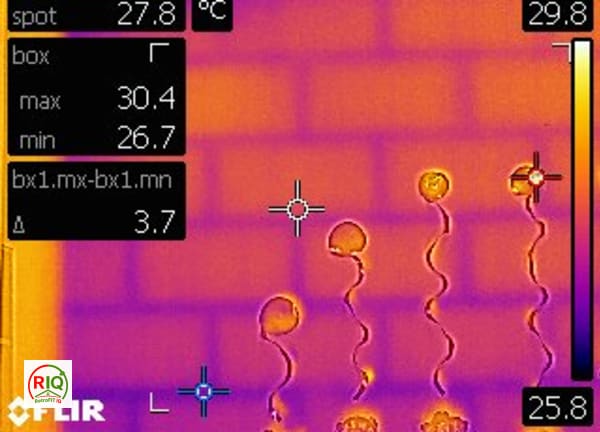
Thermal Bridging Visible Through Masonry Blockwork Wall

Thermal Bridge at Internal Corner Wall Junction

Thermal Bridge at Wall-Ceiling Junction Near Window

Internal wall surface

Internal door head and reveal next to a framed picture on a warmer external wall
No related investigations yet.
Browse all investigationsFrequently asked questions
Is mould in my rented home the landlord's responsibility?+
In most cases where it stems from the building — cold, uninsulated walls causing condensation, a leak, or ventilation that does not work — yes, it is generally the landlord's to remedy. The question turns on the cause, which landlords often dispute as 'lifestyle', so independent, measured evidence of why the mould forms is what establishes responsibility.
My landlord says it's my lifestyle — how do I respond?+
With objective evidence of the cause. Photographs show the mould but not why it forms, and a landlord can deflect them by blaming occupancy. An independent assessment that logs the humidity, maps the cold surfaces and checks the ventilation can show whether the building condenses under normal use — countering the lifestyle claim.
What building causes make it the landlord's responsibility?+
Cold, uninsulated or thermally bridged walls that condense, ventilation the landlord provides that does not work, and leaks or penetrating damp from a defect are all building issues the landlord is responsible for keeping in a fit condition. Mould arising from these under normal use is generally theirs to remedy.
What if I do dry washing indoors?+
Normal household activities generate moisture, and the building is expected to cope through warm surfaces and adequate ventilation. If the walls are cold or the ventilation does not work, mould forms under ordinary use and the building is the cause. The assessment establishes whether the moisture is within a reasonable range the building should handle.
Can this support a disrepair complaint?+
Yes. Documented, independent evidence that the cause is a building defect or inadequate ventilation establishes the landlord's responsibility and can underpin a formal disrepair complaint, as well as a request to remedy. It also defines what must be put right so the mould is actually resolved.
How do you establish the cause?+
We log the temperature and humidity, map the cold surfaces with thermal imaging, check whether the ventilation works, and inspect for leaks and defects — then document whether the building, rather than normal use, produces the mould, and specify the remedy, in an independent report that carries weight in a dispute.
Stop guessing — find the real cause
Do not spend money fixing symptoms before you understand the cause. Every home behaves differently, and the only reliable way to know what is happening in yours is professional building performance diagnostics. At RetrofitIQ we verify buildings using the right combination of investigations:
- Thermal imaging
- Blower door testing
- Moisture & dew point readings
- Ventilation review
- Building physics assessment
- Passive House methodology