
Why are the ceilings upstairs cold?
A cold upstairs ceiling is a direct sign that heat is escaping through it into the loft or roof above — usually because the loft insulation over that ceiling is missing, thin, gapped or bypassed by air leakage. Because heat rises, the ceilings below a loft are a major route for heat to leave the house, and any weakness in the insulation above shows up as a cold ceiling, sometimes with condensation or a 'ghosting' pattern of marks along the cold joists. The fix lies above the ceiling, in the loft: restoring continuous, full-depth insulation and sealing the air paths so the ceiling stays warm.
 Reviewed by George Sora, Certified Passive House DesignerUpdated June 2026
Quick answer & key takeaways
6 min read- A cold ceiling means heat is escaping upward through it.
- The cause is usually missing, thin or bypassed loft insulation above.
- Air leakage into the loft chills the ceiling too.
- Cold lines on the ceiling can mark the cold joists (ghosting).
- Biggest misconception: it's a heating issue. It's insulation and airtightness above.
- RetrofitIQ's approach: image the ceiling and fix the insulation and leakage in the loft.
What this usually means
The ceiling of an upper room is, in most houses, the boundary between the warm home and the cold loft, so its temperature reflects how well insulated and sealed that boundary is. Where the loft insulation above is missing, thin, displaced or gapped — common at the eaves, around the hatch and where storage has been laid — the ceiling there runs cold because heat conducts straight through into the loft. Because heat rises, this upward loss is disproportionately important, so a cold ceiling often signals one of the home's biggest and most easily fixed heat losses.
Air leakage adds to it. Warm air escaping into the loft around the hatch, downlighters and penetrations, and cold loft air washing back through gaps, both chill the ceiling and bypass any insulation. The tell-tale 'ghosting' — faint dark lines on the ceiling following the joists — appears because the timber joists are slightly warmer (or attract less dust deposition) than the cold insulated bays, revealing the thermal pattern. The remedy is in the loft: thermal-image the ceiling to find the cold areas and leakage, then restore continuous, full-depth insulation and seal the air paths, after which the ceiling warms and the upstairs holds heat better.
Common causes
Missing or thin loft insulation
Heat conducts straight through the ceiling into the loft.
Gaps and displaced insulation
Breaks at eaves, hatch and joists chill the ceiling.
Air leakage into the loft
Warm air escaping and cold air washing back cool the ceiling.
Compressed insulation under storage
Squashed insulation lets the ceiling beneath run cold.
Signs and symptoms
Ceiling cold to the touch
Heat escaping through poorly insulated areas above.
Ghosting lines on the ceiling
Cold joists revealed by the thermal pattern.
Condensation or mould on the ceiling
Cold ceiling surface below the dew point.
Cold upstairs rooms
Significant heat loss upward through the ceilings.
What most people check first
- Whether loft insulation above the cold ceiling is present and full-depth.
- Whether it is gapped, displaced or compressed.
- Whether air is leaking into the loft around the ceiling.
- Whether the cold pattern follows the joists (ghosting).
What most people miss
- That a cold ceiling is an insulation problem above, not a heating one.
- That upward heat loss is disproportionately large.
- That air leakage chills the ceiling as much as missing insulation.
- That ghosting marks reveal the cold joist pattern.
The building physics
The ceiling below a loft is part of the building's thermal envelope, and its inner surface temperature depends on the insulation and airtightness of that plane. Where insulation is full-depth and continuous and the plane is airtight, the ceiling stays close to room temperature; where it is thin, gapped, compressed or leaky, heat conducts and convects through, so the surface runs cold — and if it falls below the dew point, condensation and mould follow. The disproportionate importance of this loss comes from buoyancy: warm air collects against the ceiling and rises into any gap, so the upward path is the one most readily exploited by escaping heat.
Diagnosing it is straightforward with thermal imaging from inside the room, which maps the cold ceiling areas and reveals whether the pattern is uniform (thin insulation), patchy (gaps and displacement) or linear along the joists (ghosting and air movement). A blower door test quantifies the leakage into the loft. The remedy is then applied in the loft: restore a continuous, uncompressed, full-depth insulation layer over the whole ceiling including the eaves, and air-seal the hatch, downlighters and penetrations. With the plane insulated and sealed, the ceiling surface warms, the upward heat loss falls, and the condensation risk disappears.
How to fix cold upstairs ceilings
Work in the loft: restore continuous, full-depth insulation over the whole ceiling and seal the air paths, so the ceiling surface warms and the upward heat loss stops.
- 01
Image the ceiling
Use thermal imaging to map the cold areas and pattern.
- 02
Inspect the loft above
Check insulation depth, continuity and compression.
- 03
Restore the insulation
Fill gaps and top up to full depth over the whole ceiling.
- 04
Seal the air paths
Air-seal the hatch, downlighters and penetrations.
- 05
Insulate to the eaves
Fill the eaves without blocking roof ventilation.
- 06
Verify warmth
Confirm the ceiling warms and the room holds heat.
How to prevent it coming back
- Keep loft insulation continuous and full-depth over all ceilings.
- Air-seal the ceiling plane against leakage.
- Raise loft storage above the insulation.
- Insulate to the eaves without blocking ventilation.
How Retrofit IQ investigates this
We map cold ceilings and inspect the loft above to fix the insulation and leakage causing them.
Do not spend money fixing symptoms before you understand the cause — investigate first, then build with confidence.
Do I need a professional investigation?
If your upstairs ceilings are cold, ghosting or growing mould, it is worth thermal imaging to map the cold areas and a loft inspection to see why. That reveals whether the insulation above is missing, gapped, compressed or bypassed by leakage, so the right fix in the loft warms the ceilings and cuts a major heat loss.
Where to go next
Relevant services
Related comparisons
Related case studies
Evidence from Real Projects (23)
Real project and investigation images from our own fieldwork, matched to this page — not stock photography.

Sample Building Performance Investigation Report — Thermal Imaging

Thermal Bridge at Wall-Ceiling Junction Near Window

Thermal Bridge at Internal Corner Wall Junction
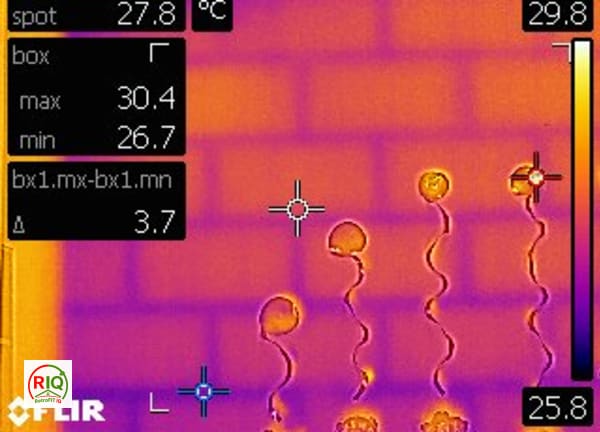
Thermal Bridging Visible Through Masonry Blockwork Wall
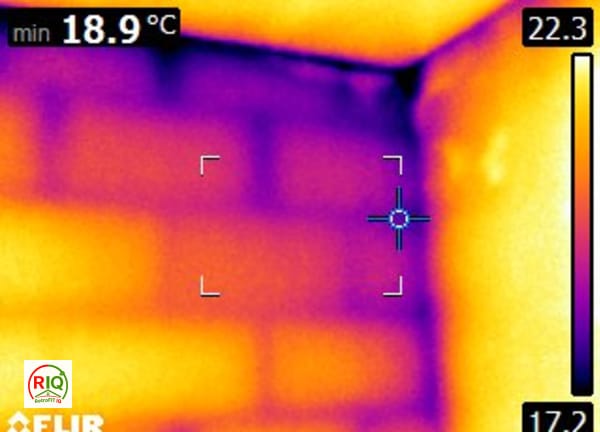
Cold wall surface vs warm ceiling
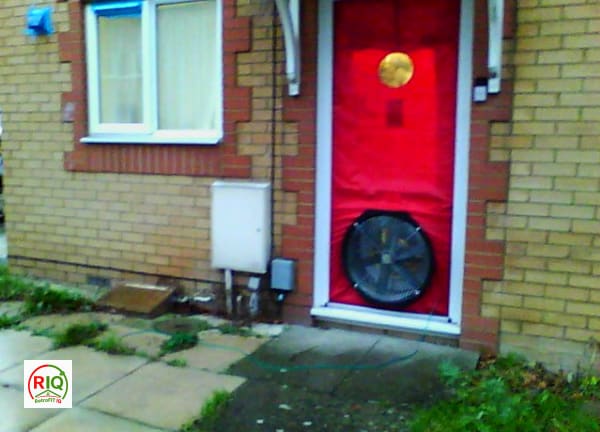
Blower Door Airtightness Test Setup
No related investigations yet.
Browse all investigationsFrequently asked questions
Why are the ceilings upstairs cold?+
Because heat is escaping through them into the loft above, usually where the loft insulation is missing, thin, gapped, compressed or bypassed by air leakage. Since heat rises, the ceilings below a loft are a major route for heat to leave, so any weakness above shows as a cold ceiling.
What are the faint lines on my ceiling?+
That's 'ghosting' — the cold joists in the loft create a thermal pattern that shows on the ceiling, often as faint darker lines following the joists. It's a sign the ceiling is cold and the insulation and airtightness above need attention.
Is a cold ceiling a heating problem?+
No — it's an insulation and airtightness problem above the ceiling. More heating won't warm a ceiling that's losing heat into a cold loft; restoring continuous, full-depth insulation and sealing the air paths in the loft is what warms it.
Why is there mould on my cold ceiling?+
Because the cold ceiling surface falls below the dew point of the room air, so moisture condenses and mould grows. Warming the surface by insulating and air-sealing the loft above raises its temperature above the dew point and stops the mould.
How do I find the cause?+
Thermal imaging from inside the room maps the cold areas and pattern, and a loft inspection shows whether the insulation is missing, gapped or compressed and whether air is leaking in. Together they tell you exactly what to fix in the loft.
Stop guessing — find the real cause
Do not spend money fixing symptoms before you understand the cause. Every home behaves differently, and the only reliable way to know what is happening in yours is professional building performance diagnostics. At RetrofitIQ we verify buildings using the right combination of investigations:
- Thermal imaging
- Blower door testing
- Moisture & dew point readings
- Ventilation review
- Building physics assessment
- Passive House methodology