
Why is the air in my bedroom stale in the morning?
Waking to stale, stuffy bedroom air is almost always a sign that the room was under-ventilated overnight — carbon dioxide and moisture from your breathing built up in a closed room faster than the small amount of air change could remove them. A sleeping person exhales CO₂ and water vapour continuously, and in a modern, fairly airtight bedroom with the door and windows shut and no working trickle vent or fan, those levels climb through the night, leaving the air feeling stale and humid by morning — and often misting the windows. It is a ventilation problem with a ventilation solution, and it matters because high overnight CO₂ is linked to poorer sleep quality.
 Reviewed by George Sora, Certified Passive House DesignerUpdated June 2026
Quick answer & key takeaways
6 min read- Stale morning air is overnight build-up of CO₂ and moisture in a closed room.
- A sleeping person continuously exhales CO₂ and water vapour.
- A sealed bedroom with no trickle vent or airflow can't clear it.
- High overnight CO₂ is associated with poorer sleep quality.
- Biggest misconception: it's about the heating or the room being 'too warm'. It's ventilation.
- RetrofitIQ's approach: measure overnight CO₂ and humidity, then provide gentle background ventilation.
What this usually means
Over a night's sleep, one or two people in a closed bedroom add a surprising amount of CO₂ and several hundred millilitres of water vapour to the air. In a leaky older home, enough air leaked through gaps to keep up; in a sealed, draught-proofed modern bedroom with the door shut and trickle vents closed or absent, the air change is too small, so CO₂ and humidity rise steadily through the night. By morning the CO₂ can be several times the outdoor level and the air feels stale and stuffy — and the extra moisture often shows up as condensation on the coldest window or wall.
This is purely a question of background ventilation while you sleep. The room needs a small, continuous supply of fresh air to dilute and remove what the occupants produce — through a trickle vent, a slightly open window, an undercut or vented door, or a mechanical system. Where none of these is present or working, the build-up is inevitable. It is not caused by the heating, and turning the heating down does not fix it; if anything a warm, sealed room with rising humidity is exactly where the staleness and the morning condensation are worst.
The fix is to provide gentle, draught-free background ventilation overnight. That can be as simple as opening a trickle vent or window slightly, ensuring the door isn't fully sealing, or — in an airtight home — relying on a designed system such as MVHR that supplies fresh air to bedrooms continuously. Measuring the overnight CO₂ and humidity confirms the problem and shows how much ventilation is needed, so the solution provides fresh air without a cold draught over the bed.
Common causes
Sealed room overnight
Closed door, windows and vents stop the air changing while you sleep.
Occupant CO₂ and moisture
Breathing adds CO₂ and water vapour continuously through the night.
No trickle vent or fan
Without background ventilation, the build-up can't be removed.
Airtight modern construction
A sealed bedroom no longer ventilates itself through accidental gaps.
Signs and symptoms
Stuffy, stale air on waking
Classic sign of high overnight CO₂ and humidity.
Morning condensation on the window
The overnight moisture build-up condensing on the cold glass.
Air fresher with the door or window open
Confirms the problem is inadequate background ventilation.
Poorer sleep in a closed room
High CO₂ is associated with worse sleep quality.
What most people check first
- Whether the bedroom has a working trickle vent or background ventilation.
- Whether the door fully seals, preventing any air movement.
- How high the overnight CO₂ and humidity actually rise.
- Whether the home is airtight enough to need designed ventilation.
What most people miss
- That it's a ventilation problem, not a heating one.
- That sealed modern bedrooms no longer ventilate themselves.
- That high overnight CO₂ affects sleep quality.
- That gentle background ventilation, not an open window in a gale, is the fix.
The building physics
Indoor CO₂ is the standard proxy for ventilation adequacy because it tracks occupancy directly: with no fresh-air supply, the CO₂ a sleeper exhales accumulates in the room volume, rising through the night towards levels well above the roughly 400 ppm outdoors. The rate of rise depends on the room volume, the number of occupants and the air-change rate; a small, sealed bedroom with two people and almost no air change can reach uncomfortable levels within a few hours. The same lack of air change traps the water vapour exhaled and perspired overnight, raising humidity until it condenses on the coldest surface — which is why stale morning air and morning window condensation so often appear together.
The remedy is a small but continuous air-change rate, not occasional bursts. Trickle vents, a slightly open window, a vented or undercut door, or mechanical supply ventilation all provide the steady dilution that keeps overnight CO₂ and humidity down. In an airtight home this is best delivered by design — MVHR supplies fresh, tempered air to bedrooms continuously and recovers the heat — so the room stays fresh without a cold draught. Measuring overnight CO₂ and humidity quantifies how much ventilation is required and confirms the cause, so the solution is sized to keep the air fresh without overcooling the room.
How to stop your bedroom air going stale overnight
Provide gentle, continuous background ventilation while you sleep — a trickle vent, slightly open window, vented door or designed mechanical supply — sized from the measured overnight CO₂ and humidity.
- 01
Confirm the cause
Log overnight CO₂ and humidity to verify the build-up.
- 02
Open background ventilation
Use a trickle vent or slightly open window for continuous air change.
- 03
Allow door airflow
Ensure the door isn't fully sealing, or vent it to share air.
- 04
Avoid cold draughts
Provide gentle ventilation rather than a blast of cold air over the bed.
- 05
Use designed ventilation if airtight
Rely on MVHR or mechanical supply where the home is sealed tight.
- 06
Verify the air stays fresh
Re-log CO₂ and humidity to confirm the ventilation keeps up.
How to prevent it coming back
- Keep a trickle vent or window slightly open overnight.
- Don't fully seal the bedroom door if it's the only air path.
- Match ventilation to occupancy in small bedrooms.
- Use designed mechanical ventilation in airtight homes.
How Retrofit IQ investigates this
We measure overnight CO₂ and humidity so the right background ventilation is provided for fresh, healthy sleep.
Do not spend money fixing symptoms before you understand the cause — investigate first, then build with confidence.
Do I need a professional investigation?
If your bedroom is reliably stale each morning, the windows mist overnight, or you sleep poorly in a closed room, it is worth logging the overnight CO₂ and humidity. The data confirms inadequate ventilation and shows how much fresh air is needed, so background or designed ventilation can keep the room fresh without an uncomfortable draught.
Where to go next
Relevant services
Evidence from Real Projects (8)
Real project and investigation images from our own fieldwork, matched to this page — not stock photography.

Sample Building Performance Investigation Report — Thermal Imaging
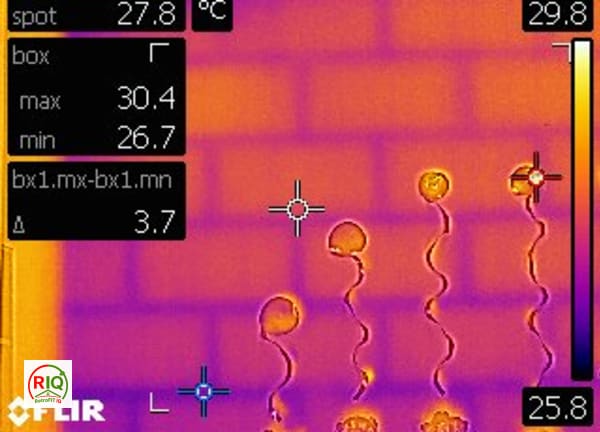
Thermal Bridging Visible Through Masonry Blockwork Wall
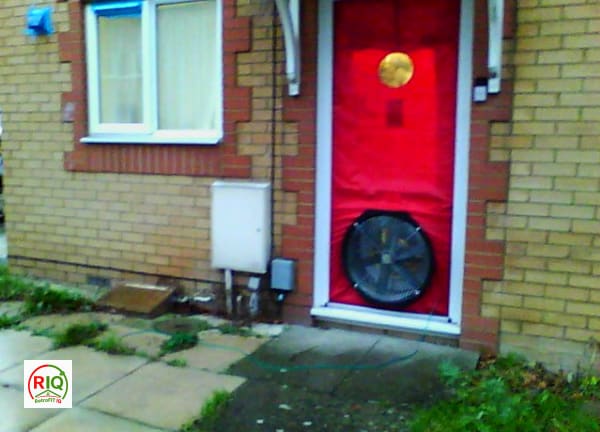
Blower Door Airtightness Test Setup

Calibrated blower door fan installed in the front doorway, sealed with the red airtight pa

Airtightness Testing in a Stratford Victorian Terrace

Thermal Bridge at Wall-Ceiling Junction Near Window
No related investigations yet.
Browse all investigationsFrequently asked questions
Why is the air in my bedroom stale in the morning?+
Because CO₂ and moisture from your breathing built up overnight in a closed, under-ventilated room. A sealed modern bedroom with the door and windows shut and no working trickle vent can't change the air fast enough, so by morning the air is stale and humid — and the windows often mist up. It's a ventilation problem with a ventilation fix.
Is stale bedroom air bad for me?+
High overnight CO₂ is associated with poorer sleep quality, and the trapped humidity encourages condensation and mould. It's not usually dangerous, but it's a sign the room needs more fresh air while you sleep.
Should I sleep with the window open?+
A slightly open window or trickle vent provides the gentle, continuous background ventilation that keeps overnight CO₂ and humidity down. You don't need a gale — just a small, steady supply of fresh air, ideally without a cold draught over the bed.
Why does my bedroom window mist up overnight?+
The same trapped moisture that makes the air stale condenses on the coldest surface — usually the window. Both are symptoms of inadequate overnight ventilation, and providing background air change fixes them together.
What if my house is very airtight?+
Then occasional window-opening is unreliable, and the room is best served by designed ventilation such as MVHR, which supplies fresh, tempered air to bedrooms continuously and recovers the heat — keeping the air fresh without a draught or heat loss.
Stop guessing — find the real cause
Do not spend money fixing symptoms before you understand the cause. Every home behaves differently, and the only reliable way to know what is happening in yours is professional building performance diagnostics. At RetrofitIQ we verify buildings using the right combination of investigations:
- Thermal imaging
- Blower door testing
- Moisture & dew point readings
- Ventilation review
- Building physics assessment
- Passive House methodology