
Why is my solid floor damp?
Damp in a solid concrete floor usually comes from one of three things: ground moisture rising through a missing, damaged or bridged damp-proof membrane; condensation forming on the cold floor surface; or a leak from plumbing or outside. Older solid floors were often laid without an effective membrane, so ground moisture rises through the slab and shows as damp, cold patches or as moisture trapped under an impervious floor covering. Newer floors should have a membrane, but it can be punctured or bridged. Because the cure differs completely — from improving ventilation to relaying the floor — the cause must be diagnosed before any expensive work.
 Reviewed by George Sora, Certified Passive House DesignerUpdated June 2026
Quick answer & key takeaways
7 min read- Damp solid floors are usually ground moisture, condensation or a leak.
- Old solid floors often lack an effective damp-proof membrane.
- An impervious floor covering can trap moisture and show as damp.
- Condensation on a cold floor is commonly mistaken for rising moisture.
- Biggest misconception: it's always a failed membrane. Sometimes it's surface condensation.
- RetrofitIQ's approach: measure the moisture and surface conditions before relaying anything.
What this usually means
A solid floor sits directly on the ground, so without an effective damp-proof membrane between the slab and the earth, ground moisture rises through the concrete by capillary action and evaporates at the surface. Many older solid floors were laid before membranes were standard, or with membranes that have since failed, so this is a common cause — showing as persistently damp or cold patches, efflorescent salts, or moisture trapped beneath vinyl, laminate or a sealed covering that cannot let the floor breathe. The trapped-moisture version is often the first sign, appearing when a new impervious floor finish is laid over a slab that was previously able to dry.
Condensation is the cause most often confused with rising ground moisture. A solid floor is a large, cold thermal mass, so in humid conditions its surface can fall below the dew point and water condenses on it — wettest in warmer, humid weather and on the coldest parts of the floor. This is a surface phenomenon driven by indoor humidity and a cold floor, not water coming up through the slab, and it is solved by ventilation, surface warming or insulation rather than by relaying the floor. Distinguishing it from ground moisture is essential before committing to major works.
Leaks are the third cause: a buried pipe, a leaking radiator or waste, or surface water finding its way under the floor can saturate a slab locally. Because the three causes — ground moisture, condensation and leaks — need entirely different remedies, ranging from improving ventilation to installing a new membrane and floor, diagnosis comes first. Moisture measurement (including, where needed, a calcium-carbide or relative-humidity test in the slab), thermal imaging and a check of the floor covering and surrounding plumbing identify the real cause, so the often-expensive decision to relay a floor is taken only when it is genuinely the answer.
Common causes
Missing or failed membrane
Ground moisture rising through a slab with no effective damp-proof membrane.
Trapped moisture under covering
An impervious finish stopping the slab drying, showing as damp.
Surface condensation
Humid air condensing on the cold floor, mistaken for rising moisture.
A leak
Buried pipe, waste or surface water saturating the slab locally.
Signs and symptoms
Damp under vinyl or laminate
Moisture trapped beneath an impervious covering on the slab.
Cold, persistently damp patches
Ground moisture rising through the slab.
Floor wettest in humid weather
Points to surface condensation rather than ground moisture.
Localised wet area near a pipe
Suggests a leak rather than general rising moisture.
What most people check first
- Whether the slab has an effective damp-proof membrane.
- Whether an impervious covering is trapping moisture.
- Whether the floor surface is condensing in humid conditions.
- Whether a pipe, waste or surface water could be leaking under the floor.
What most people miss
- That a cold floor can condense surface moisture, not just rise it.
- That a new impervious finish can reveal previously hidden damp.
- That leaks can mimic rising ground moisture locally.
- That diagnosis should precede relaying an expensive floor.
The building physics
Ground moisture moves into a solid floor by capillarity through the porous concrete unless an effective, continuous damp-proof membrane breaks the path and links to the wall's damp-proof course. Where that membrane is missing, damaged or bridged — for example by a screed or covering that carries moisture past it — the slab stays moist and evaporates at the surface; sealing the surface with an impervious covering simply moves the evaporation to the edges or traps it beneath, where it shows as damp. Measuring the moisture within the slab, rather than just at the surface, distinguishes this in-depth ground moisture from a purely surface condition.
Condensation on a solid floor is governed by surface temperature and dew point, like any other surface: the floor's high thermal mass keeps it cool, so when warm, humid air meets it the surface can drop below the dew point and water forms — paradoxically worst in mild, humid weather rather than cold weather, which helps tell it apart from heating-season window condensation. The diagnostic distinction matters because the remedies diverge completely: surface condensation is solved by reducing humidity, ventilating and warming or insulating the floor, whereas genuine ground moisture through a failed membrane usually requires a new membrane and floor build-up. Combining slab moisture measurement, surface temperature and dew-point readings, and a plumbing check identifies which mechanism is at work, so the costly option of relaying the floor is chosen only when it is the correct one.
How to fix a damp solid floor
Diagnose whether it's ground moisture, condensation or a leak, then match the fix — ventilation and warming for condensation, repair for a leak, a new membrane and floor for failed ground protection.
- 01
Measure the slab moisture
Test within the slab to confirm ground moisture versus surface damp.
- 02
Check the floor covering
Establish whether an impervious finish is trapping moisture.
- 03
Assess condensation risk
Check surface temperature and humidity for dew-point condensation.
- 04
Rule out leaks
Inspect buried pipes, wastes and surrounding drainage.
- 05
Match the remedy
Ventilate and warm for condensation, repair leaks, relay only if the membrane has failed.
- 06
Verify it dries
Confirm the floor dries and stays dry once the cause is addressed.
How to prevent it coming back
- Diagnose before relaying or sealing a solid floor.
- Avoid impervious coverings over a slab that needs to breathe.
- Control indoor humidity to prevent surface condensation.
- Fix leaks promptly to avoid local saturation.
How Retrofit IQ investigates this
We measure the slab and surface conditions to identify why a solid floor is damp before any major works.
Do not spend money fixing symptoms before you understand the cause — investigate first, then build with confidence.
Do I need a professional investigation?
If a solid floor is damp, moisture appears under a new covering, or a new floor is being planned, it is worth measuring the slab moisture and surface conditions first. Distinguishing ground moisture from condensation or a leak ensures an expensive relaying job is only done when genuinely needed, and the right cheaper fix is used where it isn't.
Where to go next
Relevant services
Related comparisons
Related case studies
Evidence from Real Projects (15)
Real project and investigation images from our own fieldwork, matched to this page — not stock photography.

Sample Building Performance Investigation Report — Thermal Imaging
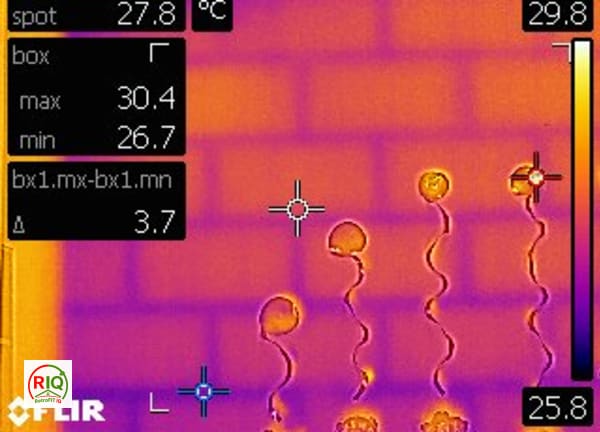
Thermal Bridging Visible Through Masonry Blockwork Wall

Thermal Bridge at Internal Corner Wall Junction

Thermal Bridge at Wall-Ceiling Junction Near Window

Airtightness Testing in a Stratford Victorian Terrace
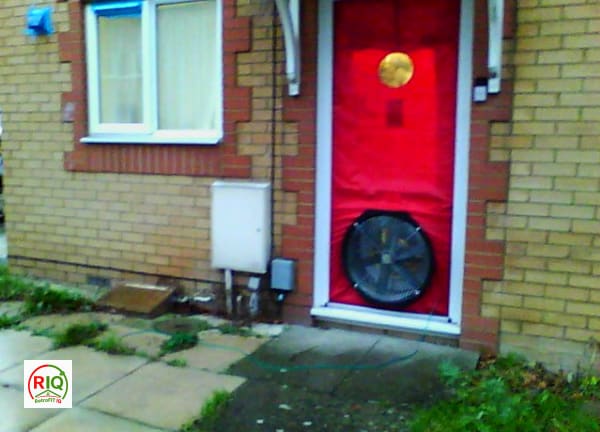
Blower Door Airtightness Test Setup
No related investigations yet.
Browse all investigationsFrequently asked questions
Why is my solid floor damp?+
Usually one of three things: ground moisture rising through a missing or failed damp-proof membrane, condensation forming on the cold floor surface, or a leak. Older solid floors often lack an effective membrane, and an impervious covering can trap moisture and show it as damp. The cure differs completely, so the cause must be diagnosed first.
Is it rising moisture or condensation?+
They're easily confused. Ground moisture rises through the slab and reads high within the concrete; condensation forms on the cold surface and is often worst in mild, humid weather. Measuring the slab moisture and surface conditions distinguishes them — and they need quite different remedies.
Why is there damp under my new vinyl or laminate?+
An impervious covering stops a slab that was previously able to dry, so any ground or residual moisture is trapped beneath and shows as damp. It can also be condensation against the cool covering. Either way it reveals a moisture condition the slab couldn't previously show.
Do I need to dig up and relay the floor?+
Only if a failed or missing damp-proof membrane is genuinely the cause. If it's surface condensation or a leak, far cheaper fixes — ventilation, warming, insulation or a repair — solve it. That's why diagnosis should always come before committing to relaying a floor.
Can insulating the floor help?+
If the problem is surface condensation on a cold slab, insulating and warming the floor raises its surface temperature above the dew point and can stop it. If it's ground moisture through a failed membrane, insulation alone won't fix the source — a new membrane and floor build-up is needed. The diagnosis decides.
Stop guessing — find the real cause
Do not spend money fixing symptoms before you understand the cause. Every home behaves differently, and the only reliable way to know what is happening in yours is professional building performance diagnostics. At RetrofitIQ we verify buildings using the right combination of investigations:
- Thermal imaging
- Blower door testing
- Moisture & dew point readings
- Ventilation review
- Building physics assessment
- Passive House methodology