
Why do my windows only get condensation in some rooms?
Condensation appearing on the windows of some rooms but not others is normal and informative: it reflects differences between those rooms in moisture generation, heating and ventilation. The rooms that mist up are usually those that are more humid (bedrooms, where breathing overnight adds moisture; bathrooms and kitchens, where water vapour is generated), cooler (so the glass is colder), or less ventilated (so the moisture isn't removed). The dry rooms simply have a better balance of those three factors. Reading which rooms condense, and why, points straight to the fix — usually more ventilation and warmth in the affected rooms.
 Reviewed by George Sora, Certified Passive House DesignerUpdated June 2026
Quick answer & key takeaways
5 min read- Condensation varies by room because moisture, heat and ventilation differ.
- Bedrooms, bathrooms and kitchens are the most humid rooms.
- Cooler rooms have colder glass that condenses more readily.
- Less-ventilated rooms can't remove the moisture.
- Biggest misconception: it means some windows are faulty. It's the room conditions.
- RetrofitIQ's approach: read the room pattern, then balance moisture, heat and ventilation.
What this usually means
Each room has its own balance of three things that determine condensation: how much moisture is generated in it, how warm it is, and how well it is ventilated. Bedrooms accumulate moisture overnight from the occupants' breathing and are often cooler and shut up, so their windows commonly mist by morning; bathrooms and kitchens generate large bursts of vapour; and a cool, little-used or closed-off room has cold glass and stagnant air. Rooms that stay dry tend to be warmer, better ventilated, or simply produce less moisture, so their glass stays above the dew point.
So the pattern is a diagnosis, not a fault with particular windows. A bedroom that mists tells you it is humid, cool and under-ventilated overnight; a kitchen that mists tells you extract isn't keeping up with cooking moisture. The remedy follows the cause in each affected room: improve ventilation (trickle vents, extract fans, or simply not sealing the room up overnight), add gentle warmth so the glass stays warmer, and reduce moisture at source (lids on pans, venting the tumble dryer, ventilating after showers). Because the dry rooms prove the rest of the home can stay condensation-free, the fix is to bring the affected rooms' moisture-heat-ventilation balance into line with them.
Common causes
Higher moisture in some rooms
Bedrooms, bathrooms and kitchens generate more vapour.
Cooler rooms, colder glass
Lower temperatures bring the glass below the dew point.
Less ventilation
Closed or poorly ventilated rooms trap moisture.
Overnight occupancy
Breathing in a closed bedroom adds moisture by morning.
Signs and symptoms
Bedroom windows wet by morning
Overnight moisture in a cool, closed room.
Kitchen or bathroom misting
Vapour bursts outpacing the extract.
Dry windows in warm, used rooms
A better moisture-heat-ventilation balance.
Worse in unheated or closed rooms
Cold glass and stagnant air.
What most people check first
- Which rooms generate the most moisture.
- Which rooms are coolest, with the coldest glass.
- Which rooms are least ventilated or shut up.
- Whether the dry rooms are warmer or better ventilated.
What most people miss
- That the room pattern is a diagnosis, not faulty windows.
- That bedrooms add moisture overnight from breathing.
- That ventilation differences explain much of the pattern.
- That the dry rooms show what the affected ones need.
The building physics
Window condensation in a room depends on whether the glass surface temperature falls below the dew point of that room's air, and both vary room to room. The dew point is set by the room's humidity, which depends on its moisture generation and ventilation; the glass temperature depends on the room temperature and the glazing. A humid, cool, poorly ventilated room has a high dew point and cold glass, so it condenses; a warm, well-ventilated room with less moisture has a low dew point and warmer glass, so it does not. The differing patterns across a home are simply these variables playing out room by room.
This makes the pattern diagnostic. A bedroom that consistently mists indicates overnight moisture accumulation in a cool, under-ventilated space; a kitchen indicates extract failing to keep pace with cooking; a spare room indicates stagnant, cold conditions. The remedy in each is to shift its balance towards that of the dry rooms — increase ventilation to lower the dew point, add gentle warmth to raise the glass temperature, and reduce moisture at source. Measuring humidity in the affected rooms confirms the deficit and sizes the ventilation, so each room is brought into a condensation-free balance without over-treating the whole house.
How to stop condensation in the rooms that get it
Read which rooms condense and why, then balance their moisture, heat and ventilation to match the dry rooms — usually more ventilation and gentle warmth.
- 01
Identify the affected rooms
Note which rooms mist and how they differ from the dry ones.
- 02
Improve ventilation
Add trickle vents or extract, and don't seal rooms up overnight.
- 03
Add gentle warmth
Keep cool rooms warm enough to raise the glass temperature.
- 04
Reduce moisture at source
Use lids, vent dryers and ventilate after showers and cooking.
- 05
Match the dry rooms
Bring the affected rooms' balance into line with the dry ones.
- 06
Verify it clears
Confirm the windows stay clear once the balance improves.
How to prevent it coming back
- Ventilate humid rooms like bedrooms, bathrooms and kitchens.
- Keep little-used rooms gently warm and ventilated.
- Reduce moisture at source where it's generated.
- Don't seal humid rooms up overnight.
How Retrofit IQ investigates this
We read the room-by-room condensation pattern to balance moisture, heat and ventilation where it's needed.
Do not spend money fixing symptoms before you understand the cause — investigate first, then build with confidence.
Do I need a professional investigation?
If condensation is confined to certain rooms, it is worth checking their humidity, heating and ventilation against the dry rooms. That confirms why those rooms condense, so improving their ventilation and warmth brings them into a condensation-free balance — without unnecessary work on the rest of the home.
Where to go next
Relevant services
Related problems you may also have
Evidence from Real Projects (12)
Real project and investigation images from our own fieldwork, matched to this page — not stock photography.

Sample Building Performance Investigation Report — Thermal Imaging

Thermal Bridge at Wall-Ceiling Junction Near Window
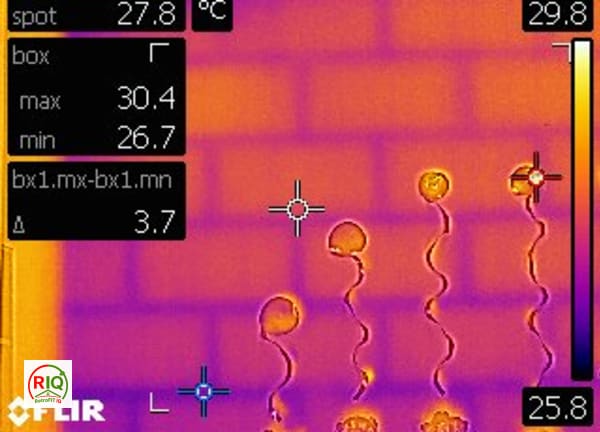
Thermal Bridging Visible Through Masonry Blockwork Wall

Living room internal wall

Thermal Bridge at Internal Corner Wall Junction

Airtightness Testing in a Stratford Victorian Terrace
No related investigations yet.
Browse all investigationsFrequently asked questions
Why do my windows only get condensation in some rooms?+
Because those rooms differ in moisture, heating and ventilation. The rooms that mist are usually more humid (bedrooms, bathrooms, kitchens), cooler (so the glass is colder), or less ventilated (so moisture isn't removed). The dry rooms simply have a better balance of those three factors.
Does it mean some windows are faulty?+
No — it reflects the room conditions, not the windows. The same window will condense in a humid, cool, closed room and stay clear in a warm, well-ventilated one. The pattern is a diagnosis of each room's moisture-heat-ventilation balance.
Why is it always the bedroom?+
Because bedrooms accumulate moisture overnight from the occupants' breathing, are often cooler than living rooms, and are shut up with little ventilation while you sleep — so the humidity rises and condenses on the cold glass by morning. More overnight ventilation and gentle warmth usually fix it.
Why do the kitchen or bathroom windows mist?+
Because they generate large bursts of water vapour from cooking and showering. If the extract fan can't keep up, the humidity spikes and condenses on the glass. Effective extract used during and after the activity is the key.
How do I stop it?+
Bring the affected rooms' balance into line with the dry ones: improve ventilation (trickle vents, extract, don't seal them overnight), add gentle warmth so the glass stays warmer, and reduce moisture at source. The dry rooms prove the home can stay clear when the balance is right.
Stop guessing — find the real cause
Do not spend money fixing symptoms before you understand the cause. Every home behaves differently, and the only reliable way to know what is happening in yours is professional building performance diagnostics. At RetrofitIQ we verify buildings using the right combination of investigations:
- Thermal imaging
- Blower door testing
- Moisture & dew point readings
- Ventilation review
- Building physics assessment
- Passive House methodology