
Why is my house colder than my neighbour's?
Two houses that look identical from the street can differ sharply in warmth, because the things that keep a home warm are mostly hidden: insulation that was or wasn't installed, airtightness, the state of windows and draught-proofing, the position in a terrace or block, and how the heating is run. If your home is colder than a neighbour's apparently similar one, the difference lies in one or more of these — and it is measurable. Comparing the two is less useful than measuring your own home to find where it loses the heat the neighbour's keeps.
 Reviewed by George Sora, Certified Passive House DesignerUpdated June 2026
Quick answer & key takeaways
5 min read- Identical-looking homes differ in hidden insulation and airtightness.
- Position — end-terrace, exposed corner, top floor — changes heat loss.
- Window condition, draughts and heating set-up vary between homes.
- The differences are hidden but measurable.
- Biggest misconception: same house means same warmth. The fabric is what counts.
- RetrofitIQ's approach: measure your home's losses rather than guess from the neighbour's.
What this usually means
Homes built or renovated at different times, or by different owners, can have very different fabric behind the same façade. One may have had cavity or loft insulation topped up, draughts sealed and windows upgraded, while the other was left as built; one may have an open chimney, worn seals or a poorly insulated extension the other lacks. Position matters too: an end-of-terrace or a corner has more exposed wall than a mid-terrace, a top-floor flat loses heat through the roof, and a more exposed aspect faces more wind-driven loss — so even genuinely similar homes can lose heat at quite different rates.
How the heating is run adds another layer — controls, thermostat settings, radiator sizing and balancing all affect how warm a home feels for a given fabric. Rather than trying to compare against a neighbour whose hidden fabric you cannot see, the productive step is to measure your own home: thermal imaging reveals missing insulation and cold bridges, a blower door test measures leakage, and a heat-loss assessment quantifies where the heat goes. That shows exactly why your home is colder and what to improve, regardless of what the neighbour did.
Common causes
Different insulation history
One home insulated and upgraded, the other left as built.
Position in the terrace or block
End, corner or top-floor homes have more exposed surface.
Airtightness and window condition
Draughts and worn seals vary between otherwise similar homes.
Heating set-up
Controls, radiator sizing and balancing differ between households.
Signs and symptoms
Colder despite similar heating
Suggests higher heat loss in your home's fabric.
Draughtier than next door
Worse airtightness or worn seals.
End or corner position
More exposed wall raising the heat loss.
Cold surfaces on a thermal image
Missing insulation the neighbour's home may have.
What most people check first
- Whether your insulation matches a warmer neighbour's.
- Whether your position exposes more wall or roof.
- Whether draughts and window seals are worse.
- Whether the heating is set up and balanced well.
What most people miss
- That identical façades hide very different fabric.
- That position changes heat loss between similar homes.
- That heating set-up affects felt warmth too.
- That measuring your own home beats guessing from the neighbour's.
The building physics
Two homes of the same size and shape can have very different total heat loss because that loss depends on the U-values of the elements (set by insulation), the air-permeability (set by sealing and window condition) and the exposed area and exposure (set by position) — none of which is visible from outside. A mid-terrace shares two walls with heated neighbours and loses heat only through the front, back and roof; an end-terrace or corner adds a whole exposed wall; a top-floor flat adds roof loss. Combined with differing insulation and airtightness, these produce real, measurable differences in how much heat each home needs to stay warm.
Because the determining factors are hidden, the reliable way to understand the gap is to measure your own home rather than infer from the neighbour's. Thermal imaging maps where insulation is missing or bridged, a blower door test quantifies the leakage, and a heat-loss assessment apportions the loss across the elements. That evidence shows precisely why your home is colder — more leakage, less insulation, more exposure, or poorer heating set-up — and what to improve, so you can close the gap with targeted works instead of guesswork.
How to find why your home is colder
Measure your own home's heat loss, leakage and insulation rather than guess from the neighbour's, then target the differences that make yours colder.
- 01
Image your home
Use thermal imaging to find missing insulation and cold bridges.
- 02
Measure the leakage
Run a blower door test to quantify draughts.
- 03
Assess the heat loss
Apportion where your home loses the most heat.
- 04
Check heating set-up
Review controls, radiator sizing and balancing.
- 05
Target the differences
Insulate, seal and upgrade where your home falls short.
- 06
Verify the improvement
Confirm the home is warmer for the same heating.
How to prevent it coming back
- Keep insulation and draught-proofing up to date.
- Account for an exposed position with extra insulation.
- Maintain window seals and controls.
- Measure rather than assume your fabric matches others.
How Retrofit IQ investigates this
We measure your home's hidden losses to explain why it's colder than a similar neighbour's.
Do not spend money fixing symptoms before you understand the cause — investigate first, then build with confidence.
Do I need a professional investigation?
If your home is noticeably colder than a similar neighbour's, it is worth measuring your own losses with thermal imaging, a blower door test and a heat-loss assessment. That reveals the hidden differences — insulation, leakage, exposure — and what to improve, so you can close the gap with targeted works.
Where to go next
Relevant services
Related comparisons
Related case studies
Evidence from Real Projects (21)
Real project and investigation images from our own fieldwork, matched to this page — not stock photography.
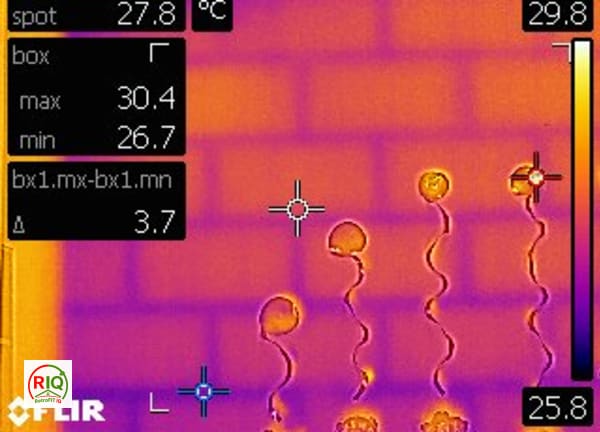
Thermal Bridging Visible Through Masonry Blockwork Wall
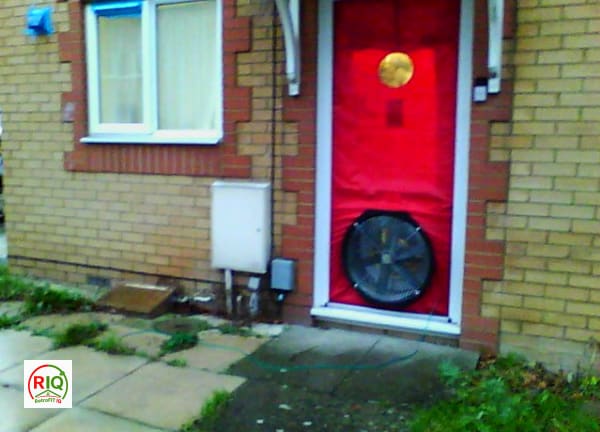
Blower Door Airtightness Test Setup

Sample Building Performance Investigation Report — Thermal Imaging

Internal door head and reveal next to a framed picture on a warmer external wall

Acoustic Floor Upgrades: Mineral Wool Insulation Between Joists
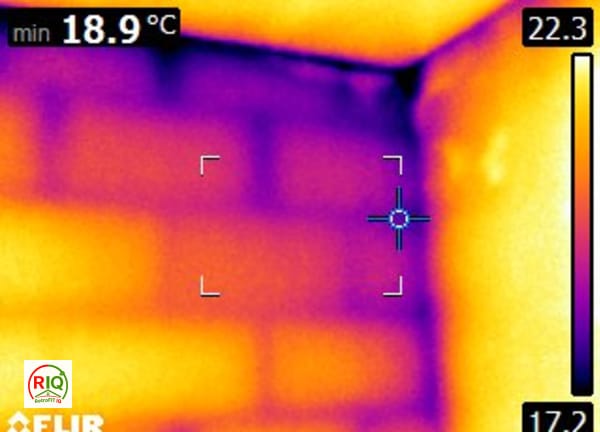
Cold wall surface vs warm ceiling
No related investigations yet.
Browse all investigationsFrequently asked questions
Why is my house colder than my neighbour's?+
Because the things that keep a home warm are mostly hidden — insulation, airtightness, window condition, position in the terrace and heating set-up — and these can differ sharply between homes that look identical. Your home likely loses heat the neighbour's keeps, which is measurable with thermal imaging and an airtightness test.
We have the same house, so why the difference?+
Same façade doesn't mean same fabric. One home may have had cavity or loft insulation, draught-proofing and new windows while the other didn't, and an end or corner position exposes more wall. Heating set-up varies too. The determining factors are behind the surface.
Does being an end-terrace make it colder?+
Yes. An end-terrace or corner has a whole extra exposed wall compared with a mid-terrace, and a top-floor flat loses heat through the roof. More exposed surface means more heat loss, so even genuinely similar homes differ in warmth by position.
Should I just copy what my neighbour did?+
Not blindly — you can't see their hidden fabric, and your losses may be different. Measuring your own home with thermal imaging, a blower door test and a heat-loss assessment shows exactly why yours is colder and what to improve, which is more reliable than copying.
Can I close the gap?+
Usually, yes. Once you've measured where your home loses heat — more leakage, less insulation, more exposure, or poorer heating set-up — targeted insulation, sealing, glazing upgrades and controls can bring it up to a warmer neighbour's standard.
Stop guessing — find the real cause
Do not spend money fixing symptoms before you understand the cause. Every home behaves differently, and the only reliable way to know what is happening in yours is professional building performance diagnostics. At RetrofitIQ we verify buildings using the right combination of investigations:
- Thermal imaging
- Blower door testing
- Moisture & dew point readings
- Ventilation review
- Building physics assessment
- Passive House methodology