
Should I insulate a suspended timber floor?
Insulating a suspended timber ground floor is usually well worth it if the floor is cold and draughty, because these floors sit over a cold, ventilated void and lose a lot of heat both by conduction and by air leaking up through the boards. Done properly — insulation supported between the joists with the air leakage sealed, while the void's airbricks are kept clear — it warms the floor, stops the ankle-level draughts and cuts heat loss noticeably. The key is to combine insulation with airtightness and to preserve the under-floor ventilation that keeps the timbers dry, so the floor is warm without putting the structure at risk of rot.
 Reviewed by George Sora, Certified Passive House DesignerUpdated June 2026
Quick answer & key takeaways
5 min read- Suspended floors over a cold void lose heat by conduction and air leakage.
- Insulating between the joists warms the floor and cuts the loss.
- Air-sealing must accompany insulation to stop draughts.
- The void's airbricks must stay clear to protect the timbers.
- Biggest misconception: insulation alone is enough. Airtightness matters too.
- RetrofitIQ's approach: insulate and air-seal while keeping the void ventilated.
What this usually means
A suspended timber floor has boards on joists over a ventilated void, so it loses heat two ways: by conduction through the cold boards, and by cold void air leaking up through gaps between boards and at the perimeter. Insulating between the joists — typically with mineral wool, wood-fibre or rigid boards supported on netting or battens — tackles the conduction, while sealing the board gaps and perimeter tackles the air leakage. Together they make the biggest difference, which is why a floor insulated without air-sealing can still feel draughty, and a floor sealed without insulating can still feel cold underfoot.
Access decides the method and cost. Where there is a cellar or crawl space, the floor can be insulated and sealed from below with relatively little disruption; otherwise the floorboards must be lifted, which is more involved but allows thorough work. Whichever route, the under-floor ventilation must be preserved: the airbricks keep the void dry and the timbers sound, so they must stay clear, and any insulation and membrane detailing must not trap moisture against the timbers. Done with that care, insulating a suspended floor is a high-value, comfort-improving retrofit; done by simply blocking the void or packing it without thought to moisture, it risks rot.
Common causes
Conduction through cold boards
Heat lost downward into the cold void.
Air leakage up through the floor
Cold void air leaking through board and perimeter gaps.
No existing floor insulation
Older suspended floors are usually uninsulated.
Access constraints
Crawl space or lifting boards determines method and cost.
Signs and symptoms
Cold floor underfoot
Conduction into the cold void below.
Draughts at the floor edges
Void air leaking up at the perimeter.
Cold ground-floor rooms
Significant heat loss through the floor.
Suspended timber construction
A floor that benefits from insulation and sealing.
What most people check first
- Whether the floor is cold and draughty enough to justify the work.
- Whether there is crawl-space access or boards must be lifted.
- Whether air-sealing will accompany the insulation.
- Whether the void's airbricks will be kept clear.
What most people miss
- That air-sealing is as important as insulation here.
- That the void must stay ventilated to protect timbers.
- That access shapes the method and cost.
- That moisture detailing prevents rot.
The building physics
Heat loss through a suspended floor is the sum of the conductive loss through the floor build-up (area times U-value times the temperature difference to the cold void) and the infiltration loss as void air leaks into the room. Insulation between the joists raises the floor's thermal resistance and so cuts the conductive term and warms the surface; sealing the board and perimeter gaps cuts the infiltration term and stops the draughts. Because both terms are significant in an uninsulated suspended floor, addressing only one leaves a noticeable problem, which is why effective floor retrofit combines insulation with airtightness.
The constraint is moisture: the void is ventilated precisely to keep the timbers dry, so the design must keep that ventilation while ensuring the insulation and any membranes do not trap moisture against the joists or boards. Vapour-open insulation and correct membrane orientation allow the floor to dry, and the airbricks must remain clear so the void continues to be cross-ventilated. A blower door test and thermal imaging confirm the air leakage and cold areas before, and verify the improvement after. With insulation, air-sealing and preserved ventilation combined, the floor becomes warm and draught-free while the timbers stay safely dry — the correct, durable outcome.
How to insulate a suspended timber floor properly
Insulate between the joists and air-seal the board and perimeter gaps, using vapour-open detailing and keeping the airbricks clear so the floor is warm and the timbers stay dry.
- 01
Assess access and condition
Determine crawl-space access and the floor's state.
- 02
Insulate between the joists
Support insulation in the joist zone to cut conduction.
- 03
Air-seal the floor
Seal board gaps and the perimeter to stop draughts.
- 04
Use moisture-safe detailing
Choose vapour-open materials and correct membranes.
- 05
Keep airbricks clear
Preserve the under-floor ventilation for the timbers.
- 06
Verify warmth and dryness
Confirm the floor is warm, sealed and the void ventilated.
How to prevent it coming back
- Always combine floor insulation with air-sealing.
- Never block the airbricks.
- Use vapour-open detailing to avoid trapping moisture.
- Check timber condition before insulating.
How Retrofit IQ investigates this
We assess a suspended floor's losses and access so insulation and air-sealing are done safely and effectively.
Do not spend money fixing symptoms before you understand the cause — investigate first, then build with confidence.
Do I need a professional investigation?
If a ground floor is cold and draughty, it is worth assessing the suspended floor with thermal imaging and a blower door test before insulating. That confirms the conduction and leakage losses and the access available, so the insulation and air-sealing are detailed correctly and the void stays safely ventilated.
Where to go next
Relevant services
Related comparisons
From the Academy
Related case studies
Evidence from Real Projects (19)
Real project and investigation images from our own fieldwork, matched to this page — not stock photography.

Acoustic Floor Upgrades: Mineral Wool Insulation Between Joists
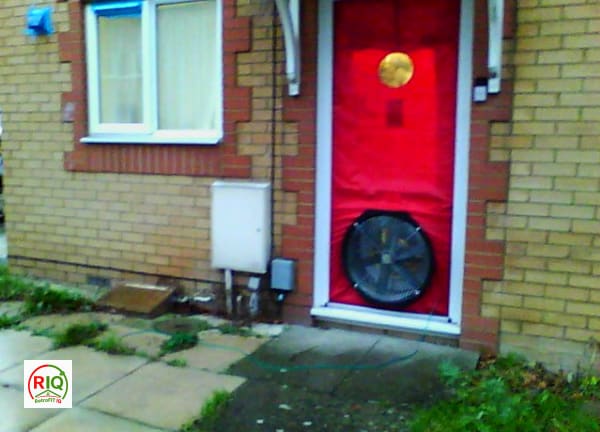
Blower Door Airtightness Test Setup

Sample Building Performance Investigation Report — Thermal Imaging
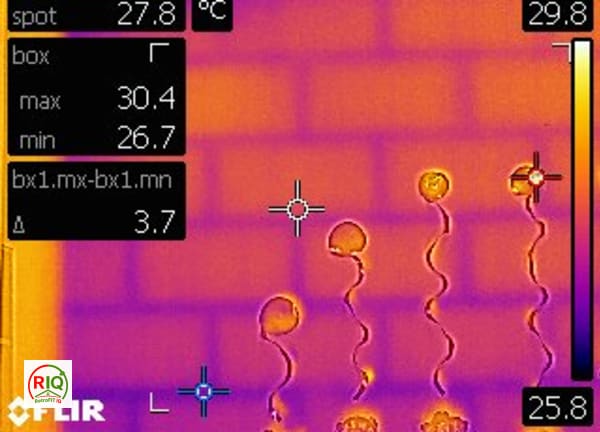
Thermal Bridging Visible Through Masonry Blockwork Wall

Thermal Bridge at Internal Corner Wall Junction

Thermal Bridge at Wall-Ceiling Junction Near Window
No related investigations yet.
Browse all investigationsFrequently asked questions
Should I insulate a suspended timber floor?+
Usually yes if it's cold and draughty — these floors sit over a cold, ventilated void and lose a lot of heat by conduction and by air leaking up through the boards. Insulating between the joists and air-sealing the gaps warms the floor, stops the draughts and cuts heat loss, provided the void's airbricks are kept clear.
Will insulation alone stop the draughts?+
No — you need air-sealing too. Insulation cuts the heat conducted through the boards, but the ankle-level draughts come from cold void air leaking up through gaps, which only sealing the board and perimeter gaps stops. Effective floor retrofit combines both.
Won't insulating the void cause rot?+
Not if done correctly. The void must stay ventilated — airbricks clear — and the insulation and membranes must be detailed so the timbers can dry, using vapour-open materials. Blocking the ventilation or trapping moisture is what risks rot, so the moisture detailing matters.
Do I have to lift the floorboards?+
It depends on access. With a cellar or crawl space, the floor can be insulated and sealed from below with little disruption. Without access, the boards usually have to be lifted, which is more involved but allows thorough insulation and sealing.
Is it worth the cost?+
For a cold, draughty ground floor, generally yes — it's a high-value comfort improvement that removes the floor draughts and a real chunk of heat loss. Assessing the losses and access first ensures the work is scoped and detailed to pay off.
Stop guessing — find the real cause
Do not spend money fixing symptoms before you understand the cause. Every home behaves differently, and the only reliable way to know what is happening in yours is professional building performance diagnostics. At RetrofitIQ we verify buildings using the right combination of investigations:
- Thermal imaging
- Blower door testing
- Moisture & dew point readings
- Ventilation review
- Building physics assessment
- Passive House methodology