
Why can I hear everything in my new build?
New builds can be surprisingly noisy because modern construction is often lightweight — timber or steel frame, plasterboard partitions, engineered floors — which blocks airborne sound less than heavy masonry, and because sound frequently travels by indirect 'flanking' routes through the connected structure rather than straight through the wall you blame. Add the gaps and service penetrations common in fast modern building, and you can hear neighbours, footsteps and conversations clearly. The key to fixing it is finding the real sound paths, which are rarely the obvious ones.
 Reviewed by George Sora, Certified Passive House DesignerUpdated July 2026
Quick answer & key takeaways
7 min read- Modern lightweight construction blocks airborne sound less than heavy masonry.
- Much new-build noise travels by flanking — indirect routes through the connected structure.
- Gaps and service penetrations let sound through where the build was rushed.
- The real sound paths are often not the wall you blame, so they must be found.
- Biggest misconception: thicker walls alone will fix it. Flanking and gaps often dominate.
- Retrofit IQ's approach: identify the actual sound paths, then treat the dominant ones.
What this usually means
Older homes were built of heavy masonry, which blocks airborne sound well simply through mass. Many new builds use lightweight construction — timber or light-steel frame, plasterboard-lined partitions and separating walls, and engineered joist floors — which is efficient and quick but inherently lighter, so it transmits more airborne sound unless carefully designed and built with the right layers, cavities and isolation. When that detailing is imperfect, the separating walls and floors let through more conversation, television and footstep noise than people expect of a brand-new home.
Just as important, and often overlooked, is flanking sound: noise that travels not straight through the separating element but indirectly, through the surrounding connected structure — continuous floor screeds, junctions, walls that carry on past the separating wall, and shared structural elements. In lightweight, highly connected modern construction, flanking can easily become the dominant path, which is why upgrading the obvious party wall sometimes barely helps: the sound was mostly coming round it through the structure, not through it. This is the commonest reason new-build noise complaints are so puzzling.
Finally, the speed of modern building leaves gaps. Sound, like air, exploits any opening — unsealed service penetrations, gaps around sockets and pipes, poorly sealed junctions, and incomplete acoustic seals — so even a well-specified wall underperforms if it is not sealed airtight to sound. Because the noise in a new build is usually a combination of lightweight construction, flanking and gaps, the fix begins with diagnosing which paths actually dominate. Treating the real paths — adding mass or isolation where it counts, interrupting flanking routes, and sealing gaps — is what works, whereas guessing at the visible wall often disappoints.
Common causes
Lightweight construction
Timber or steel frame and plasterboard block airborne sound less than heavy masonry.
Flanking transmission
Sound travels indirectly through connected floors, junctions and continuing walls, bypassing the separating element.
Gaps and service penetrations
Unsealed sockets, pipes and junctions let sound through where building was rushed.
Imperfect acoustic detailing
Missing layers, isolation or seals in the separating wall or floor reduce its performance.
Continuous structural elements
Screeds and structure carried across the separation carry sound between dwellings.
Signs and symptoms
Hearing neighbours clearly through walls
Clear conversation or television through a separating wall shows airborne sound transmitting.
Footsteps and impact from above
Hearing footsteps from the flat above indicates impact and flanking transmission through the floor.
Upgrading the wall barely helps
Little improvement after treating the obvious wall points to flanking being the dominant path.
Noise through sockets and penetrations
Sound entering at sockets, pipes or junctions reveals unsealed gaps.
Surprising noise in a brand-new home
Unexpected noise in a new build reflects lightweight construction and detailing shortfalls.
What most people check first
- Whether the noise is airborne (voices, TV) or impact (footsteps).
- Whether it travels through the separating element or by flanking routes.
- Whether gaps at sockets, pipes and junctions are letting sound through.
- Whether treating the obvious wall has already failed, indicating flanking.
What most people miss
- That lightweight construction transmits airborne sound more than masonry.
- That flanking — indirect paths — often dominates and is missed.
- That gaps and penetrations let sound through even good walls.
- That the wall you blame is often not the main path.
The building physics
Airborne sound insulation rises with mass (the mass law) and with decoupling and absorption between leaves. Heavy masonry achieves good insulation through mass alone, whereas lightweight separating walls and floors must achieve it through engineered combinations of mass, independent leaves, cavity absorption and isolation. When any of these are reduced or imperfectly executed — thinner boards, bridged cavities, missing isolation — the direct transmission through the separating element rises, so a lightweight new build can transmit more airborne sound than an older masonry one despite meeting nominal standards.
Flanking transmission is frequently decisive. Sound energy reaching a room is the sum of the direct path through the separating element and all the flanking paths through connected elements — floors, ceilings, inner leaves of external walls, and junctions — that continue past the separation. In highly connected lightweight construction, these flanking paths can carry as much or more energy than the direct path, so the overall insulation is limited by flanking regardless of how good the separating wall is. This is why isolated upgrades to the obvious wall often fail to deliver: they reduce the direct path while the flanking paths, untouched, continue to dominate.
Air paths set a ceiling on performance. Because airborne sound passes through any unsealed opening, gaps at service penetrations, sockets, pipe runs and junctions short-circuit even a well-built wall, and the speed of modern construction makes such gaps common. Effective treatment therefore depends on diagnosis: identifying whether the dominant transmission is direct, flanking or leakage, and at which frequencies, so that mass or isolation is added where it counts, flanking routes are interrupted (for example with independent linings or floating floors that break the structural connection), and gaps are sealed. An acoustic assessment of the actual paths is what turns new-build noise treatment from guesswork into a targeted, effective solution.
How to reduce noise in a new build
Find the real sound paths first, then treat the dominant ones: add mass or isolation where it counts, interrupt flanking routes, and seal the gaps.
- 01
Identify the dominant paths
Establish whether the noise is direct, flanking or through gaps, and whether airborne or impact.
- 02
Seal the gaps
Seal service penetrations, sockets, pipes and junctions so sound cannot bypass the construction.
- 03
Interrupt flanking routes
Use independent linings or floating floors to break the structural paths carrying sound around the separation.
- 04
Add mass or isolation to the separating element
Where direct transmission dominates, add mass and decoupling to the wall or floor.
- 05
Treat impact noise at the floor
Address footstep noise with resilient floor treatments that isolate the impact.
- 06
Verify the improvement
Check the dominant path has been treated so the noise is genuinely reduced.
How to prevent it coming back
- Diagnose the real sound paths before treating.
- Seal all gaps and service penetrations.
- Interrupt flanking routes rather than only treating the visible wall.
- Match the treatment to airborne or impact noise.
How Retrofit IQ investigates this
We identify the dominant sound paths — direct, flanking or leakage — and whether airborne or impact, then target the treatment.
Do not spend money fixing symptoms before you understand the cause — investigate first, then build with confidence.
Do I need a professional investigation?
If you can hear everything in a new build, it is worth an acoustic assessment to find the real sound paths, because they are often flanking routes or gaps rather than the wall you blame. Identifying the dominant paths ensures the treatment is targeted and effective, rather than upgrading the obvious wall and being disappointed.
Where to go next
Relevant services
Related comparisons
From the Academy
Related case studies
Evidence from Real Projects (31)
Real project and investigation images from our own fieldwork, matched to this page — not stock photography.

Acoustic Floor Upgrades: Mineral Wool Insulation Between Joists
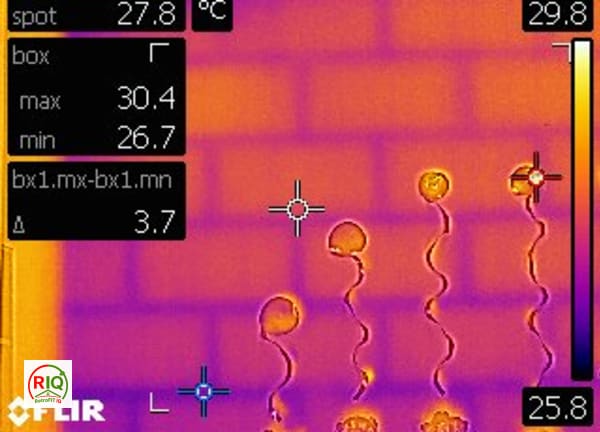
Thermal Bridging Visible Through Masonry Blockwork Wall

Sample Building Performance Investigation Report — Thermal Imaging

Stage 3
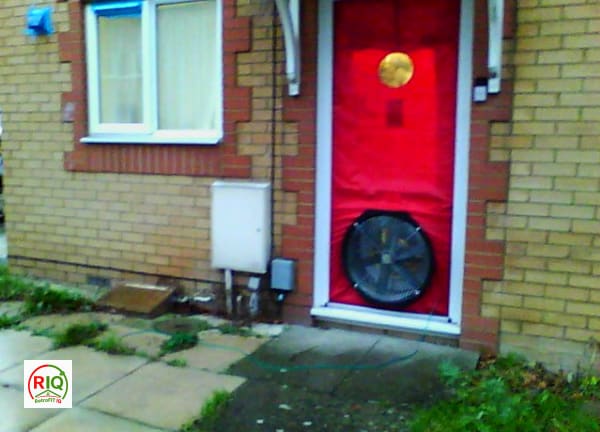
Blower Door Airtightness Test Setup

Thermal Bridge at Internal Corner Wall Junction
No related investigations yet.
Browse all investigationsFrequently asked questions
Why can I hear everything in my new build?+
Because modern construction is often lightweight — timber or steel frame and plasterboard — which blocks airborne sound less than heavy masonry, and because sound frequently travels by indirect flanking routes through the connected structure, plus gaps left by fast building. The real paths are often not the wall you blame.
Are new-build walls just too thin?+
Lightweight separating walls block sound through engineered layers and isolation rather than mass, so they can transmit more if the detailing is imperfect. But flanking and gaps are often as important, so 'thin walls' is only part of the story.
What is flanking sound?+
It's noise that travels not straight through the separating wall but indirectly, through connected elements like floors, junctions and continuing walls. In lightweight construction it can dominate, which is why upgrading the obvious wall sometimes barely helps.
Why didn't soundproofing my party wall work?+
Almost certainly because the noise was mostly coming round it by flanking routes or through gaps, not through the wall itself. Treating only the direct path leaves the dominant flanking and leakage paths untouched.
Is it airborne or impact noise?+
Voices and television are airborne; footsteps from above are impact. They need different treatments — mass and isolation for airborne, resilient isolation for impact — so identifying which dominates is part of the diagnosis.
Can new-build noise be fixed?+
Yes, but only by treating the real paths. Sealing gaps, interrupting flanking routes with independent linings or floating floors, and adding mass or isolation where direct transmission dominates — targeted by an assessment — is what genuinely reduces it.
How do you find the real sound paths?+
We carry out an acoustic assessment to identify whether the dominant transmission is direct, flanking or through gaps, and whether airborne or impact, then specify treatment where it counts rather than guessing at the visible wall.
Stop guessing — find the real cause
Do not spend money fixing symptoms before you understand the cause. Every home behaves differently, and the only reliable way to know what is happening in yours is professional building performance diagnostics. At RetrofitIQ we verify buildings using the right combination of investigations:
- Thermal imaging
- Blower door testing
- Moisture & dew point readings
- Ventilation review
- Building physics assessment
- Passive House methodology