
Soundproofing vs Thermal Insulation: Related but Not the Same
Soundproofing vs Thermal insulation.
 Reviewed by George Sora, Certified Passive House DesignerUpdated June 2026
Quick answer & key takeaways
4 min read- Bottom line: Soundproofing controls noise; thermal insulation controls heat — and while they share some materials, they are optimised for different physics.
- When Soundproofing is enough: Your priority is reducing noise
- When Thermal insulation is the better choice: Your priority is warmth and lower bills
- When you need both: A wall is both cold and noisy
- Biggest misconception: “Insulating a wall soundproofs it.” — Insulation may add some absorption, but real soundproofing also needs mass and decoupling that thermal insulation does not provide.
- Retrofit IQ’s approach: We treat soundproofing and thermal insulation as different objectives with different physics — decoupling and mass for noise, continuity and low conductivity for heat — and design each deliberately rather than assuming one material satisfies both.
Quick answer
Soundproofing controls noise; thermal insulation controls heat — and while they share some materials, they are optimised for different physics. Mineral wool helps both, which is why people assume insulation soundproofs, but real soundproofing also needs mass and decoupling that thermal insulation does not, and good thermal insulation needs continuity and airtightness that soundproofing alone does not guarantee. Expecting one to deliver the other is a common and costly assumption.
At a glance
| Attribute | Soundproofing | Thermal insulation |
|---|---|---|
| Goal | Reduce noise | Reduce heat loss |
| Key principles | Mass + absorption + decoupling | Low conductivity + continuity + airtightness |
| Shared material | Mineral wool (absorption) | Mineral wool (insulation) |
| Needs decoupling | Yes | No |
| Needs continuity | Helpful | Essential |
| Overlap | Partial | Partial |
What is Soundproofing?
Controlling the transmission of noise between spaces using mass, absorption and decoupling. Its goal is quiet, and it depends heavily on breaking vibration paths and sealing flanking routes.
What is Thermal insulation?
Reducing heat flow through the building fabric using low-conductivity materials and continuity. Its goal is warmth and energy efficiency, and it depends on an unbroken, well-detailed insulating layer.
What each method measures — and what it doesn’t
Soundproofing
- Reduces airborne and impact noise between spaces
- Relies on mass and decoupling, supported by absorption
- Depends on sealing flanking paths
- Heat loss or thermal performance directly
- Continuity of an insulating layer
Thermal insulation
- Reduces heat flow through the fabric
- Relies on continuous, low-conductivity layers
- Depends on airtightness to perform
- Noise transmission
- Impact-noise control via decoupling
The building science
Sound and heat are different forms of energy, and controlling each follows different rules. Soundproofing reduces noise with mass (hard to set vibrating), absorption (mineral wool turning sound into heat) and decoupling (breaking the vibration path). Thermal insulation reduces heat flow with low-conductivity materials arranged in a continuous, airtight layer. The disciplines meet where mineral wool serves both as a sound absorber and a thermal insulant — which is the source of the common confusion.
But the overlap is partial. A thermally insulated wall is not necessarily quiet: without added mass and decoupling, sound still passes through, and rigid foam insulation can even worsen acoustics. Equally, a soundproofed wall is not necessarily warm: a decoupled, mass-loaded lining does little for heat loss if there is no continuous insulating layer and the construction leaks air.
Airtightness is the hidden link. Air leakage carries both heat and noise, so sealing gaps helps both causes — a wall full of unsealed service penetrations will be both cold and noisy. This is one place where doing the building-physics job properly delivers a double benefit, which is why acoustic and thermal upgrades are best coordinated rather than done in isolation.
The practical lesson is to be clear about the objective and design for it, then capture the overlap deliberately. If the goal is quiet, design a soundproofing system and let the mineral wool contribute some warmth; if the goal is warmth, design a continuous insulated, airtight build-up and accept that real acoustic separation needs more. Coordinated, the two can share materials and detailing; assumed, one is disappointed.
Key differences
- Soundproofing targets noise; thermal insulation targets heat.
- Soundproofing needs mass and decoupling; insulation needs continuity and airtightness.
- Mineral wool helps both; rigid foam helps thermal but not acoustics.
- The overlap is real but partial — neither guarantees the other.
Common misconceptions
Myth: Insulating a wall soundproofs it.
Insulation may add some absorption, but real soundproofing also needs mass and decoupling that thermal insulation does not provide.
Myth: Soundproofing keeps the room warm.
It can add some insulation, but without a continuous insulating layer and airtightness, warmth is not guaranteed.
Myth: One upgrade covers both equally.
Designed deliberately, an upgrade can serve both — but you must design for each goal, not assume the overlap.
Real-world situations
Cold and noisy party wall
Coordinate a soundproofing system (mass, decoupling, mineral wool) with continuous insulation and airtight sealing to capture both benefits.
Warm but noisy room
Add mass and decoupling for acoustics; thermal insulation alone has not solved the noise.
Quiet but cold room
Add a continuous insulated, airtight build-up; the acoustic lining has not addressed heat loss.
Planning a refurbishment of an external wall
Design thermal and acoustic requirements together so materials and detailing serve both where possible.
Which do you actually need?
When Soundproofing is enough
- Your priority is reducing noise
- You need acoustic separation between spaces
- Impact or airborne noise is the complaint
When Thermal insulation is the better choice
- Your priority is warmth and lower bills
- You need a continuous insulated, airtight fabric
- Comfort and energy are the concern
When you need both
- A wall is both cold and noisy
- You are refurbishing and want both benefits
- You can coordinate the two upgrades
What Retrofit IQ checks on site
We treat soundproofing and thermal insulation as different objectives with different physics — decoupling and mass for noise, continuity and low conductivity for heat — and design each deliberately rather than assuming one material satisfies both.
- Clarification of the primary objective — acoustic, thermal or both
- Noise-type assessment (airborne/impact) where soundproofing matters
- Thermal assessment and condensation-risk check where insulation matters
- Airtightness detailing that benefits both heat and noise
- A coordinated build-up capturing the overlap deliberately
- Junction and flanking detailing so neither goal is undermined
What a Certified Passive House Designer recommends
Soundproofing and thermal insulation are cousins, not twins. They share mineral wool and they share airtightness, but soundproofing also needs mass and decoupling, and insulation needs continuity — so one does not automatically deliver the other. The assumption that 'insulation soundproofs' is behind a lot of disappointed clients.
Where a wall is both cold and noisy, I design for both at once and let the shared elements do double duty. That is efficient and avoids opening the wall twice. But I am always clear which goal leads, because the detailing that achieves quiet and the detailing that achieves warmth are not identical.
— George Sora, Certified Passive House Designer, Founder, RetrofitIQ
Reviewed using current building physics principles and Passive House methodology.
Related services
Related comparisons
Related investigations
Compare another way
Closely related comparisons our clients read next.
Acoustic Mineral Wool vs PIR Insulation
Mineral wool absorbs sound; PIR is a rigid thermal board that reflects it.
Read comparisonResilient Bars vs Independent Wall System
Resilient bars partially decouple a lining from the structure; an independent wall fully separates it.
Read comparisonAirborne vs Impact Soundproofing
Airborne noise (voices, TV) is controlled mainly with mass, absorption and decoupling; impact noise (footsteps) is controlled mainly by decoupling and resilient layers.
Read comparisonInternal vs External Wall Insulation
EWI is generally the better building-physics solution because it keeps the wall warm and the insulation continuous, reducing thermal bridges and condensation risk.
Read comparisonEvidence from Real Projects (22)
Real project and investigation images from our own fieldwork, matched to this page — not stock photography.

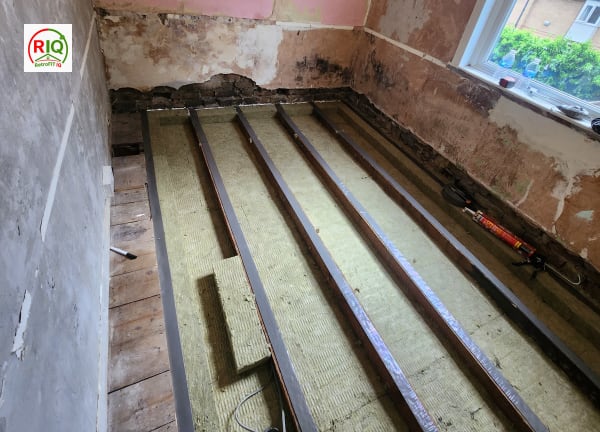
Acoustic Floor Upgrades: Mineral Wool Insulation Between Joists
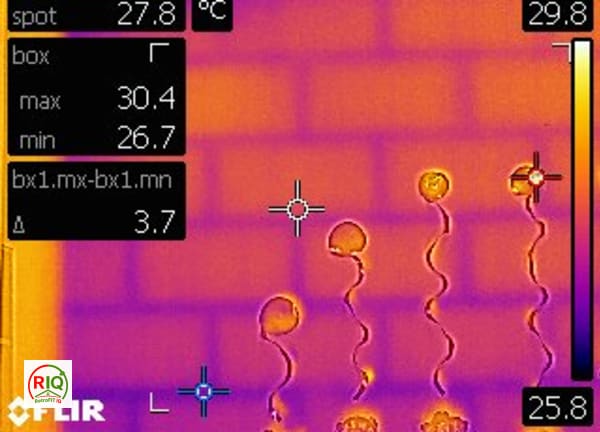
Thermal Bridging Visible Through Masonry Blockwork Wall

Sample Building Performance Investigation Report — Thermal Imaging

Stage 3
N17 project · pink bedroom

Thermal Bridge at Internal Corner Wall Junction
No related investigations yet.
Browse all investigationsFrequently asked questions
Does thermal insulation soundproof a wall?+
Only partly. Mineral wool adds some absorption, but real soundproofing also needs mass and decoupling, which thermal insulation does not provide.
Does soundproofing keep a room warm?+
It can add some insulation, but without a continuous insulating layer and airtightness, warmth is not assured. Soundproofing targets noise, not heat.
What material helps both?+
Mineral wool — it absorbs sound and insulates thermally. Rigid foam insulates well thermally but does little acoustically.
Why is airtightness relevant to both?+
Air leakage carries both heat and noise, so sealing gaps improves warmth and quiet together — a genuine double benefit.
Can one upgrade achieve both?+
Yes, if designed deliberately for both goals, sharing materials and detailing. The mistake is assuming the overlap without designing for it.
My insulated wall is still noisy — why?+
Because it lacks the mass and decoupling that soundproofing requires. Insulation alone does not break the sound transmission path.
My soundproofed wall is still cold — why?+
Because it lacks a continuous insulating layer and airtight detailing. The acoustic lining addressed noise, not heat loss.
Should I do them at the same time?+
Often yes — coordinating avoids opening the wall twice and lets shared elements serve both goals efficiently.
Does rigid foam ever help acoustics?+
Little, and rigidly fixed it can worsen decoupling. For acoustics, open absorbent mineral wool is the correct infill.
Who designs a combined upgrade?+
A Certified Passive House Designer, so the acoustic and thermal requirements are met together with the right materials and detailing.
Need professional advice?
A comparison like this helps you understand the theory, but every property behaves differently. The only reliable way to establish the real cause in your home — rather than guessing — is professional building performance diagnostics. At RetrofitIQ we verify buildings using the appropriate combination of investigations:
- Thermal imaging
- Blower door testing
- Moisture investigation
- Building physics assessment
- Passive House methodology