
The symptoms
- A musty, earthy smell that returns despite cleaning and airing
- Stronger in certain rooms, cupboards, or near floors and external walls
- Visible mould somewhere — or none visible at all (hidden growth)
- Worse in winter or after rain
The building physics: where moisture hides
The musty odour comes from microbial volatile organic compounds (MVOCs) released by mould and damp materials as they grow. Crucially, the smell often appears before any visible mould, because the growth is hidden — behind furniture, under floors, in a wall build-up, or in a sub-floor void. Your nose is a sensitive detector of moisture you cannot yet see.
The moisture feeding it can be condensation on hidden cold surfaces, penetrating damp from an external defect, a slow plumbing or roof leak, or a damp, poorly ventilated sub-floor void or cellar. Each needs locating and removing — masking the smell with air fresheners changes nothing about the moisture driving it.
The likely causes
- Hidden condensation on cold surfaces (behind furniture, in voids, on cold walls)
- Penetrating damp from an external defect
- A damp, poorly ventilated sub-floor void or cellar
- A slow, undetected plumbing or roof leak
Why the smell can appear before the mould
Mould only needs a damp surface, a little warmth and time. It frequently establishes in places you never see — the back of a wall, the underside of floorboards, inside a built-in cupboard against an external wall. By the time it would be visible, it has already been releasing MVOCs for a while. That is why a damp smell with no obvious mould is worth investigating rather than ignoring: it is an early warning of hidden moisture.
Common mistakes homeowners make
- Masking the smell with air fresheners instead of finding the moisture
- Assuming it is harmless 'old house' smell
- Sealing the space tighter, trapping the moisture and the odour
How RetrofitIQ tracks down a damp smell
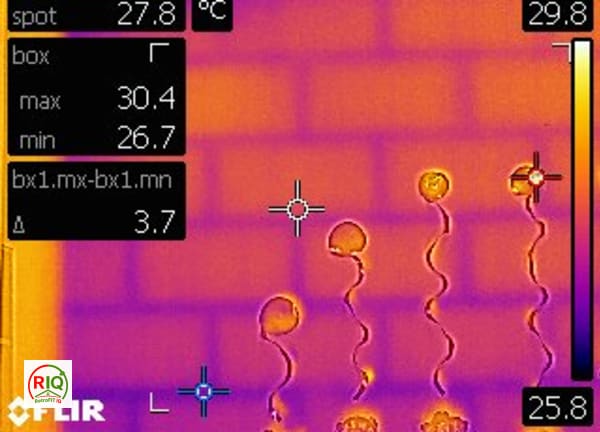
- Thermal imaging to find cold and damp-cooled surfaces, including hidden ones
- Moisture readings across walls, floors and suspect areas
- Humidity logging and a ventilation assessment of affected rooms and voids
- Inspection of sub-floor voids, cupboards and the external envelope
- A diagnosis of the moisture source and a plan to remove it and ventilate properly