
The symptoms
- The same patch of damp or mould returns within months of treatment
- Multiple 'fixes' tried — paint, bleach, even a chemical damp-proof course — with no lasting result
- The problem moves to a new cold surface after one area is treated
- Money spent, but the moisture is still there
The building physics: three mechanisms, one symptom
A damp patch looks the same whatever is causing it, but there are three quite different mechanisms. Surface condensation forms when warm, humid air meets a cold surface below its dew point — the most common cause by far. Penetrating damp is water getting in from outside through a defect. Genuine rising damp — moisture drawn up from the ground through masonry — is real but far rarer than the damp-proofing industry implies. Each has a completely different driver and a completely different remedy.
Recurring moisture means the underlying mechanism is still active. If the diagnosis was a guess, the 'fix' almost certainly addressed the wrong mechanism — for example, a chemical damp-proof course injected to cure what was actually condensation — so the moisture keeps coming back. The only way to break the cycle is to identify the real mechanism by measurement.
The likely causes of recurrence
- Condensation on a cold surface that was painted over but never warmed
- Penetrating damp from an external defect that was never repaired
- An incorrect 'rising damp' diagnosis leading to an ineffective chemical DPC
- A ventilation problem leaving indoor humidity chronically high
Why a single moisture-meter reading isn't a diagnosis
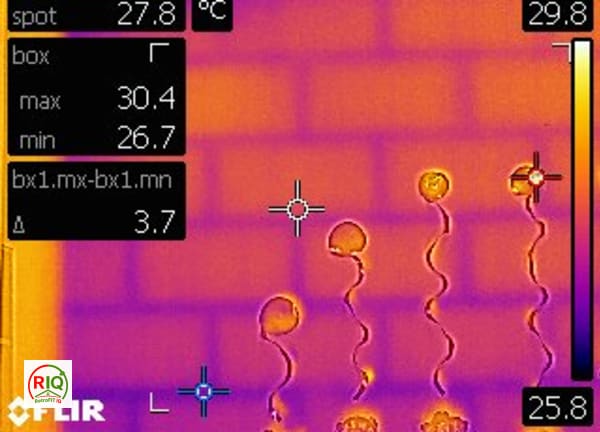
Many 'damp surveys' rely on a hand-held conductance meter pressed against a wall, which can read 'damp' for several unrelated reasons — surface condensation, hygroscopic salts, or genuine moisture — without distinguishing between them. A high reading on its own proves nothing about the cause. Proper diagnosis combines moisture readings on different substrates, surface temperature and humidity logging to assess condensation risk, thermal imaging, and an external inspection.
Common mistakes homeowners make
- Repeatedly treating the surface instead of the cause
- Accepting a single moisture-meter reading as a full diagnosis
- Paying for a chemical damp-proof course before condensation has been ruled out
How RetrofitIQ ends the cycle
- A full diagnostic survey — thermal imaging, surface-temperature and humidity logging, moisture readings on several substrates
- An external inspection for penetrating-damp sources
- Calculating the dew-point margin to confirm or rule out condensation
- A written diagnosis naming the actual mechanism (often a combination)
- A remedy that fixes the cause — so it does not come back