
Why ventilation is part of heat pump readiness
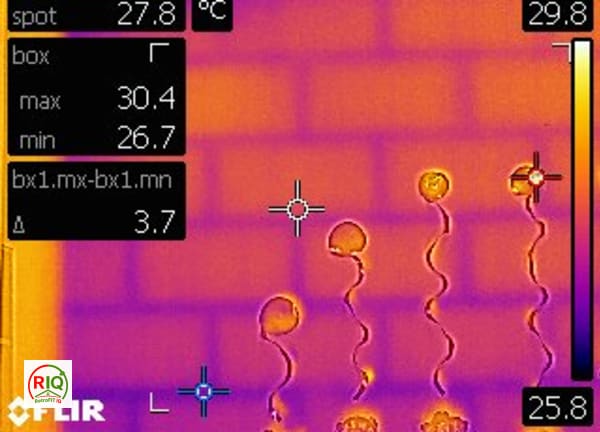
A heat pump runs best in a low-heat-loss, reasonably airtight home. But as you reduce the air leakage, the accidental ventilation that used to control humidity disappears. The moisture from cooking, washing, drying clothes and simply breathing has to go somewhere. Without a designed replacement, indoor humidity rises, surfaces fall below the dew point, and condensation and mould follow — often blamed unfairly on the new heat pump or insulation.
What the ventilation needs to achieve
- Remove moisture at the source (kitchens, bathrooms, utility rooms) before it spreads
- Provide a continuous supply of fresh air for healthy indoor air quality
- Control humidity to keep relative humidity in the healthy 40–60% band
- Do all of this without throwing away the heat the heat pump has provided
The main ventilation options, and what suits which home
There is no one-size-fits-all answer — the right strategy depends on how airtight the home becomes and the moisture load.
- Continuous mechanical extract (dMEV/MEV): quiet, continuous extract from wet rooms, suitable for moderately tight homes — simple and effective
- Mechanical ventilation with heat recovery (MVHR): supplies filtered fresh air and recovers up to ~90% of the heat from the extract air, ideal for airtight homes
- Positive input ventilation (PIV): a lower-cost option that dilutes humidity, useful in some properties but without heat recovery
- Trickle vents and background ventilation: a minimum baseline, rarely sufficient on their own in a tightened home
Why commissioning matters
A ventilation system only delivers its rated airflows if it is installed and commissioned correctly — ducts sized and sealed, runs kept short and smooth, and flow rates measured and set on handover. Poorly commissioned MVHR is a common cause of disappointing performance and noise. Whatever system is chosen, it must be measured on completion, not just switched on.
How RetrofitIQ specifies ventilation for a heat-pump home
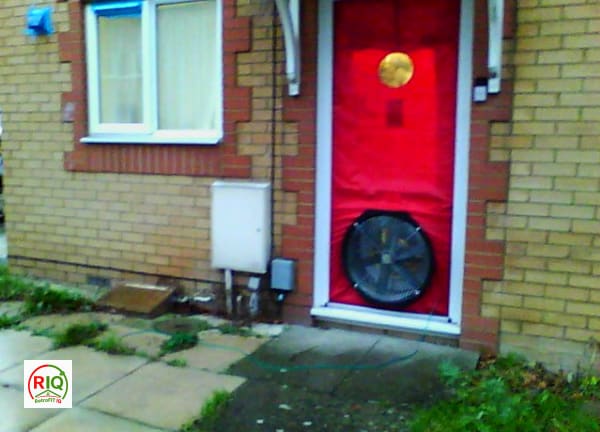
- Assess the current ventilation and the measured airtightness from the blower door test
- Match the ventilation strategy (dMEV, continuous extract or MVHR) to the achieved tightness and moisture load
- Size airflows to the occupancy and the wet rooms
- Coordinate the ventilation with the fabric and heating works so the air barrier and ducting are continuous
- Verify humidity and measured airflows after installation