
Why there's no magic U-value
Readiness is about the combined heat loss of the whole envelope, not any single element hitting a target. A home with modest wall insulation but a well-insulated roof, an insulated floor and good airtightness may be ready; another with one well-insulated wall but a cold loft, leaky floor and draughty everything else may not. We assess the building as a system and find the most cost-effective route to a low heat demand.
Typical retrofit U-value targets to aim towards
These are sensible reference points for a fabric-first retrofit (lower is better). They are targets to work towards where practical, not rigid pass/fail thresholds — the real test is the resulting whole-house heat loss.
- Loft / roof: around 0.15–0.16 W/m²K (roughly 270–300mm of mineral wool at ceiling level)
- Walls: solid walls can often be improved to around 0.30–0.45 W/m²K with internal or external insulation, against an uninsulated ~2.1 W/m²K
- Floors: around 0.20–0.25 W/m²K for an insulated suspended or solid floor
- Windows: modern double glazing around 1.4 W/m²K, good triple glazing under 1.0 W/m²K
- Airtightness: lower air leakage (ACH₅₀) reduces the demand as much as insulation in many older homes
The order that usually makes sense
- Loft / roof insulation — usually the cheapest, highest-impact first step
- Air-sealing — frequently the most overlooked and most cost-effective lever in older homes
- Floor insulation — improves comfort (cold floors) as well as heat loss
- Wall insulation (internal or external) — the biggest job, prioritised on the coldest, most exposed walls
- Glazing and reveal improvements — and reducing thermal bridges throughout
Why insulating safely matters as much as insulating
Adding insulation changes where the dew point sits within a wall or floor build-up. Internal wall insulation, in particular, can push the dew point into the masonry and cause hidden interstitial condensation if it is not designed correctly. That is why any solid-wall internal insulation should be checked with hygrothermal (WUFI or Glaser) modelling, and why ventilation must be upgraded as the home is tightened. Insulating for a heat pump must never trade a cold home for a damp one.
How RetrofitIQ sets the targets
- Measure the current heat loss room by room with a fabric survey
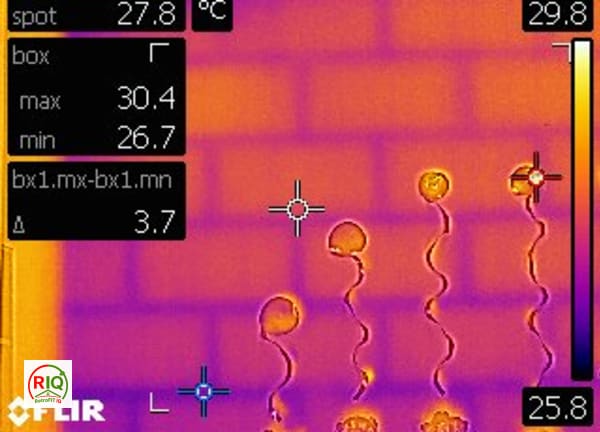
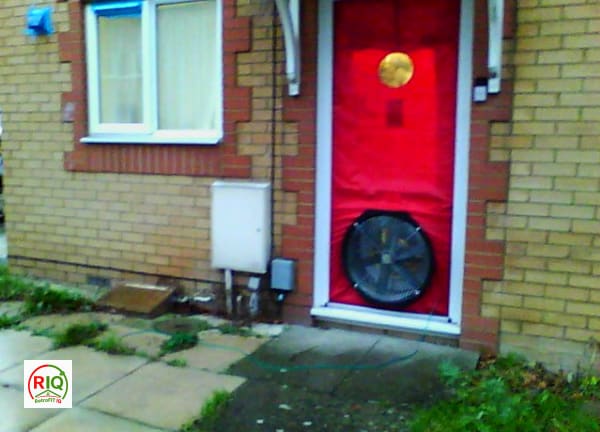
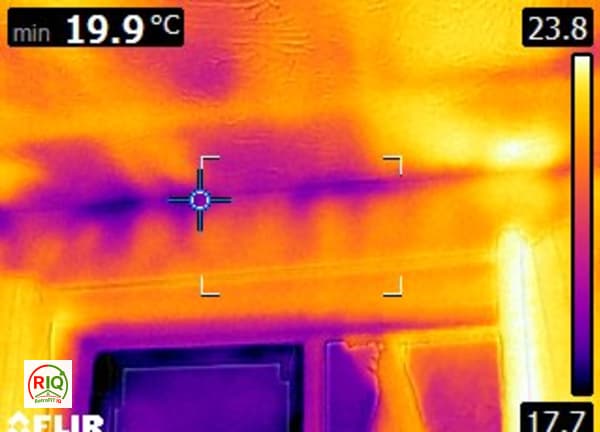
- Use thermal imaging and a blower door test to find the weakest elements and quantify air leakage
- Model the heat-demand reduction from each candidate improvement
- Recommend the minimum effective package to reach heat-pump readiness at the lowest cost
- Where internal wall insulation is proposed, check it is moisture-safe before specifying
- Verify the achieved heat loss after the works