
Why air leakage undermines a heat pump
Uncontrolled air leakage can rival the heat lost through the walls of an older home. Warm air rising in a heated house creates a 'stack effect' that draws cold air in low down and pushes warm air out high up — through floor perimeters, loft hatches, chimneys, service penetrations and worn window seals. Every cubic metre of warm air lost must be replaced and reheated.
A boiler can mask this by blasting heat in at 70°C. A heat pump cannot — it relies on a steady, low-temperature output, so a constant cold draught is the difference between a room that holds temperature and one that never quite warms up. Reducing leakage directly lowers the design heat loss the heat pump has to meet, which means a smaller unit and a lower flow temperature.
What good airtightness does for a heat pump
- Lowers the design heat loss, allowing a smaller, cheaper heat pump
- Enables a lower flow temperature and therefore a higher SCOP
- Improves comfort immediately by removing cold draughts at floor level
- Reduces running cost regardless of the heating system
- Makes room temperatures more stable and easier for the heat pump to maintain
Airtightness is not the same as 'no fresh air'
A common worry is that sealing a home makes it stuffy or damp. The opposite is true when it is done properly. Accidental leakage is uncontrolled — it under-ventilates in still weather and over-ventilates (wasting heat) in wind. Replacing it with designed, controlled ventilation — continuous extract or MVHR — gives reliable fresh air and humidity control while stopping the heat loss. Tightening without ventilating is the mistake; tightening with the right ventilation is the goal.
How airtight does a retrofit need to be?
There is no fixed retrofit target the way there is for Passive House (0.6 ACH₅₀) or new build. The point is direction of travel: the lower the leakage, the lower the heat demand and the better the heat pump performs. Many older homes start at 10–15 ACH₅₀ or worse; bringing that down meaningfully through targeted sealing is one of the best-value steps towards readiness.
How RetrofitIQ measures airtightness for readiness
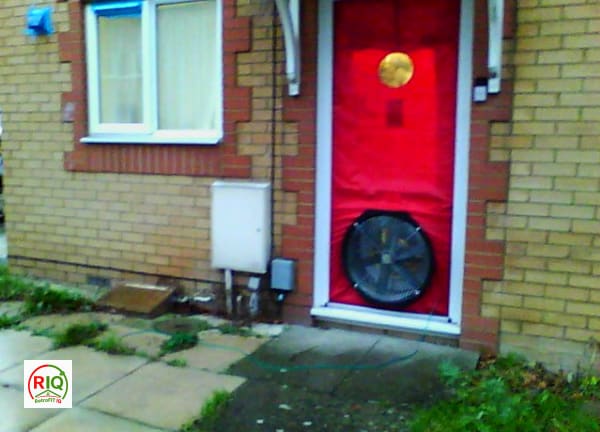
- A blower door test to measure total air leakage (ACH₅₀) and the air-change rate that feeds into the heat-loss calculation
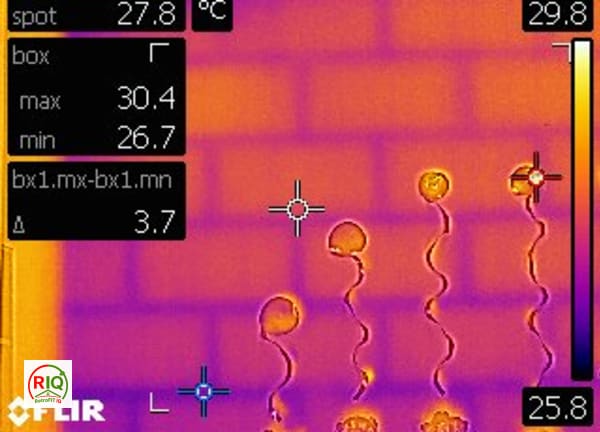
- Smoke tracing and thermal imaging under depressurisation to locate every leak path with photographs
- A prioritised air-sealing plan, ranked by impact on the heat demand
- A controlled-ventilation strategy matched to the tightened fabric
- A re-test to verify the reduced leakage before the heat pump is sized