
Why heat loss drives every other decision
A heat pump must be sized to the home's design heat loss — the rate at which the building loses heat on the coldest expected day. In most of England the design outdoor temperature used for this is around -2°C to -3°C. The heat-loss figure determines the size (kW output) of the heat pump, the flow temperature the home can run at, and the size of every radiator or underfloor circuit. Everything downstream depends on getting this number right.
Heat is lost two ways: through the fabric (conduction through walls, roof, floor and windows) and through air (ventilation and uncontrolled leakage). A proper survey accounts for both, room by room, because the heat pump and emitters are sized per room, not just for the house as a whole.
What an accurate heat-loss survey delivers
- Correct sizing of the heat pump — neither undersized (cold on peak days) nor oversized (short-cycling and inefficiency)
- The flow temperature the home can realistically run at, which sets the achievable SCOP
- A room-by-room emitter schedule, identifying which radiators need upsizing
- A ranked list of which fabric improvements reduce the demand most cost-effectively
- A measured baseline so the improvement can be verified afterwards
Why oversizing is the most common — and most costly — error
Installers often add a 'safety margin' on top of an already-cautious estimate. The result is an oversized heat pump that delivers more heat than the house needs at part-load. It then short-cycles — switching on and off repeatedly — which is inefficient, increases wear, and can require a buffer tank that adds further losses. A correctly sized unit modulates smoothly and runs long, gentle cycles at a low flow temperature, which is exactly where heat pumps are most efficient.
How the MCS heat-loss calculation fits in
An MCS-certified installer is required to produce a room-by-room heat-loss calculation (typically to BS EN 12831) before installing. That is good practice — but it is part of a sales process, and the quality varies. An independent, measured survey beforehand gives you a check on that calculation, identifies fabric improvements the installer's quote may ignore, and means you arrive at the installer with a clear, evidence-based brief.
What a measured heat loss survey involves
- Room-by-room assessment of wall, roof, floor and glazing construction, with U-values based on the actual build-up
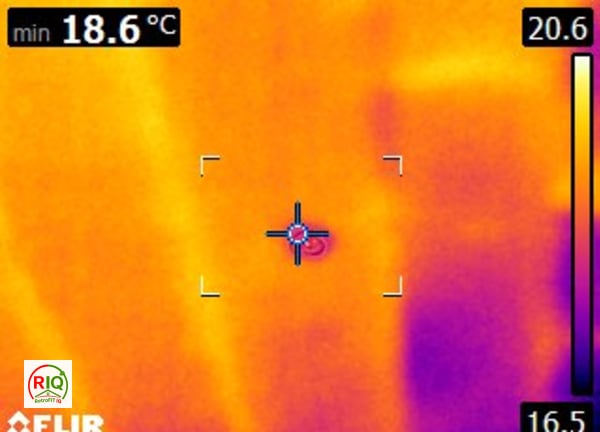
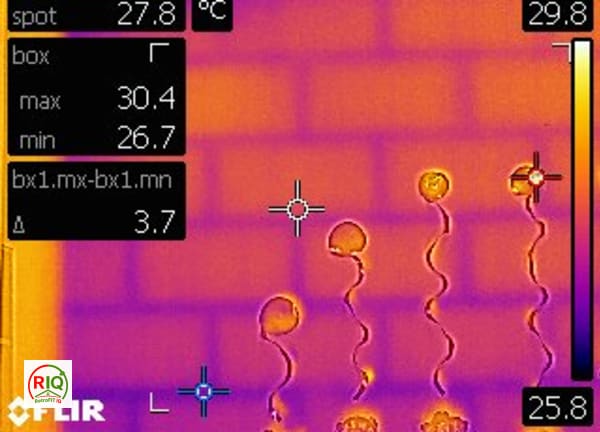
- Thermal imaging to find missing or bypassed insulation and thermal bridges that raise the real heat loss
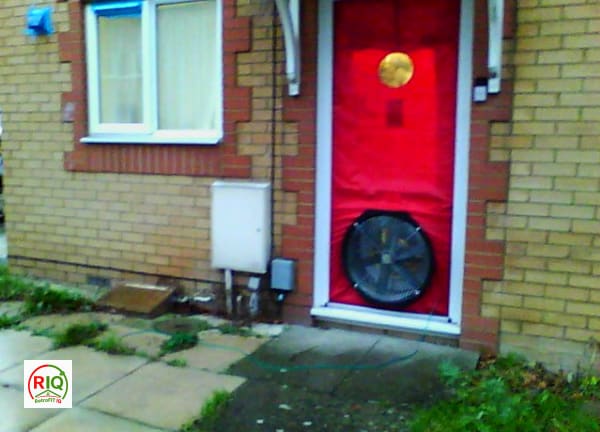
- A blower door test to quantify the air-change rate, which is a major and frequently underestimated part of the heat demand
- Calculation of the design heat loss per room and for the whole house at the local design temperature
- A fabric-first plan to reduce the heat loss before the heat pump and emitters are sized