
The symptoms
- Black mould or damp on the reveals and around the frame
- Peeling paint and stained plaster near the opening
- Worse in winter (suggesting condensation) or worse after rain (suggesting water ingress)
- Soft or stained timber on the sill or frame
The building physics: two different mechanisms
The reveal — the wall surface returning to the window — is often a thermal bridge. The wall is thinner there, or the frame interrupts the insulation, so the internal surface runs cold. When that cold strip falls below the dew point of the room air, moisture condenses on it. That is condensation, driven by cold surfaces and indoor humidity, and it is worse in winter.
Separately, water can get in from outside: failed perimeter sealant or mastic, cracked render, a defective or missing sill, blocked weep holes, or poor flashing above the window. That is water ingress, and it tracks with rainfall rather than cold weather. The two look similar but need completely different remedies — which is why diagnosis matters before any work is done.
The likely causes
- Cold, uninsulated reveals (a thermal bridge) condensing indoor moisture
- Failed perimeter sealant or mastic letting water in
- Cracked render, defective sills or blocked drainage above the window
- Air leakage chilling the reveal further
How to tell which one you have
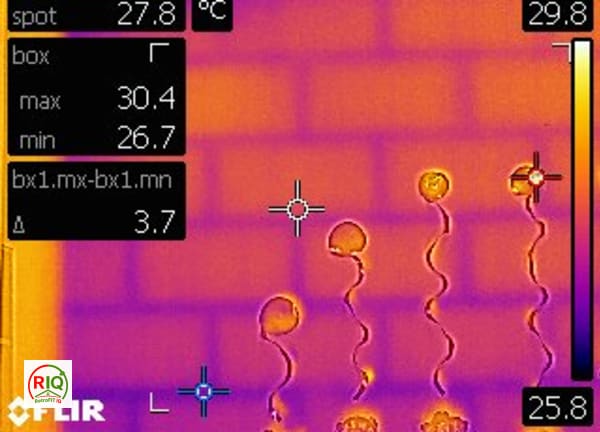
A useful first test is timing: condensation worsens in cold weather and high indoor humidity (and is often paired with window condensation), while a leak worsens during and after rain. But the two can coexist — a cold reveal that also has a minor external defect — so we confirm with thermal imaging (showing the cold bridge) and moisture readings (distinguishing surface condensation from water tracking through the wall).
Common mistakes homeowners make
- Re-sealing the outside when the problem is internal condensation on a cold reveal
- Repainting with 'anti-mould' paint without warming the surface
- Assuming any window damp must be a leak
How RetrofitIQ investigates damp around windows
- Thermal imaging of the reveals and frame to map cold surfaces and bridges
- Surface-temperature and humidity readings to calculate the dew-point margin
- Moisture readings to distinguish condensation from water ingress
- An external inspection of sealant, render, sills and flashings
- A diagnosis stating the actual cause, then a targeted remedy (insulated reveal, sealing, or both)